| Author |
 Replies: 77 / Views: 61,450 Replies: 77 / Views: 61,450 |
|
New Member
United States
2 Posts |
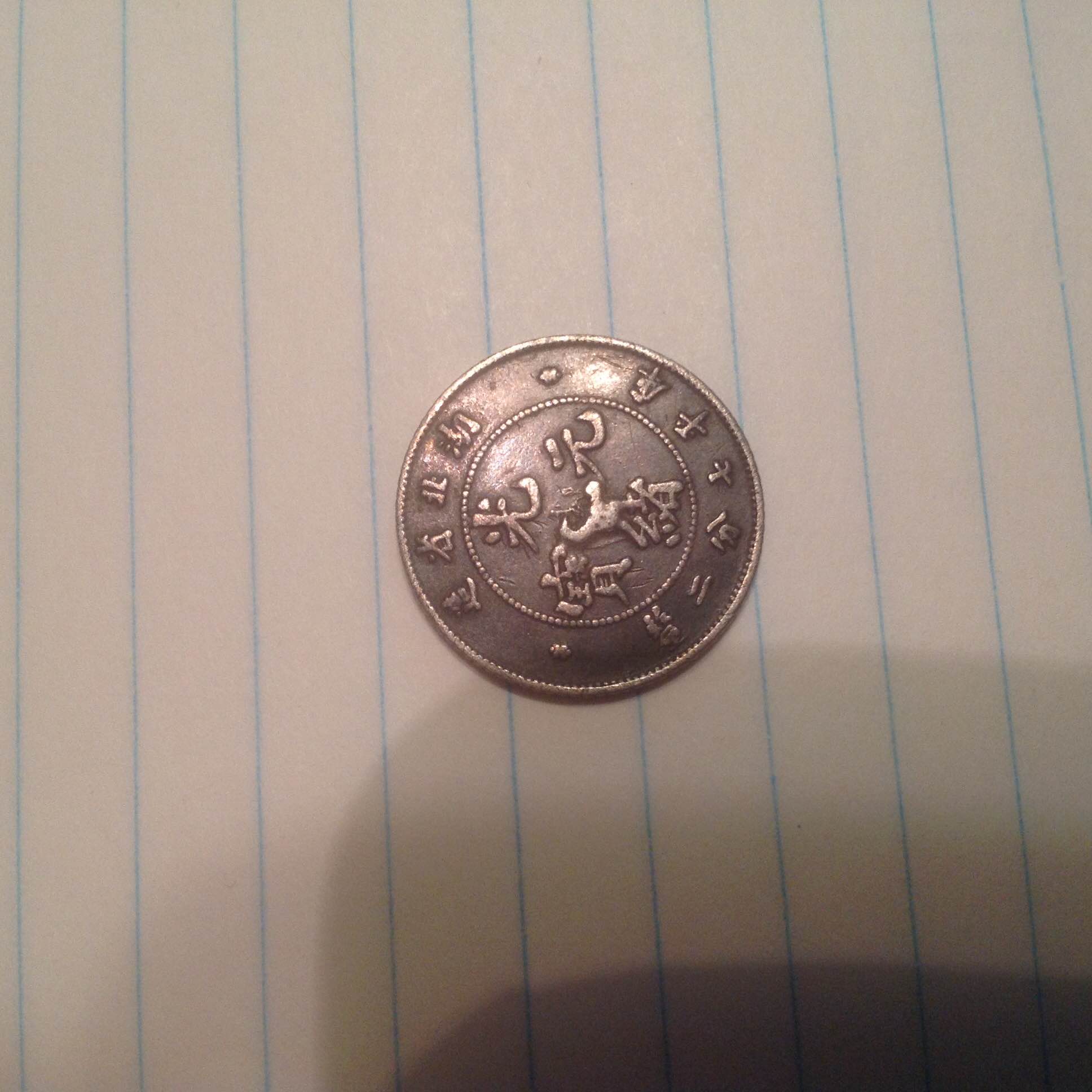
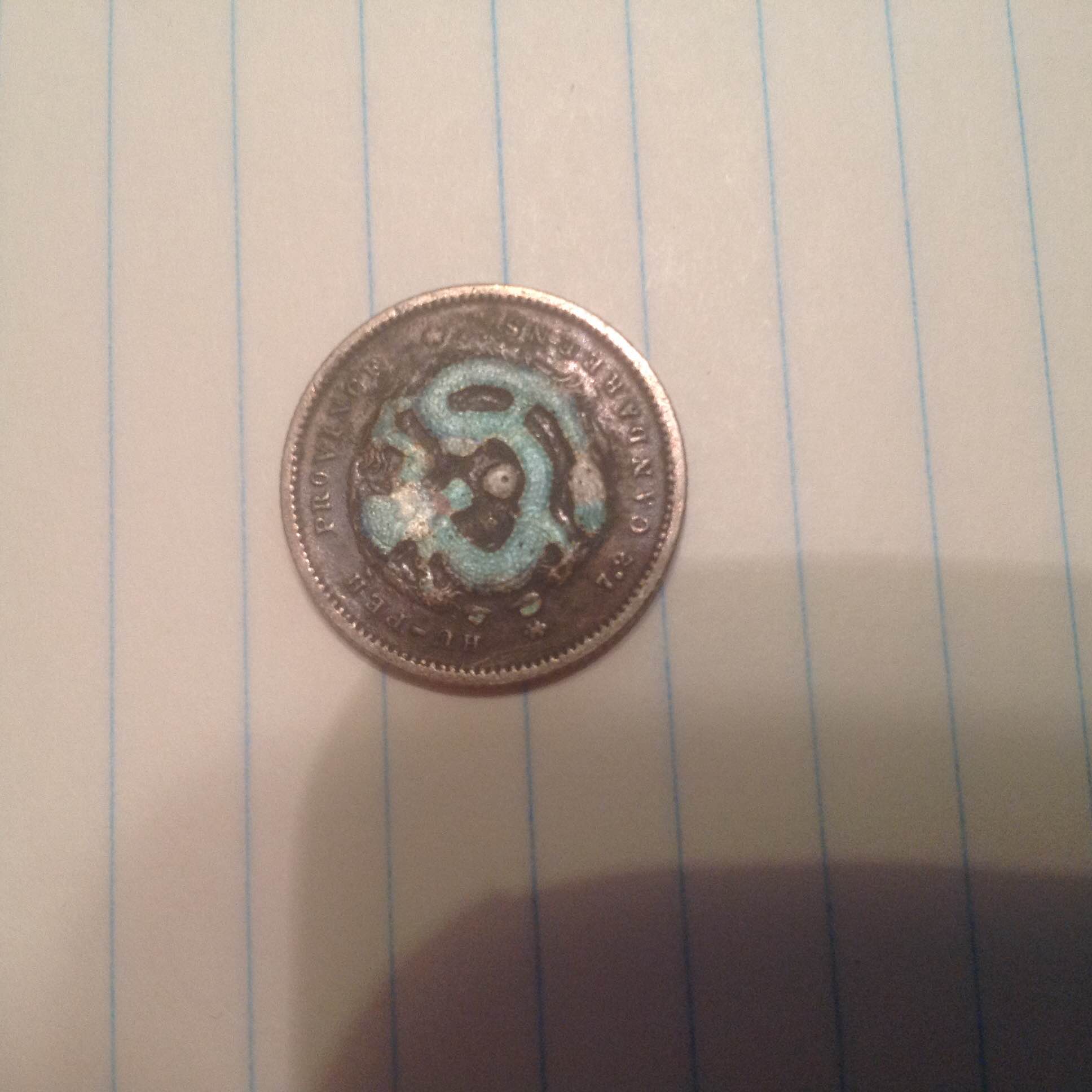
This is from my great grandfathers collection. He visited China numerous times. I do not know the weight, but a small unreliable scale shows it at 20 grams. Again it is unreliable. The coin "sounds silver" and magnets do not stick to it. I would like to know what the symbols say as I have not been able to find any others with the same symbols on the reverse top. I would enjoy and feedback or comments. Thanks so much! 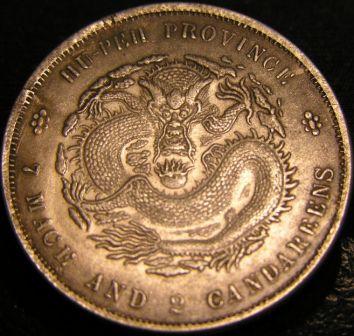 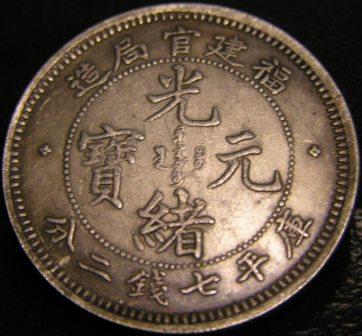 |
|
|
|
Moderator
 Australia
17031 Posts |
Hello, and welcome to the forum.  I wish we could be the bearers of good news, but alas, we can't. The Chinese have been making fakes of their own dollars and selling them to tourists for a long time now, and yours is one such fake. The main giveaway that this is not a genuine silver dollar is that the Chinese inscriptions contradict what the English inscriptions on the other side say. At the top, the Chinese inscription reads "Made in FuKien Province", while the other side says "HuPeh Province". Genuine coins always say the same province on both sides. Compare your inscriptions with this Fukien dollar and this Hupeh dollar. This kind of die mix-up is very commonly seen on these counterfeit dollars; the counterfeiters simply didn't try very hard to match up the obverse and reverse dies. If you had it tested more precisely, I suspect you will find that your coin is too light (genuine dollars should weigh about 26.7 grams) and not actually made of silver. Don't say "infinitely" when you mean "very"; otherwise, you'll have no word left when you want to talk about something really infinite. - C. S. Lewis
|
|
Pillar of the Community
Australia
3841 Posts |
This die detail can be quite troubling and I will explain why. When I first looked at the first image, I nearly thought it looked VERY real. But given the details of the obverse being Fookien Province as well as the wrong weight, it can't be real. Details of the Fookien designs aren't right.
As Sap mentioned, the weight is supposed to be 26.7g and there's practically no way dies can be mixed up unless mints were playing some kind of mint sport. Lastly, Fookien dollar coins are quite scarce.
It sucks to hear all these but Chinese coins have always been counterfeited for many years as well as prices of them are just too hot this year.
My partial coin collection http://www.omnicoin.com/collection/gxseriesMy numismatics articles and collection: http://www.gxseries.com/numis/numis_index.htmRegularly updated at least once a month. |
|
New Member
 United States
2 Posts |
First of all thank you very much for taking the time to answer my question. I do appreciate the knowledge everyone has provided.
At first I thought I may have selected the wrong picture of the front, but sadly I did not.... and I agree that it must be a fake. We have 34 of these coins and all of them appear to be fake as they weight the same....about 21 grams.
We only looked a these coins becasue of the price of silver lately. I do plan on having the coin tested for silver but my only optimism will be my two crossed fingers :)
Thank you again for the feedback!
|
|
Pillar of the Community
Australia
3841 Posts |
I wouldn't hold my breath - most likely nickel copper. It's not too hard to imitate the sound of silver with nickel copper except the weight.
My partial coin collection http://www.omnicoin.com/collection/gxseriesMy numismatics articles and collection: http://www.gxseries.com/numis/numis_index.htmRegularly updated at least once a month. |
|
New Member
United States
1 Posts |
Hi I also have a coin HU-PEH that my grandfather gave me. Could someone tell me what it reads and if is real or fake. Thank you   |
|
Moderator
Australia
17031 Posts |
Hi rosyleo, and welcome. On your coin, at least the province-name in Chinese matches the province-name in English - unlike the coin at the top of this thread. Unfortunately, your coin is nevertheless also not genuine. It has the typical mixed-up "wear" typical of Chinese fakes. There are two simple tests to verify this. See if a magnet sticks to it. If it does, it's a steel fake. See how much it weighs, to the nearest 0.1 grams ideally. Genuine coins should weigh around 26.5-27.0 grams; fakes often weigh much less, as the previous posters in this thread have discovered. Don't say "infinitely" when you mean "very"; otherwise, you'll have no word left when you want to talk about something really infinite. - C. S. Lewis
|
|
Pillar of the Community
Austria
566 Posts |
|
|
New Member
United Kingdom
2 Posts |
Hi, Sorry to hijack an old thread but I also have one of these coins, except mine is not magnetic and weighs 26.76g. I cant read Chinese so wouldn't know where to go from here Very informative forum, new greetings from the UK    |
|
Moderator
Australia
17031 Posts |
Hello and welcome. Judging just by the looks of it, I'd be suspicious - the tarnish has the unnatural, "painted-on" look to it, typical of the lower quality fakes. As for the design, it too has cause for concern. I'm not aware of any genuine Hupeh Province coins that spell the name "He-peh", though given the prevalence of the type with the counterfeiters, it would not surprise me if there was a rare pattern coin with this error. However, doing a Google search for "he-peh province", I can see plenty of fakes being sold with that name (the notorious fake merchant Ali the Barber is currently selling fakes just like this for $3 each) - and plenty of confused people who own them and are trying to find out what they own. I'm afraid your coin, too, is not genuine. Don't say "infinitely" when you mean "very"; otherwise, you'll have no word left when you want to talk about something really infinite. - C. S. Lewis
|
|
Pillar of the Community
Canada
2805 Posts |
Maybe one day, somebody will post a real Chinese dollar?
|
|
Valued Member
United States
347 Posts |
Quote:
...I'm not aware of any genuine Hupeh Province coins that spell the name "He-peh"... China has both a Hupeh Province (Hubei #28246;#21271;) and a Hepeh Province (Hebei #27827;#21271;). They are not the same province. The inscription on the OP's coin states that it was made during the reign (1875-1908) of the Guangxu Emperor of the Qing Dynasty. However, during the Qing Dynasty "Hepeh Province" did not exist. At that time the province was known as " Chihli" (Zhili). The name of the province changed in 1928 to "Hepeh". Therefore, any "Qing Dynasty" coin which states "Hepeh" in its inscription must be a fake. Gary |
|
New Member
United Kingdom
2 Posts |
back to doing the lottery then! lol. Thank you for your responses, very much appreciated. seems finding a real Chinese dollar is like finding a needle in a haystack the size of everest with the sheer volume of fakes. I think I will stick with British coins.
I could be back again soon as I have just purchased a job lot of 14kg mixed British and some world coins. only just took on the hobby after disability has forced me to retire really early, the hobby is coin collecting as well as making rings out of coins. The last thing I want to do is punch a hole through the middle of a rare coin and I am sure veteran collectors would seriously frown upon that.
apologies again for the thread Hijacking and waffling on.
Have a great day where ever you are.!
Lee
|
|
New Member
United States
9 Posts |
|
|
Pillar of the Community
Australia
3841 Posts |
It's not 7 mace 2 candareens.
Yours is 1/10 of it, which is 7.2 candareens. This is actually quite common in low grade condition. Genuine as far as I can tell.
My partial coin collection http://www.omnicoin.com/collection/gxseriesMy numismatics articles and collection: http://www.gxseries.com/numis/numis_index.htmRegularly updated at least once a month. |
|
New Member
United States
9 Posts |
Yay me!! Thank you!!  |
| |
Replies: 77 / Views: 61,450 |







 Posted 08/23/2011 12:03 pm