| Author |
 Replies: 10 / Views: 3,490 Replies: 10 / Views: 3,490 |
|
|
New Member
United States
6 Posts |
Just purchased on ebay (I know, prob. a bad move). Is this Authentic? What is the value (I paid $63)? Where can I find mintage numbers? 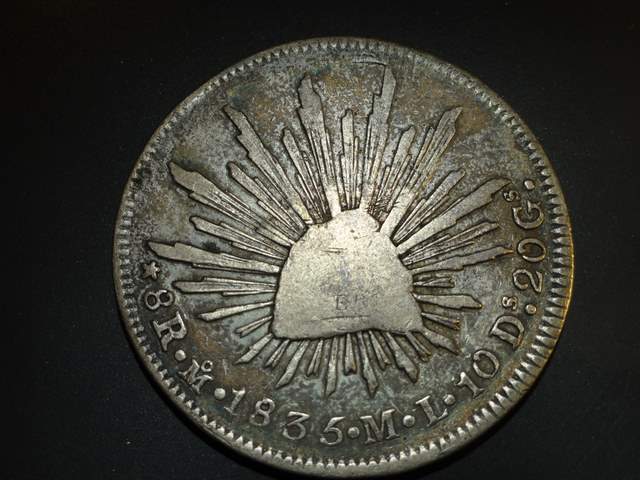 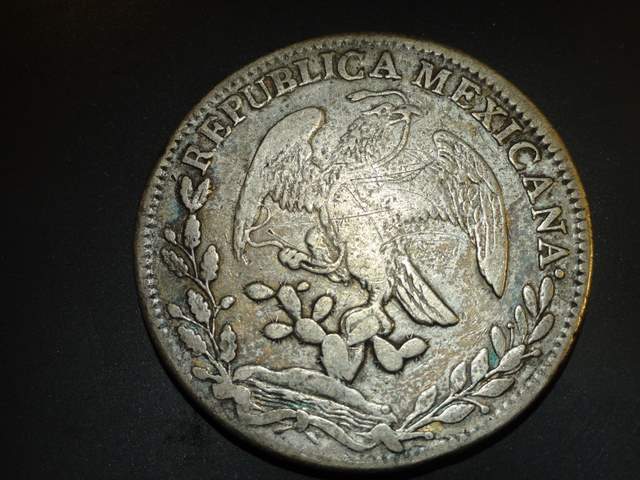 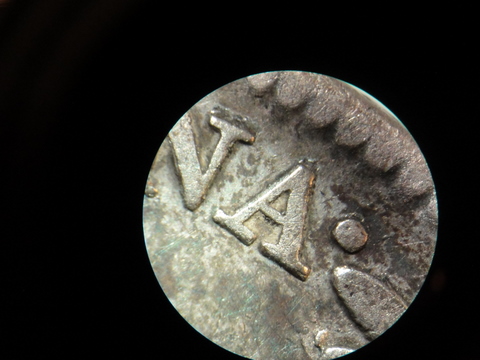 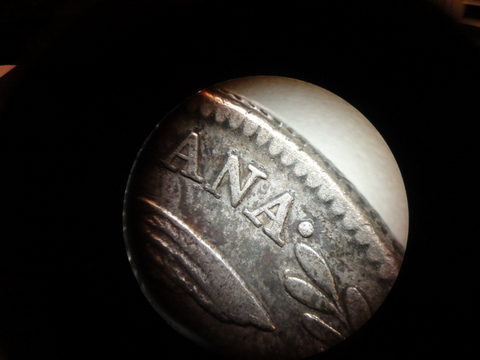 |
|
|
|
Pillar of the Community
Serbia (Srbija)
576 Posts |
There is no mintage info in Krause catalog, but I dont think that you paid too much. Catalog value is from 150 to 900 this piece is closer to the bottom number.
|
|
Pillar of the Community
France
1591 Posts |
Doesn't it look like a coper plated coin ? (metal detail, green oxidation on the second picture)
I'm sure swamperbob will come with more details :)
|
|
Pillar of the Community
United States
5362 Posts |
drakemeister Lets start with the obvious questions:
1. Have you weighed the coin? A weight of 26.2 -26.7 is about the correct range provided there is no damage that is not visible.
2. Is the edge design correct (engrailled - resembling a parenthesis with a point or dot at midline) or not?
3. Does the edge have overlaps in the design which are exactly opposite one another and of correct length?
4. Does the coin ring like silver? Lightly tap the coin on the edge with a wooden pencil while the coin is balanced on your finger. The tone and duration should MATCH a US silver dollar. With experience you can usually spot off metal or cast copies. Much of the edge damage seen on 8Rs came as the result of the way ring tests were performed 150 years ago. To check the ring a coin was often thrown onto a stone. You can picture what happened to the edge.
5. Have you done a Specific Gravity test to determine the density of the metal. 10.31 is acceptable other readings ARE NOT (or need to be explained by test limitations).
Once all of those observations are determined to be correct you can move to the coin itself and what it looks like.
Remember that in a picture there are limitations - focus, size, clarity, color and distortions. But given those limitations, you can look at the photo and make observations which either support authenticity or point toward a possible forgery.
First, there is an X test scratch on the eagle's breast. Often before accepting a "suspicious" coin a merchant would scratch the surface to see if an "off color" core is present. A light scratch is often followed by a DEEPER scratch, but I see only one X and the scratch over the wing. If as a result of the scratches the coin remained suspect, the next step was usually to cut or notch the edge. This exposes the core better (deeper) and can provide a small piece of metal for destructive testing. This test was usually definitive and a forgery was often drilled to prevent further circulation.
The presence of an X is a neutral fact - neither positive or negative really because there was no typical second test. It shows that ONE person saw the coin as suspect.
Second, as pointed out by MathieuMa there is an odd patina which he interprets as copper. To me it looks like a silver sulfide tarnish. This tarnish is often caused by storage in an atmosphere containing Sulphur dioxide or another agent that promotes tarnish. It us akso seen when a silver coin stays in contact with a high sulphur paper or cardboard. Older envelopes are often the culprit. But the tarnish is easily removed by a mild acid. Since it is likely to exist on the edge - I usually try to remove a a microscopic bit of tarnish there.
In this case, I believe the color will prove to be tarnish. Remember that color in a picture alone can be deceptive.
Now you can look at the design of the coin. Based on a comparison with the photo in "Resplandores" and I see what amounts to a reasonable correlation for this YEAR and Date. Remember that you need to know in which years hubs were used and not used. Also you need to know which elements were King punch features and which are not. That information can not be imparted except through experience with the series. What may be a very expectable variation in one coin could absolutely condemn another.
In this case, the coin looks good.
I then checked Riddell and my files for a matching forgery - I see NONE.
Because drakemeister provided enlarged pictures you can get a better look to see if the appearance is reasonable for a die struck coin or not. These pictures also support the idea that the color change is tarnish.
Here the evidence clearly points to a struck coin with some very natural and expected die wear.
From the position of the faces in relation to the planchet perimeter, I would conclude the strike was NOT collared. Remember that a perfectly centered coin is the exception not the rule when it comes to open sided screw press strikes.
Taken all together unless there is something here that I do not anticipate - I believe the coin is REAL.
|
|
New Member
 United States
6 Posts |
swamperbob - thank you for your detailed response - I have learned a ton as I considered your questions. 1) 27g - but occasionally flashes to 26g. My current scale (ordered a .01g scale from Amazon) only has a 1g resolution, but it seems produce results that one would expect from a ~26.5g coin. 2) and 3) Please see attached pics. 4) I was able to tap a pencil on a 1875 Trade dollar and this 1835 8R. They both "ring" in a similar manner and timeperiod, but the TD has a higher pitch than this coin. Not sure if that is a pass or not. 5) I'll to the SG test once I get a scale that resolves better than 1g so the results will be useful. Another note - I've only looked at a few coins in my stereo microscope (Modern pocket change, the Trade dollar, and this), but the 1835 Mexico 8R appears to have a huge amount of relief in the lettering compared to any of the other coins. Really quite remarkable. See attached pics. A couple things of note - - I notices some of the letters were deeper on the lower section than the upper (see the "holes" in the "B" photos). Not sure if this is because of the wear, or the way the coin is made. In the US coins they were even. - There is a white/yellowish crystalline substance in the many of the deep crevices (see the bottom of the "C"). -Drake 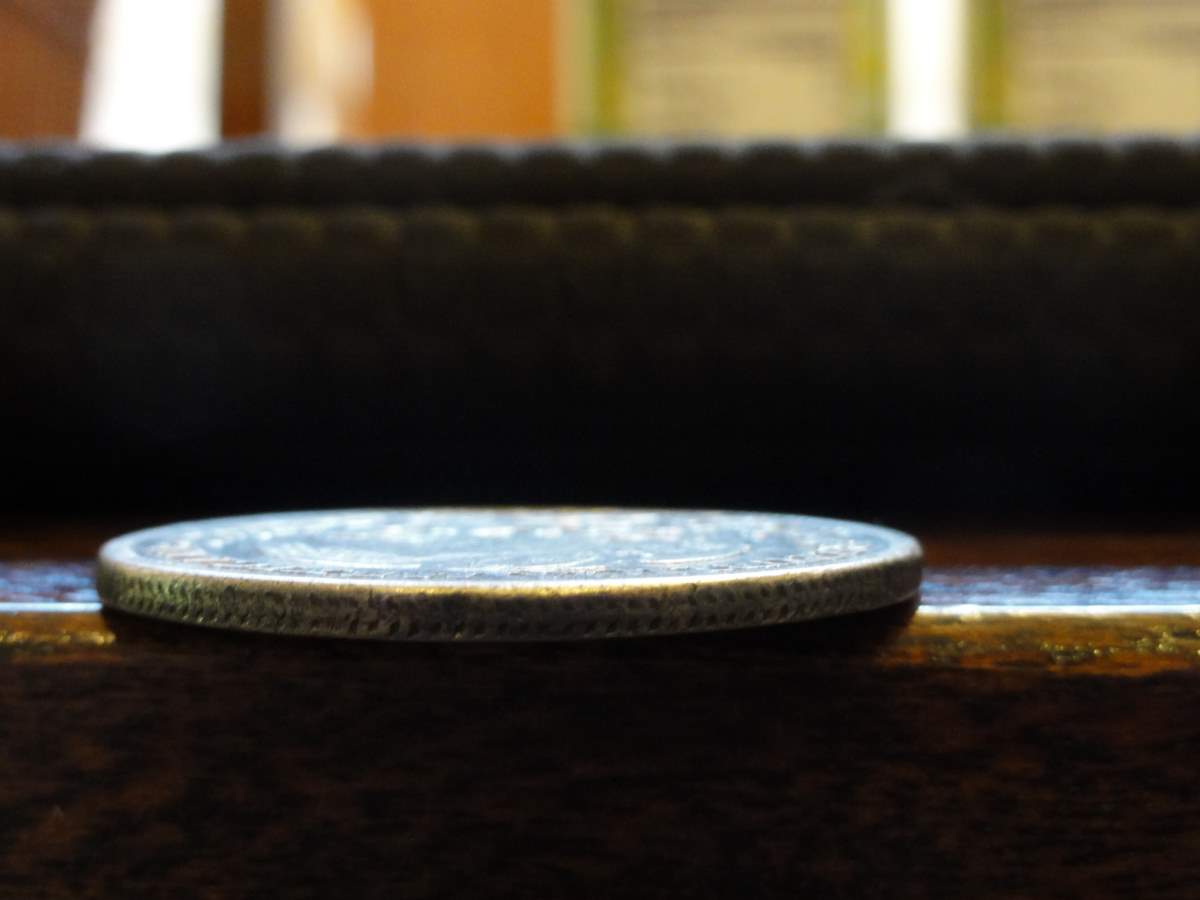 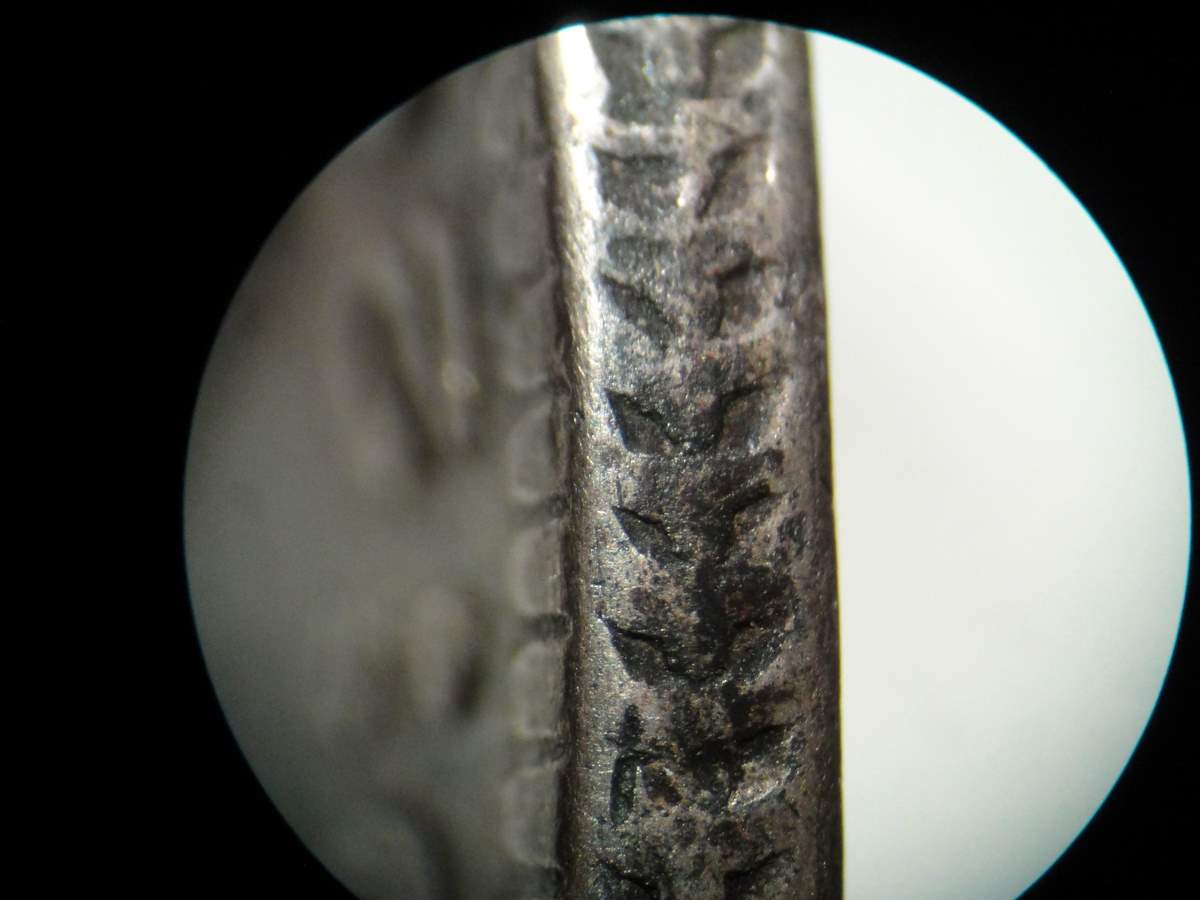 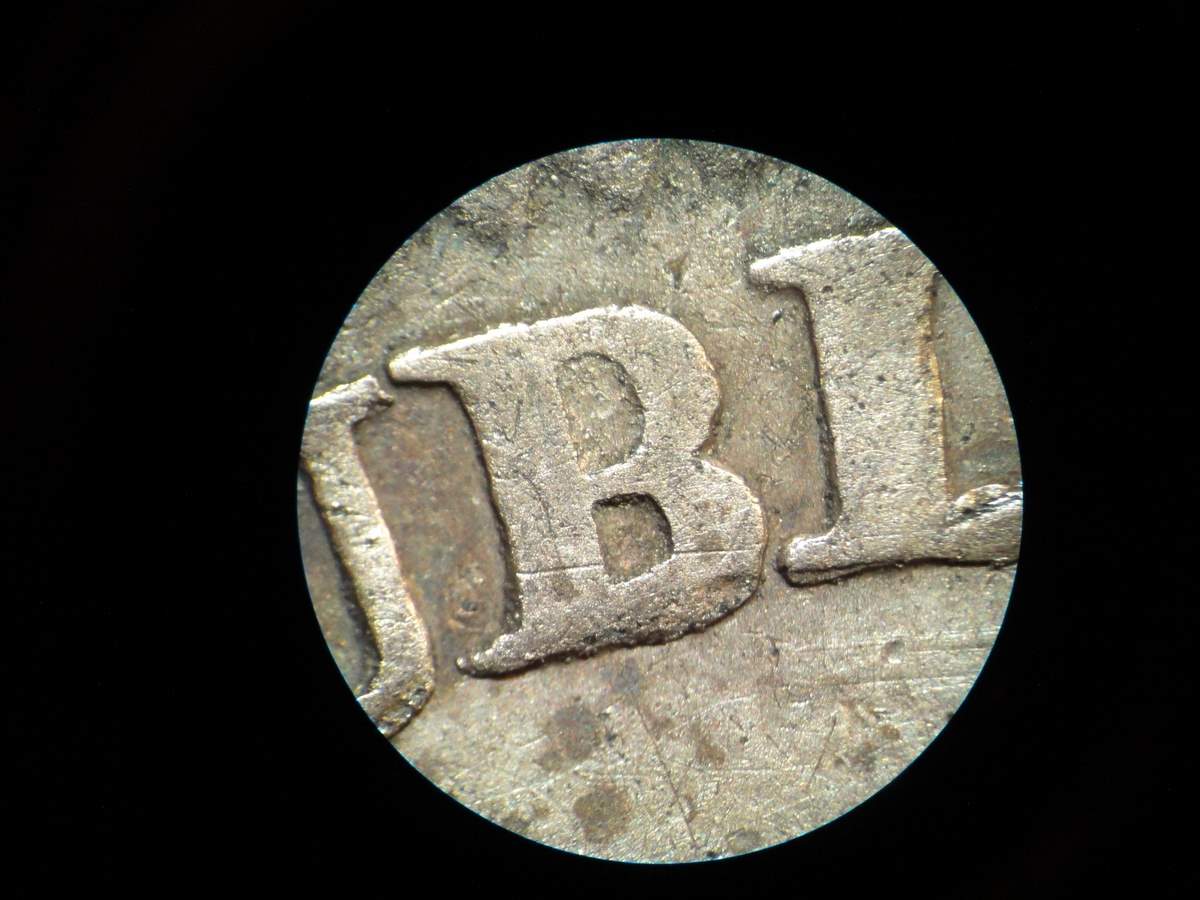 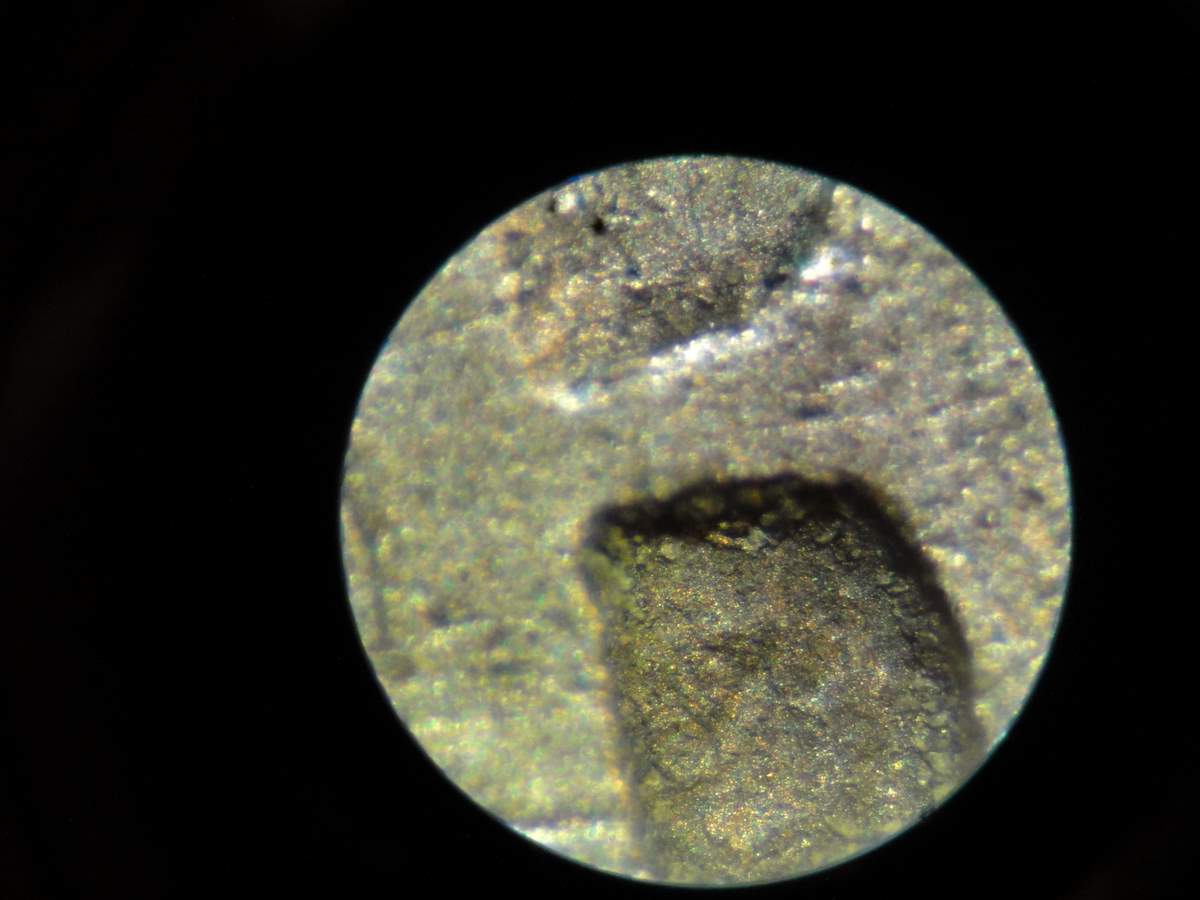 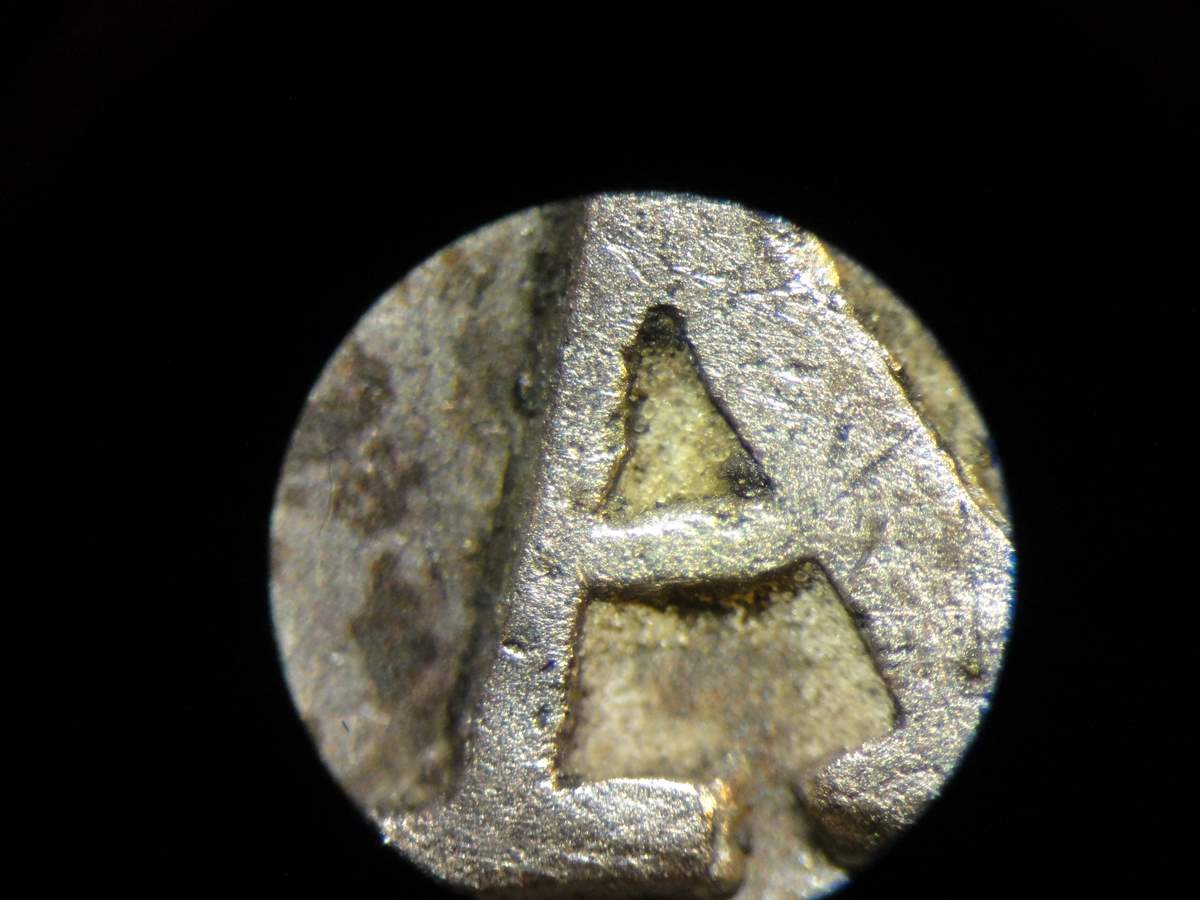 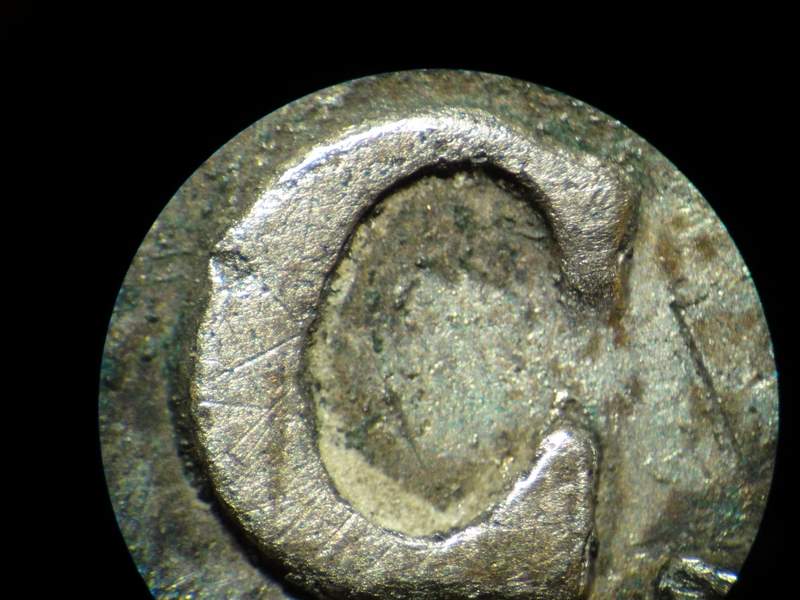 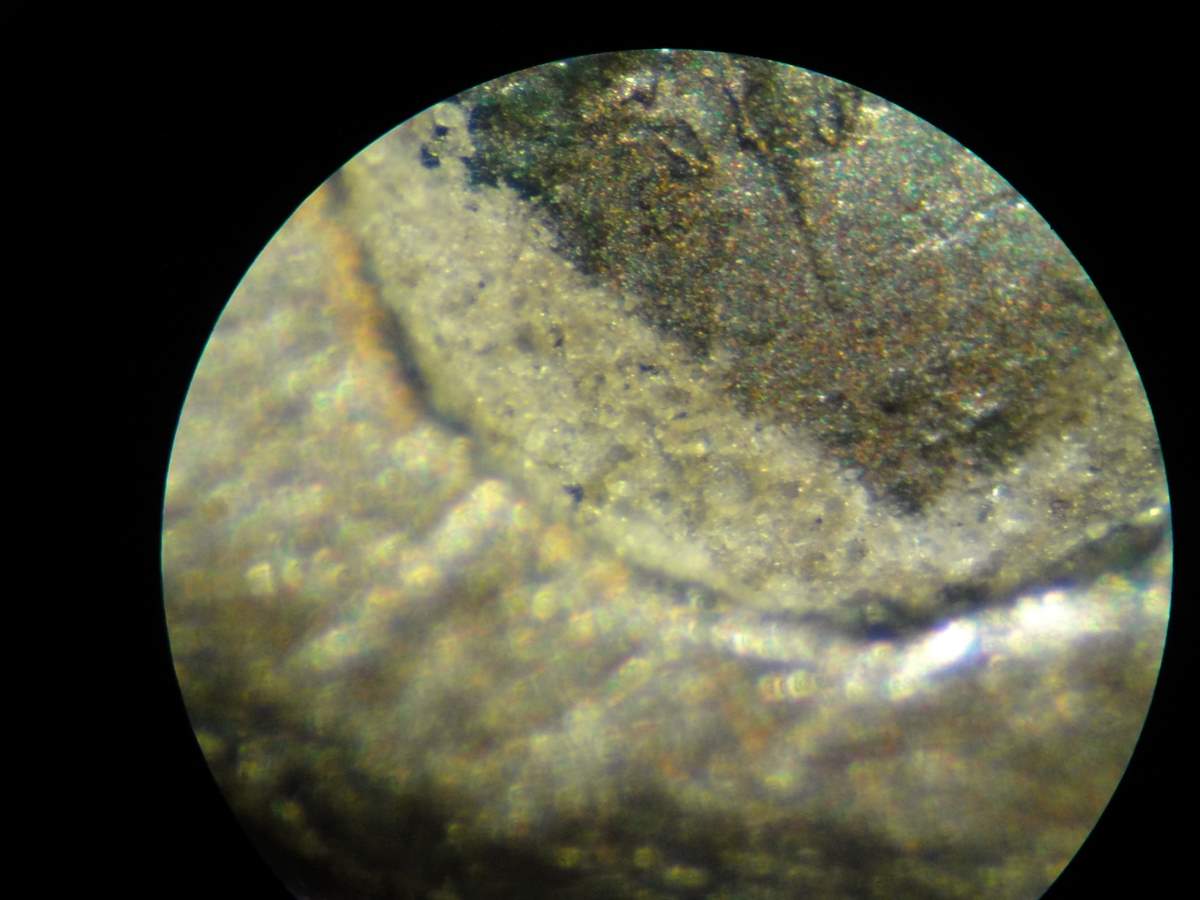 |
|
Pillar of the Community
India
1996 Posts |
Recently I got a coin,8 reales,1885C-AM. I shall post an image shortly. Are they common? Thanks.
|
|
Pillar of the Community
United States
5362 Posts |
drakemeister I see nothing that appears to be wrong with the coin that would change my initial impressions. I do note there is a significant number of raised lumps - but they do resemble die rust. Regarding the letter depth - the difference may be wear or the manner in which the digit was applied. Letters and numbers in 1835 were added one at a time so a tilted impact could be the cause. Regarding relief - many older coins were made with high relief when compared to modern coins. The tone you get when ringing the coin bothers me a bit - because the Trade dollar rings HIGHER, are you sure the Trade dollar is REAL? drnsreedhar The coin you refer to is a late Republican issue many of which are common. Please post pictures and I can provide a better answer. I am still away from home so my records are not at hand.
|
|
Pillar of the Community
India
1996 Posts |
This is the coin I had written earlier about. Is this common? 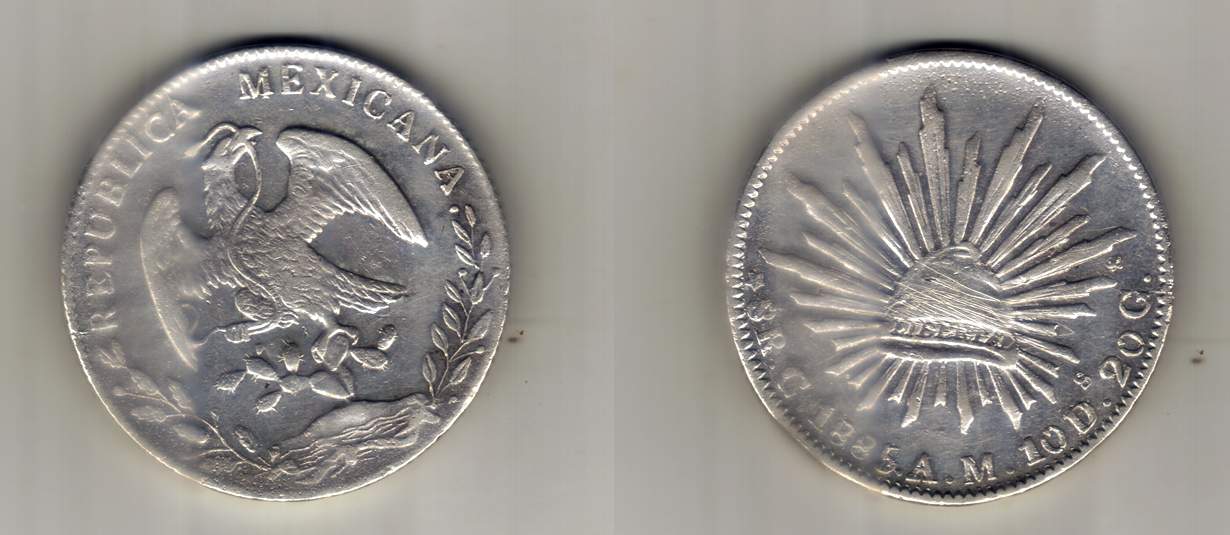 |
|
Valued Member
United States
115 Posts |
Great thread thanks especially to the replies of Swamperbob and the awesome closeups from Drakemeister. Very impressive well-struck coin!
|
|
Pillar of the Community
United States
5362 Posts |
drnsreedhar Very interesting coin. The 1885 C is the last date for this branch mint when a single letter was used for the mint mark. The two letter format (one large and one small) had been adopted in Culiacan in 1874. Culiacan was the LAST of the branch mints to adopt the two letter mint mark. The 1885 issue and the 1881 issue which also had a one letter variety were likely die cutting errors. The mint never actually reverted to one initial. There are similar errors seen at Zacatecas.
In 1885 there is also a Gn mint variation recorded in Dunigan. So 1885 was an "odd" year at Culiacan with TWO serious and collectible die errors.
Your coin may be one of the scarce die errors or it may have been altered from an original Cn. The critical area of the coin is out of focus. The reason I suspect an alteration is the overall condition of the coin. It has been cleaned (apparently chemically) and there is extensive mechanical damage to the cap. As a Cn it is a bullion coin. But as a C it would be scarce and command a premium. Damaged coins are often targeted for alteration because they have NO collector value over bullion.
Check the area around the mint mark VERY closely looking for evidence of tooling. Also if possible post larger pictures that are in focus.
|
|
Valued Member
United States
426 Posts |
drakemeister
Mintage info on early date Mexican 8R's are hard to come by, the only site that had partial facts was mexicancoinmagic but the mintage figures on silver 8R's has not been recuperated. Quote:Just purchased on ebay (I know, prob. a bad move). Not necessarily, if you know what to look for and do your homework on counterfeits you can still find nice original pieces on ebay. If this is your first cap & ray purchase then welcome to this awesome and unique part of coin collecting. Just the fact that there is so much variance in the styles depending on what mint they were struck at makes this series very appealing to some people.
Edited by RealPeso
11/08/2011 12:32 am
|
| |
Replies: 10 / Views: 3,490 |
|







 Posted 08/27/2011 4:09 pm





