| Author |
 Replies: 23 / Views: 2,838 Replies: 23 / Views: 2,838 |
|
New Member
United States
6 Posts |
Edited by Matt_Oneill_Sr
01/18/2017 5:03 pm
|
|
|
|
Pillar of the Community
United States
3360 Posts |
 to CCF, Matt! I am anxious to see what folks think of this!  |
|
New Member
 United States
6 Posts |
Thanks, Pete! Can't wait to hear what people think! :)
|
|
Pillar of the Community
United States
2775 Posts |
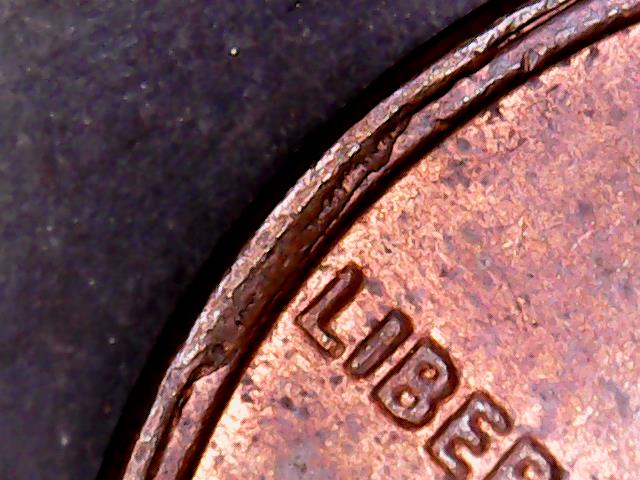
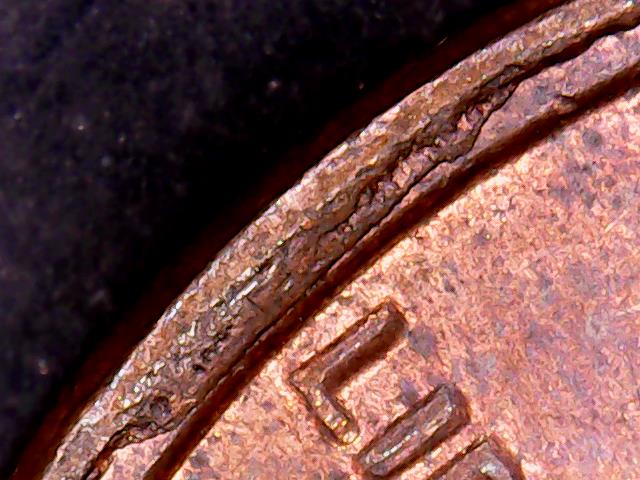
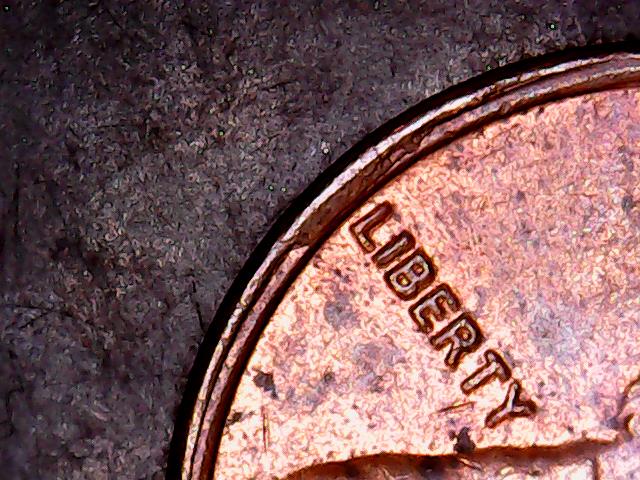
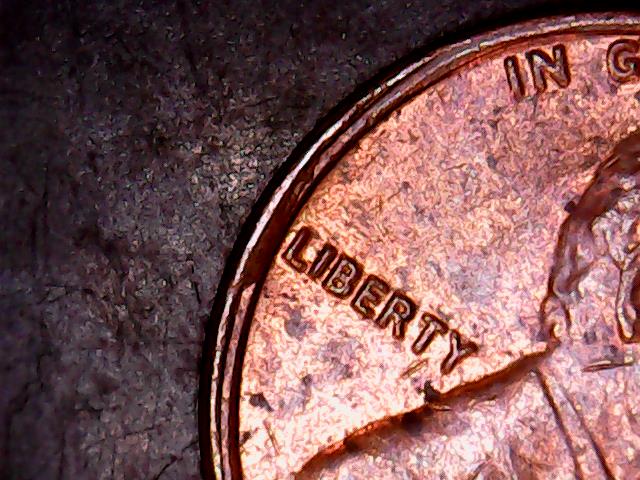
It seems to rise above the inner design rim so I think rim Cud is plausible. A misaligned strike often creates a double or false rim effect, which sometimes results in partial filled gaps resembling rim Cuds. The irregular shape of this one on the design rim makes me think genuine. Note I'm not an expert. Thanks, Doug. |
|
Pillar of the Community
United States
3656 Posts |
|
|
Pillar of the Community
United States
3360 Posts |
I am having difficulty visualizing what is happening here. Perhaps it is because I cannot visualize what exactly happens with a MAD. With a MAD, I guess that the "Rim" which forms outside the design rim is from the outer portion of the planchet and is contained by the collar. Since the design rim is involved in the die break, that metal against the collar rises as high as the metal of the Cud (or higher) at the design rim. Am I understanding that correctly? Please correct me! |
|
Pillar of the Community
United States
3360 Posts |
Thanks for the reminder, CoinCents. It is interesting when you look at CU-1c-1982-17(LD) Rim Cud, the Cud is not only on the design rim, but also is on top of the outside rim, too, of that MAD. That is what is confusing me! Same thing with CU-1c-1982-30(SD)(Cu) Rim Cud and with CU-1c-1982-32(LD) Rim CudOne that is similar happens to be my coin (which I was too senile to remember ) CU-1c-1982D-42(LD) Rim CudEdited by Pete2226
01/18/2017 3:25 pm
|
|
New Member
United States
6 Posts |
You are right Pete, The example in question and your example CU-1c-1982D-42(LD) Rim Cud are quite similar! It is odd that mine does not seem to match up %100 to any of the listings... wonder if this is a new discovery or maybe labeled as something else? |
|
Pillar of the Community
United States
3656 Posts |
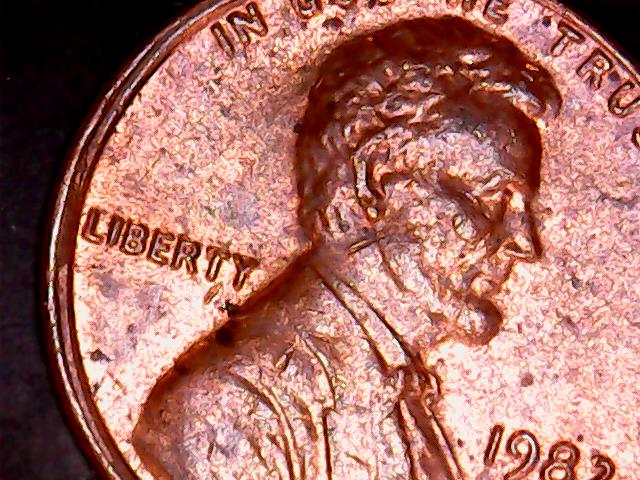
Matt can you please post a full shot of the Obverse? Pete - You sent me back to studying the ones listed on COC. The one I thought it was closest to was: CU-1c-1982-44(LD)(Cu) Rim Cud though your is close as well but not MAD. Quote:Rim Cud, the Cud is not only on the design rim, but also is on top of the outside rim, too Most of them are like what you mentioned above, except yours and this one. Look at CU-1c-1982-52 this is a full Cud but seems to be slightly separated from the edge of the outside rim. However, looking at the OP's image # 4 it is similar to the ones I have for folded over and or flattened fin and in this shot you can see the extra height on that side of the coin and how it goes from 1 rim splits into 2 and then back to 1 - also an indication of a misaligned die - which is why I thought it closer to the #44. Each one like this is always a new learning experience. I am really horrible at being able to write in the proper terminology to explain what I want to say. So hopefully I did Okay (if I didn't you can give me the  ) Edited by CoinCents
01/18/2017 4:30 pm
|
|
Pillar of the Community
United States
3360 Posts |
Quote:
wonder if this is a new discovery or maybe labeled as something else? I would suggest that you send your photos to JC. He may confirm that it is a Cud and want to list it. I know he is well behind working through his E-mails now so don't expect an immediate response! |
|
New Member
United States
6 Posts |
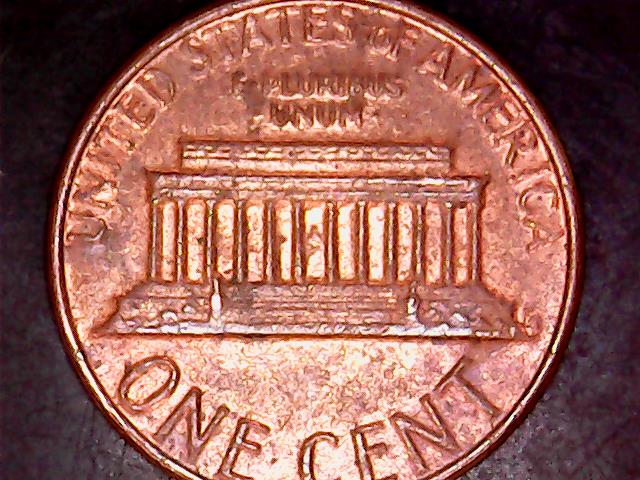
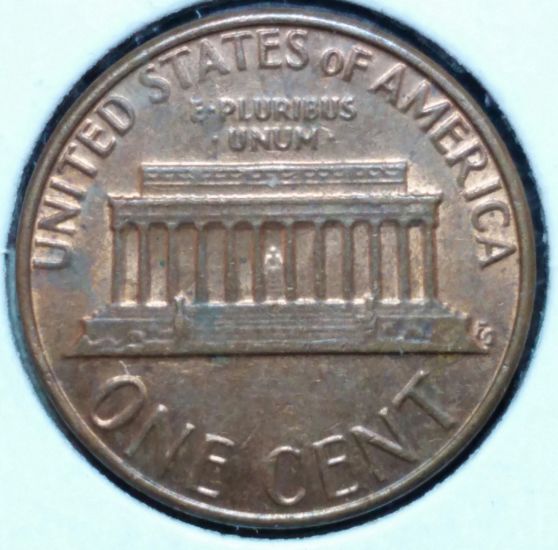
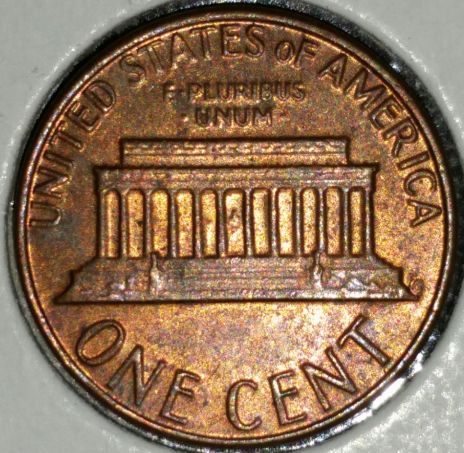
Sorry, I am just getting the hang of this... Posted a couple pictures of the reverse, hopefully they're good enough! I had to use my phone camera and the lighting is less than ideal...
|
|
Pillar of the Community
United States
2563 Posts |
Looks like a keeper to me! Nice one!  1800th Post! 1800th Post!Edited by CoinCollector2000
01/18/2017 6:41 pm
|
|
Pillar of the Community
United States
2775 Posts |
In most cases or my minds eye, I try to become the die and not so much the coin. The result of a coins strike in most cases is derived from the dies state, condition or location. When the hammer die is misaligned the actual design rim is now moved inward over the planchet to be struck. To me this equals loss of containment to one side of the dies strike. Thats pending the collar is still providing outward containment, which equals or maintains the diameter. Just because the hammer die is misaligned, this does not allow or equal more outward flow, but more upward along with back flow effect. This all happens in a fraction of a second, and can result or be one of the more common causes in an appearance of a second or false rim due to the die being shifted over leaving a gap and more area to (back) fill. Sometimes the back fill completes filling the gap and sometimes not. That would depend on applied pressure or time allowed for the strike. Technically a gap like this could be called a fin, because there is a means for material to flow upwards into the gap. Though I think a true Rim Fin is tapered thin and extends or extrudes upwards from the outer edge of a properly or a near perfect aligned strike. A rim Cud to me should rise above the actual design rim as thats the area that has been chipped or broken away from the die itself. False rims from misalignment strikes do not equal broken die, though can result along side of one. Note the actual design rim should not be, but often is confused with the false rim on misaligned strikes. A partially filled gutter, gaps or folded pushed over outer rim anomalies are not considered true rim Cuds to me, unless it includes and rises above the actual design rim itself. Note: below (die image) the design rim around the outer edge or parameter. Thats where the break needs to be contained to be considered a rim Cud. If the field is involved then considered a full blown or regular Cud. If the die is misaligned showing a false rim the facts remain the same for me to conclude rim Cud. The outer edge of the die itself needs to be broken. Except now you have to take into account the actual design rim is moved inward and the false rim is not actually part of that. Thanks, Doug. 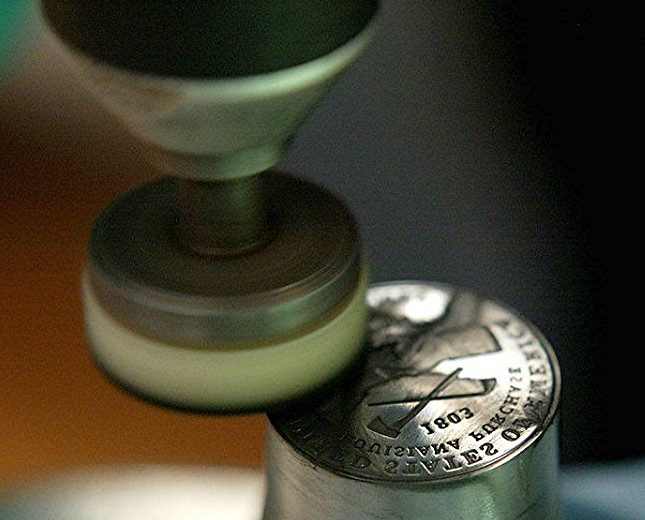 Edited by Halo1st
01/18/2017 10:47 pm
|
|
Pillar of the Community
United States
3656 Posts |
Excellent write up on this Doug, Thanks for taking the time to do it.
I look forward to the day when I can write up something as good as what you have done.
|
|
Bedrock of the Community
United States
62064 Posts |
I coming to a new line of thought on these. Note the rim on this die? Do you see the step down on the edge of the die? What if there were some grease in that location? Would that not affect that area? It could prevent the inside edge of the rim to be affected. But in order for this to happen it would need something to hold the grease in place during the strike. That is accomplished by the collar holding the grease in that location. To me that sounds more plausible for the rise of the rim on the inside part of the coin. If it were broken off the die, then the higher than the outside rim? Thus when see on Cuds the extra height on the outside edge of the coin because of the missing metal. (but this is something I've been mulling in my mind) No one else has considered this that I know of yet. |
|
Pillar of the Community
United States
3360 Posts |
Interesting idea, coop. It is digging in to what has been bothering me about this one (and the one I found a while back and forgot!  ). Even without this, I am still having difficulty understanding how the 2 rims form on a MAD with the outside rim higher than the inside rim. Perhaps if I understood that better?  I wonder if anyone is artistic enough to sketch that out in a diagram (a diagram of Doug's excellent explanation). Then we could add the cud/whatever-it-is to the drawing and see how that fits/doesn't fit with a broken die. Thanks for that explanation, Doug - - - I may have to save that and read it several more times - and even reference it in other discussions!  Edited by Pete2226
01/19/2017 06:22 am
|
| |
Replies: 23 / Views: 2,838 |









 Posted 01/18/2017 2:37 pm





