









 Posted 09/05/2008 6:24 pm


Hi,
Let's start with the second part first. Depending upon how many Schuler edge-lettering machines are in service at one time, there will only be a percentage of coins that have the same anomaly or anomolies. All the coins are not rolling through the same machine.
Also, the rolls are not necessarily comprised of coins struck by the same dies, rolled through the same edge-lettering machines or even struck on the same day.
The coins are struck by numerous dies, placed in huge bins, are then brought over to edge-lettering machines, then have the edge-lettering applied then fall into huge bins again.
Whether in bins or in huge bags (I am not sure of the containers used ) they are then warehoused for a short period of time. They are then shipped to coin counting and rolling facilities that are contracted by the Mint. In the case of the Dollar Coins...N.F. String & Sons prints the wrappers and boxes that are then used by contracted counting companies to wrap the coins. Contrary to popular belief, String & Sons does not wrap the coins. The coins are wrapped by a company called Coinwrap, Inc. You will actually see a CWI number on a box of dollar coins where the Inspection number is stamped. That indicates the Coinwrap, Inc. plant location that wrapped and boxed the coins.
So with all the movement and mixing of coins after they are struck, finding 2 out of 250 coins would actually translate into a very high number of coins being out there, whatever the anomaly. Finding 2 out of 25,000 might be a big deal. 2 out of 250 (ten rolls) would be common.
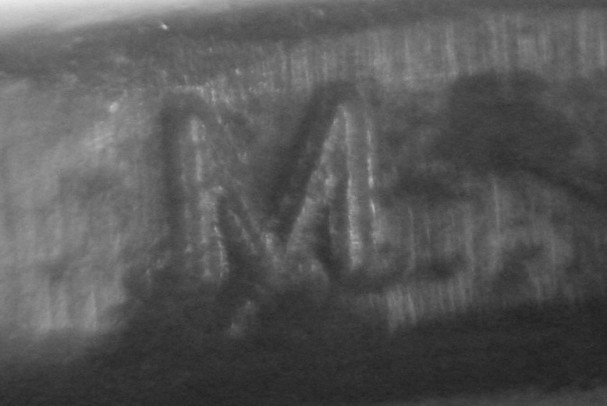
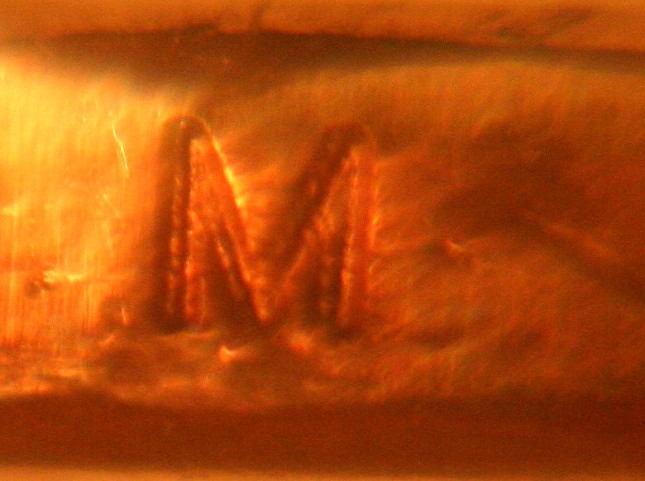
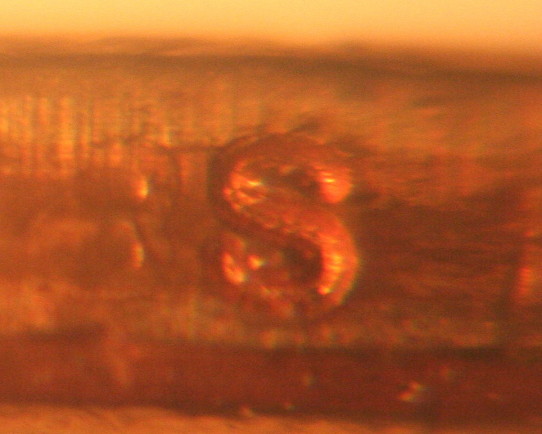
The other part of the question can be explained , in a sense, as Machine Doubling damage on the edge lettering.
To back up the truck a little bit, Proof Presidential dollar coins are struck employing a collar that strikes the lettering into the edge of the coin at the same time that the coin is struck. I just wanted to point that out with respect to the proof coins.
Coins struck for circulation are struck in a traditional way to impart the obverse and reverse designs to the coin. There is a collar in place that is smooth. There is no edge lettering on the collar when the obverse and reverse of the coins struck for circulation are struck.
After this part of the operation, coins are moved to the Schuler edge-lettering presses where the lettering is applied as the coins roll through the machine.
Essentially a vacuum like nozzle sucks the coins into the machine where the coins are fed against a wheel that drives them past the die with the edge lettering on it. The coins are randomly fed so that they may be reverse side up or obverse side up. Also, wherever the coin hits the lettered die first is where the lettering starts. This happens at about 1000 coins per minute. That's between 16 and 17 coins per second.
Any shake of the coin as the coin is going through the machine can result in a coin that looks like yours. Any minor discrepancy in the diameter of the coin can allow for a little play as the coin goes through the edge-lettering machine. In the same ways that Machine Doubling damage occurs on the raised lettering of a struck coin, it can happen on the recessed edge lettering.
I've looked through about 20,000 Presidential dollars and many of the edges look like this.
So, a recap...2 out of 250 is a huge number in the overall scheme of things and a little movement of the coin as it passes through the machinery will cause the kind of doubling you see.
I hope this helps.
Bill
Let's start with the second part first. Depending upon how many Schuler edge-lettering machines are in service at one time, there will only be a percentage of coins that have the same anomaly or anomolies. All the coins are not rolling through the same machine.
Also, the rolls are not necessarily comprised of coins struck by the same dies, rolled through the same edge-lettering machines or even struck on the same day.
The coins are struck by numerous dies, placed in huge bins, are then brought over to edge-lettering machines, then have the edge-lettering applied then fall into huge bins again.
Whether in bins or in huge bags (I am not sure of the containers used ) they are then warehoused for a short period of time. They are then shipped to coin counting and rolling facilities that are contracted by the Mint. In the case of the Dollar Coins...N.F. String & Sons prints the wrappers and boxes that are then used by contracted counting companies to wrap the coins. Contrary to popular belief, String & Sons does not wrap the coins. The coins are wrapped by a company called Coinwrap, Inc. You will actually see a CWI number on a box of dollar coins where the Inspection number is stamped. That indicates the Coinwrap, Inc. plant location that wrapped and boxed the coins.
So with all the movement and mixing of coins after they are struck, finding 2 out of 250 coins would actually translate into a very high number of coins being out there, whatever the anomaly. Finding 2 out of 25,000 might be a big deal. 2 out of 250 (ten rolls) would be common.
The other part of the question can be explained , in a sense, as Machine Doubling damage on the edge lettering.
To back up the truck a little bit, Proof Presidential dollar coins are struck employing a collar that strikes the lettering into the edge of the coin at the same time that the coin is struck. I just wanted to point that out with respect to the proof coins.
Coins struck for circulation are struck in a traditional way to impart the obverse and reverse designs to the coin. There is a collar in place that is smooth. There is no edge lettering on the collar when the obverse and reverse of the coins struck for circulation are struck.
After this part of the operation, coins are moved to the Schuler edge-lettering presses where the lettering is applied as the coins roll through the machine.
Essentially a vacuum like nozzle sucks the coins into the machine where the coins are fed against a wheel that drives them past the die with the edge lettering on it. The coins are randomly fed so that they may be reverse side up or obverse side up. Also, wherever the coin hits the lettered die first is where the lettering starts. This happens at about 1000 coins per minute. That's between 16 and 17 coins per second.
Any shake of the coin as the coin is going through the machine can result in a coin that looks like yours. Any minor discrepancy in the diameter of the coin can allow for a little play as the coin goes through the edge-lettering machine. In the same ways that Machine Doubling damage occurs on the raised lettering of a struck coin, it can happen on the recessed edge lettering.
I've looked through about 20,000 Presidential dollars and many of the edges look like this.
So, a recap...2 out of 250 is a huge number in the overall scheme of things and a little movement of the coin as it passes through the machinery will cause the kind of doubling you see.
I hope this helps.
Bill
Edited by foundinrolls
09/05/2008 6:30 pm
09/05/2008 6:30 pm


