| Author |
 Replies: 16 / Views: 14,267 Replies: 16 / Views: 14,267 |
|
New Member
United States
3 Posts |
What is a die break?
|
|
|
|
Pillar of the Community
United States
642 Posts |
When coins are minted, they are done so with metal dies. When they press the dies against the blank coin planchet, over time the die can crack and break. Especially with harder metals(Nickel). When a die has cracked but is not yet broken enough to be removed from service, the cracks and breaks appear on the coin.  |
|
Valued Member
United States
230 Posts |
Welcome to CCF Soclose42! rjkingston is exactly correct with his definition. All I can add is a few illustrations. The first photo is from an 1867 Shield nickel. The faint line running through the bottoms of the letters is a die break. The second coin is an 1866 Shield nickel and the die break can be seen running from the edge of the coin through the bottom devices of the shield, through the right arrowhead and on to the edge of the coin. Some times they can be quite dramatic as in the last photo. This one runs about a third of the way around this 1837 Half Dollar, from the C in Cents roughly parallel to the rim all the way to the first S in States. Hope this helps. 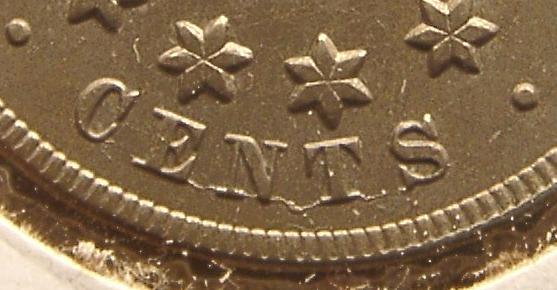 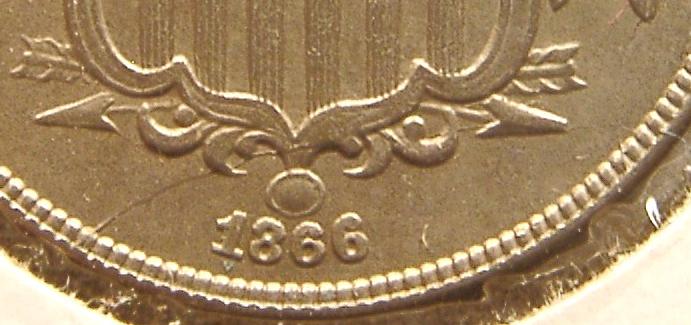 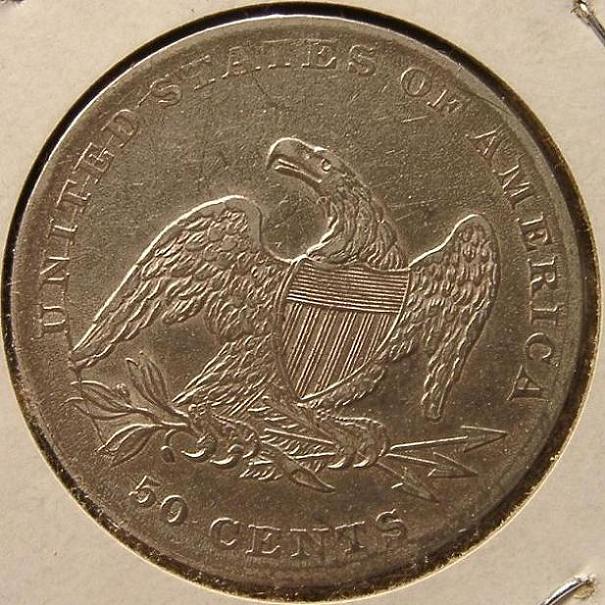 |
|
New Member
 United States
3 Posts |
Does it make the coin more valuable?
|
|
Valued Member
United States
230 Posts |
Typically, no. I have heard of people collecting particular examples and any additional value is in what the collector would pay. For example, I have heard of someone collecting Large Cents with a single die break connecting all the stars. One notable die break that comes to mind is on the 1861-O Half Dollar. After the Civil War started, the New Orleans mint kept minting them for the South even though they still said USA on them. One particular die break is tied to coins struck under the Confederacy and so is "proof" that it is a Confederate Half. In that example the premium isn't in the die break itself but in it's historical connection.
I hope more people have something to add to this answer.
|
|
Pillar of the Community
 United States
1551 Posts |
A crack -vs- Break is a big deal. Stress fractures as seen as light breaks on most coinage. Where a Break will be seen with the naked eye and has metal coming up from the fields or devices. Notable Die breaks with a bunch of added value would be the 1888 O Morgan Scarface. The late die state of this coin in mint state is far from cheep. It has a die break that as the die state runs it's course, almost looks like the coin will break in 2. There are people that collect what is seen as "TERMINAL DIE BREAKS" This is when the working die would not of minted many more coins, as the die would fully break or explode. As far as rarity mint state coins would carry a premium much like other type collectables. It will and would come down to How Broken and what grade. In many coin types you find given years where a coin becomes very grade sensitive. This is seen in many different years in the Morgan dollars. A 1880 S or 1881 S Morgan can be found in a MS-65 very easily and even in 66 and 67 without really looking. But change where that same year coin was minted and all bets are off. The total Population between PCGS and NGC of the 1880 P totals over 25,000 coins graded, the total number of MS-66 coins is less then 125 coins in total and that would not of had any cross-overs subtracted from that total. The total numbers of MS-67 in the 1880 P is ZERO! Anyway! How broken a die is and the condition of the coin, plays a big part in value! Edited by twohawks
12/23/2011 6:21 pm
|
|
New Member
United States
28 Posts |
Here is a picture of a 1957 Wheat penny. Looks like a true die break. What do you think. Both on obverse and reverse. 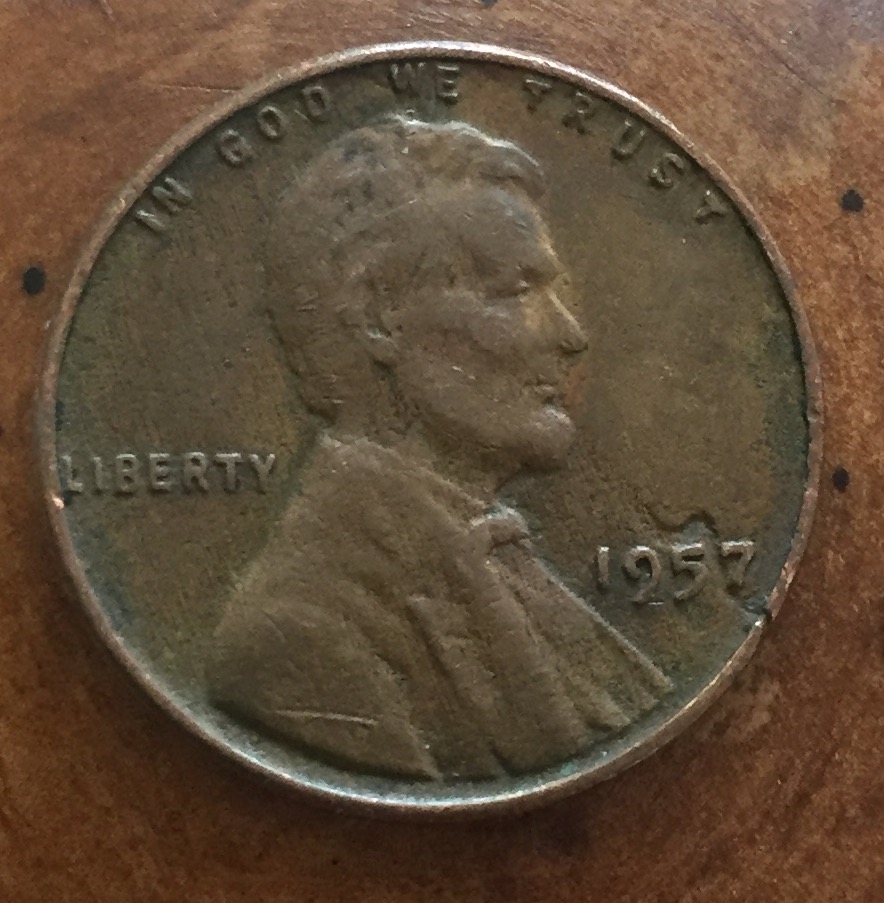 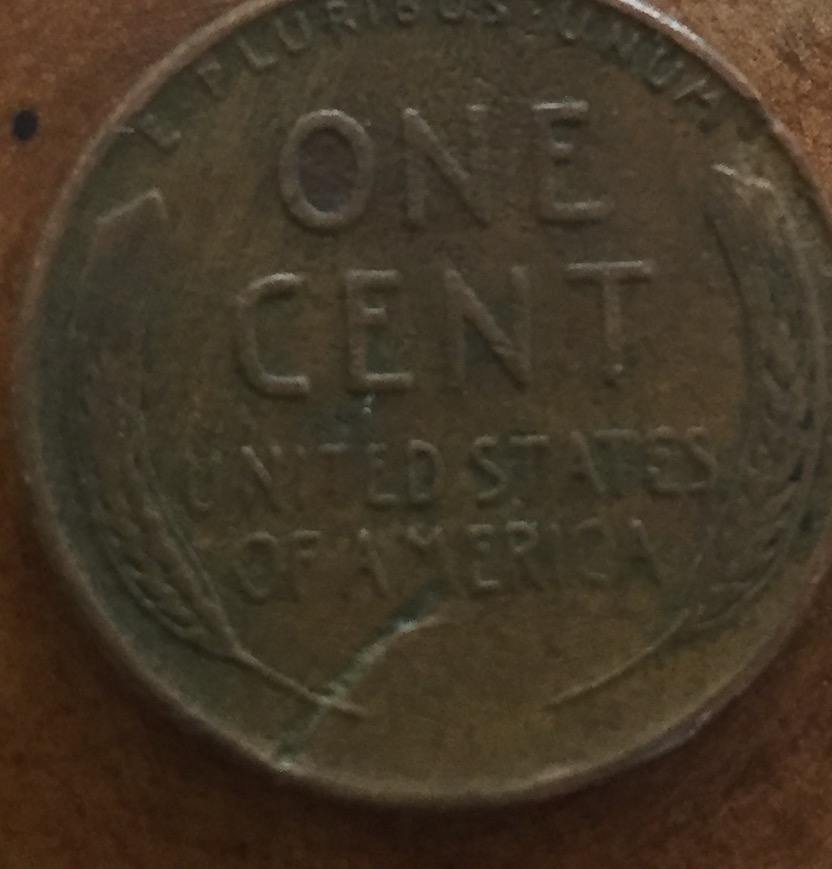 |
|
Pillar of the Community
United States
1314 Posts |
I tend to think the Lincoln Cent shows a strike through. Imagine a thread or wire getting placed between the die and planchet just before the strike. Later, the foreign particle falls out leaving an impression on the coin. Sometimes the foreign material is just die grease. |
|
Rest in Peace
United States
637 Posts |
Yes, die breaks are raised, not incuse.
|
|
Moderator
 United States
54297 Posts |
This is a die crack on a 1948-S which sold for $7.95 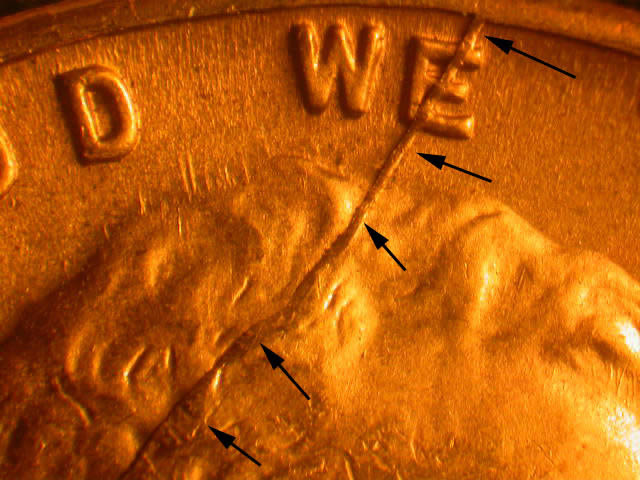 Show your financial support of the Coin Community Family (click here)See my topic on Mexican Numismatic Medals (click here) |
|
Pillar of the Community
United States
4085 Posts |
I don't think die cracks or breaks add value but they do add interest for some collectors, with certain types of breaks possibly adding to the desirability and hence value of the coin. This would mostly be a subtle difference in value.
|
|
Bedrock of the Community
United States
12437 Posts |
The coin posted on 11/12 suffers from environmental damage(rough porous surfaces), not a die break or strike-through.
|
|
Pillar of the Community
Canada
1747 Posts |
|
|
Formerly nancyc
Australia
5385 Posts |
ace_ftw, what year and denomination is the Canadian coin?
life is a mystery to be lived not a problem to be solved
|
|
Pillar of the Community
United States
2703 Posts |
1654 France Louis XIV Ecu with long curl for Bearnobverse die state I (headache)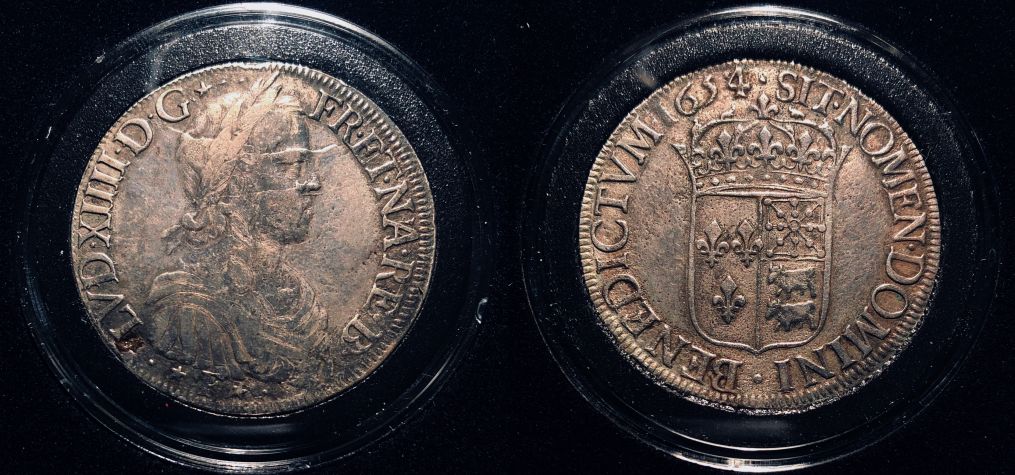 obverse die state II (migraine) obverse die state II (migraine)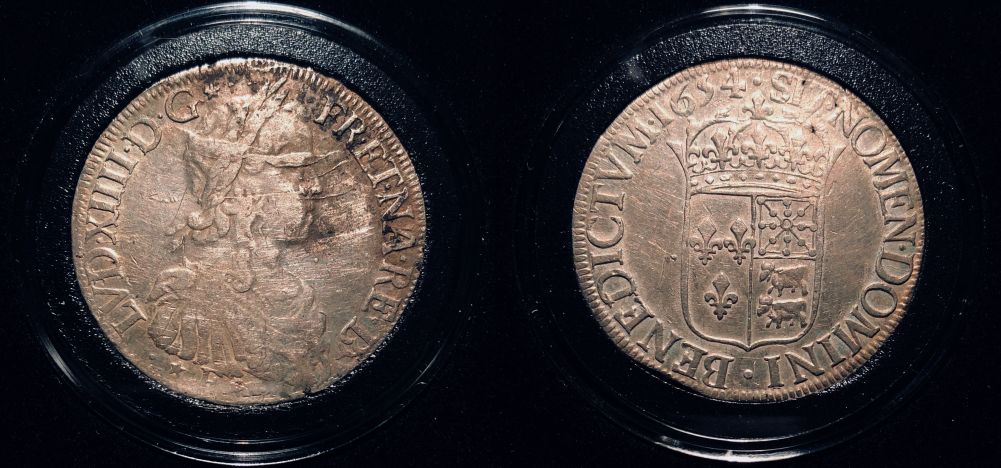
|
|
Pillar of the Community
United States
2703 Posts |
A slightly earlier obverse die state from a recent Inumis sale 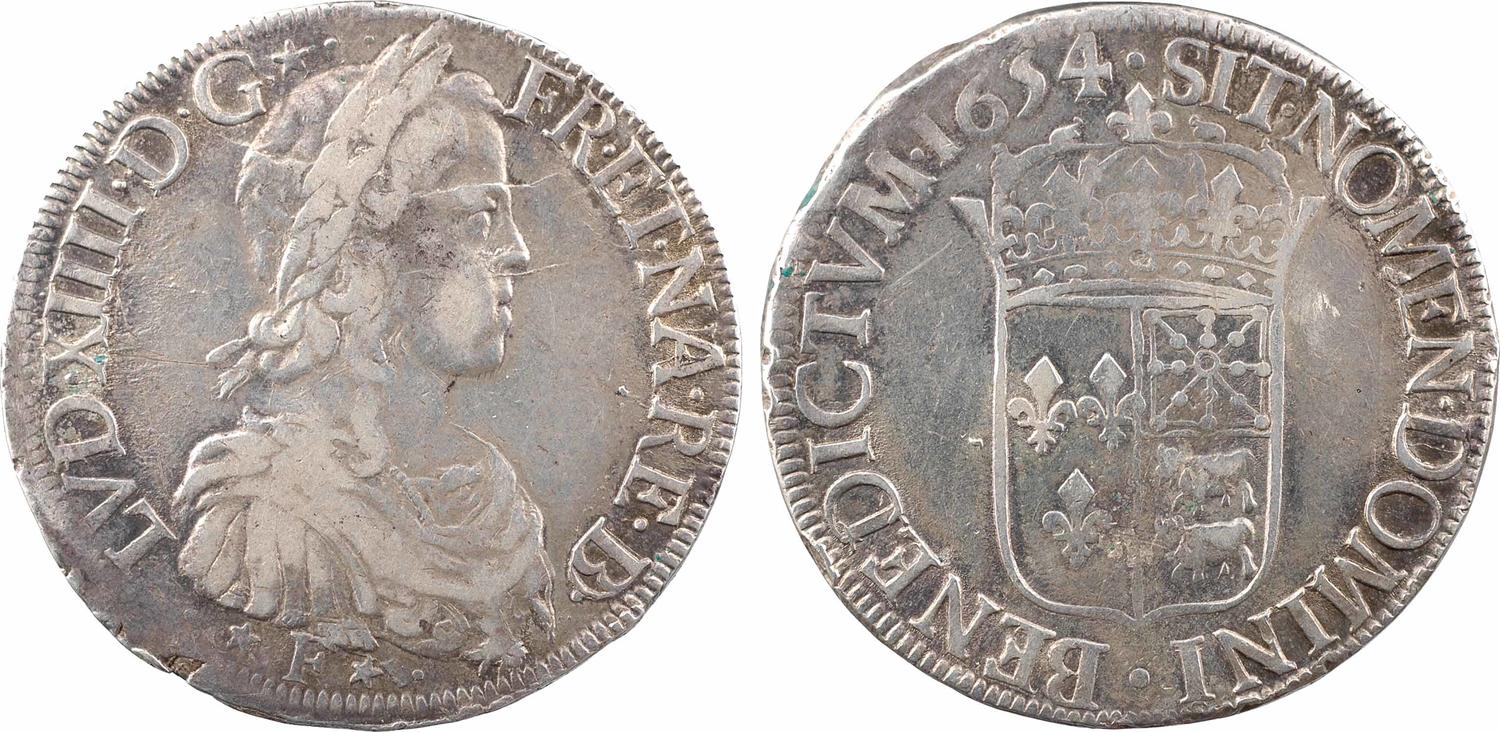 Edited by t360
04/27/2019 08:49 am
|
| |
Replies: 16 / Views: 14,267 |








 Posted 12/23/2011 08:59 am


