Briefly Sheffield plate can be thought of as the first Modern Clad coin or an industrialization of a Roman Fouree technique rediscovered by accident.
Roman forgeries (the fourees) were made by putting a silver foil over a copper core and striking the three layers together to produce a mechanical bond.
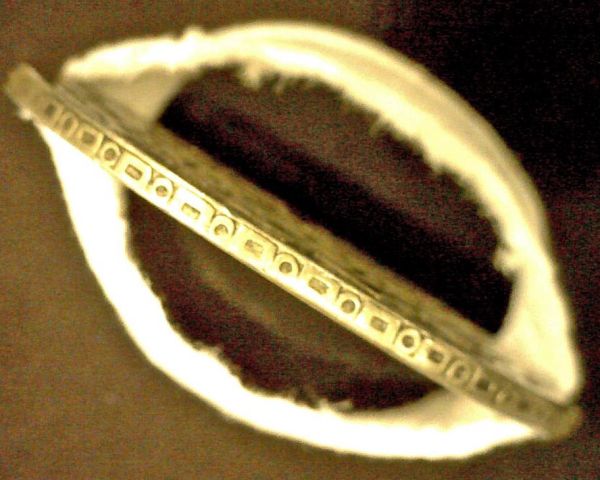
The Sheffield plate process welds two silver layers to a copper ingot (fillet size) using heat or rollers to make a bonded or welded material that rolls as a unit with all three layers stretching proportionately. Core metals changed over time but the need to create a fusion of materials that would draw without cracking one layer did preclude some matings of metals.
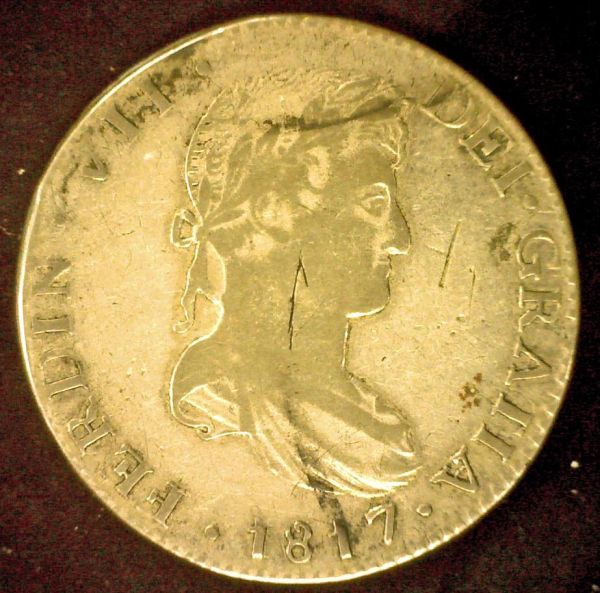
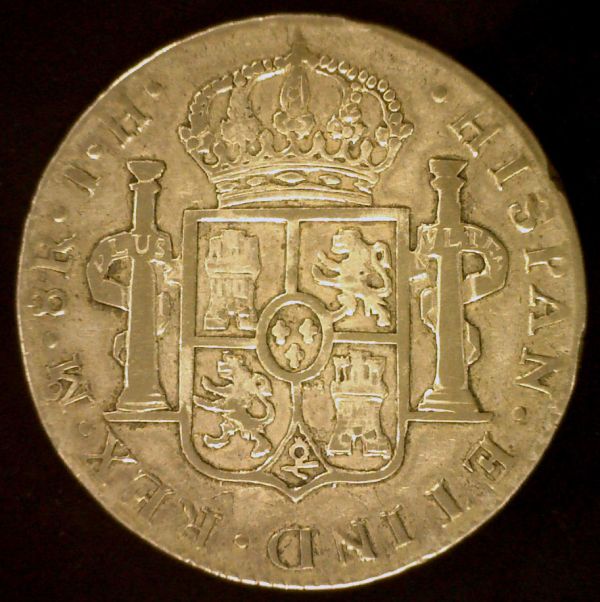
Done correctly it produces a great fake until wear or a test cut goes through the silver plate. Uncut Sheffield's are prizes - John is correct about some of them being in slabs already.
The value of a Contemporary Counterfeit is based on what the buyer is willing to pay and the dealer's understanding of what he has. There are NO red books for counterfeits and no weekly trends. It is not an area of collecting that is plagued by the Sheldon scale or speculative investors.
When I started collecting counterfeit 8R's back in the early 1960's they were things no one wanted. Being a teenager I didn't have a lot of money so it was perfect for me. Over time I came to appreciate that many of the early counterfeits APPEARED ONE TIME and then were gone. I learned never to turn one down - as long as I could afford it (beg, borrow or steal that is).
I remember a particular counterfeit an 1825 Mo that was sold 36 years ago in a Boston auction (November, 1976). At the time, I never paid much over $5-6 for any counterfeit 8R because it was the "prevailing" market price in New England and New York. This one was special - high grade VERY distinctive crude die. Only two bidders once it past $3 - me and a much older fellow (I did not know him but he was not a local - a south westerner based on his accent). I decided to outbid the guy - but had to give up when the bid got to $80. I was making less than $200 a week and my wife would have "killed me". My previous high was $25 which I thought was a rip off price. So I said to myself "another will turn up" and stopped bidding.
But the point of the story is what the old fellow said after the auction that in his experience the coin was UNIQUE and I would never see one again.
So far, he has been correct. I have never seen one like that since - and I HAVE hunted for 36 years.
Today you see JUNK counterfeits priced at astronomical prices - because the owner "THINKS" they are old rarities when in reality they are junk and CCC's still priced under $10 because the owner thinks they are Modern Junk and he does not know what he has.
This happens because there is a VAST VOID in the collective Numismatic community about the true rarity and potential for interest in the older historic circulating counterfeits.
The only solution is to publish the facts as we can dig them out and hope people start to appreciate what they are. But old mindsets are hard to break.
The Sheffield's of your type were originally made in VERY large numbers and are the ONLY type in general (made before 1830) which I would call "common" but that is by Counterfeit (CCC) standards. A Common CCC coin means there may be 50 survivors.
Recalling earlier threads on value - at this point - it must be said that RARITY alone is not a price setter. Interest is what increases value.
But on average, if I was bidding on
ebay for something like your coin I would Hope to get it for $60 (reasonable) but not be surprised at $120 (full value) and not be really mad at $180 (overpriced). But if I believed the coin to be unique and distinctive my bid would be MUCH higher.
I already happen to own the type but yours would be an upgrade for me.









 Posted 09/27/2012 10:37 pm





