The ratio of Class 2 to original 8 reales is a question I have been pondering for some time without coming to a satisfactory resolution. I recall sorting a group of 1000 portrait 8 Reales that came out of China in about 1970 for a Boston dealer. At that time 8Rs cost about $10 each in bulk. I was to sort out the better stuff for sale. The rest were wholesaled. We took in one bag (1000 coins) per month for a long time.
What I noticed was that a great many coins appeared to be counterfeits based on my early theories about one overlap edges. My thoughts were almost entirely based on stories I heard earlier from a forger who had made 8Rs for a living in the 1920's. This whole episode was almost enough to make me abandon my theory until I spoke to the shop owner who had been in the coin business over 40 years. He said - "I know they are fakes and you know they are fakes but as long as they are silver, I can sell them as genuine, because no one cares!"
This "secret" was well known in the trade but not publicised at all. It was story for which no HARD proof seemed to exist. Just stories.
Recently, since the Internet and the publication of numerous old rare reprints in hardcover and on CD, facts have come to light that point to the probability that Class 2 coins actually outnumber the originals substantially. The reasons are tied to how the coins were treated after they reached China in the first part of the 19th century.
Nearly everyone knows that "Buddha Dollars" (aka Bustman Dollars or Carolus dollars) were preferred by the interior Chinese tea and silk merchants. It is also well known that this preference could not be satisfied by mint output after 1812 when the output of Carolus dollars ceased. In fact, by 1804 speculation in Carolus Dollars stripped the US of so much silver that all US dollar coin mintages were stopped.
By 1825 a premium of 15% over silver content was AVERAGE for an unchopped high grade Carolus 8R.
Couple this with the fact that the majority of silver coins imported into China before 1838 (mostly 8Rs) were melted into the sycee ingots and you end up wondering how any real ones were left at all. After 1838 a need for export of coin silver arose and the 8Rs were not melted in such great numbers.
By 1838, it is very likely that the 8,000,000 Carolus coins per year which were needed to balance trade payments were Class 2 coins - NOT originals. So the survival rates after 1838 favored the Class 2 coins as well.
The trade of Class 2 coins persisted until at least 1920 and likely until 1935. So how many coins went into China and when and how many came out is critical information no one seems to possess.
We do know how many 8Rs were made by Mexico, Peru and Bolivia and the total of all these mintages COMBINED is not large enough to satisfy the demands of China during the 1812 to 1930 period of time. Not enough Carolus coins were made in all the mints combined.
The key to determining the survival ratio lies in the import and export archives for Canton and Shanghai. If the records were kept (I fear that is a very big if) then the raw numbers of imports and exports could be determined. If production of sycee were recorded somewhere as well these could be deducted. Then to the official numbers you need to estimate the number of Portrait 8R coins smuggled into China from 1856 to 1935 and the number made IN CHINA itself. You see in 1856 the Mexican Eagle Dollar was formerly recognized as the standard for currency transactions and was officially placed on a par with the Bustman or Buddha dollar. After 1856 a duty was levied on the Carolus dollars to stop their import.
Interdiction of smuggled shipments are recorded into the 20th century - so avoiding the import duty was an incentive to smuggle the prized coins INTO China even after 1900. By 1900 the premium value attached to the unchopped MS grade Carolus dollars was 26% over silver.
The peak premium recorded was 80% OVER SILVER MELT for a Carolus Dollar. The incentive to forge (re-strike unofficially) was enormous.
This is an area that I hope my book (which covers all the facts in detail) will spark additional research. I have over the past 30 years dug out all the facts I could. Someone needs to carry on. The facts are sketchy but taken together they do paint a rather complete outline of a vast international undertaking that eventually produced 10's if not 100's of millions of silver restrikes of the Carolus Dollar (Class 2 counterfeits). It is the remnant of these same coins that are now finding their way out of China and right back to where they were made in the US, UK and Europe.
Class 2 coins in the US market today are a good example proving the old adage
Quote:
"What goes around comes around".







 First Page


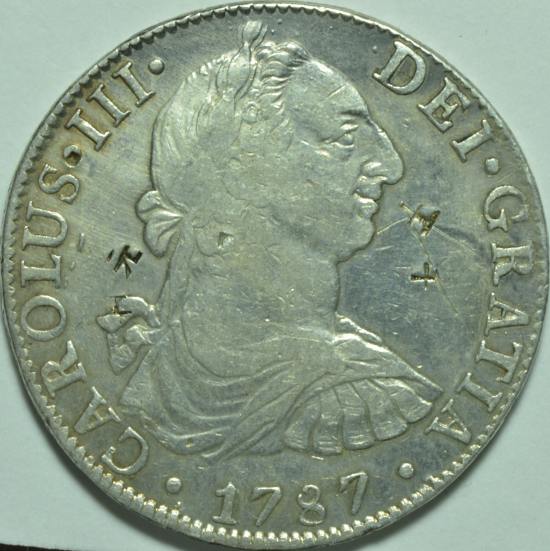
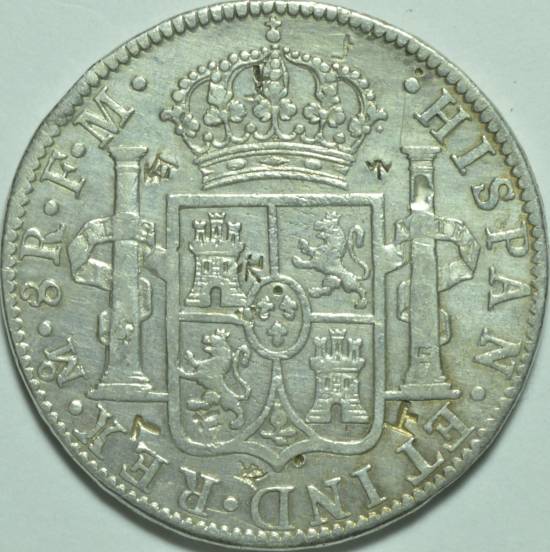
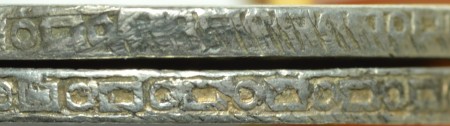
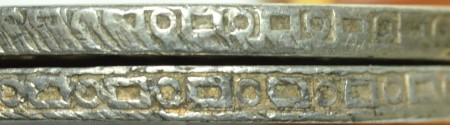


 Posted 04/13/2013 1:14 pm


