| Author |
 Replies: 12 / Views: 2,399 Replies: 12 / Views: 2,399 |
|
|
New Member
United States
5 Posts |
I've had this coin for quite some time but I want to know what it is. I really want to know its story, like where its from, what it's currency is, what year it was made, who made it. If you can help, tell me what it is or point me in a direction I will be SOOOOOOOOOO thankful! Thanks, S.Wriggs 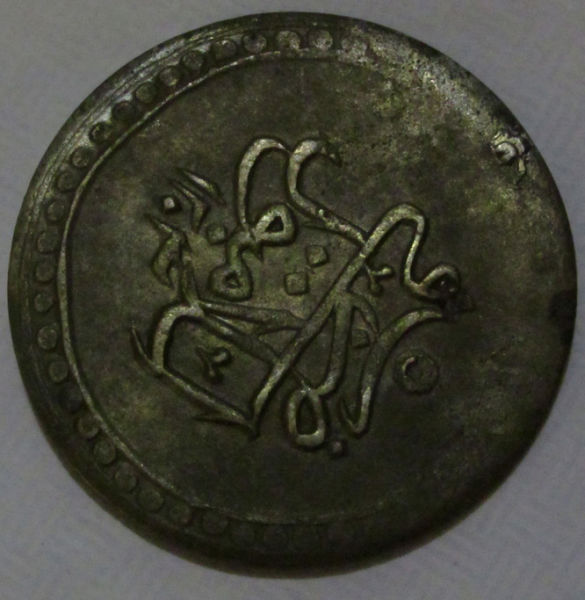 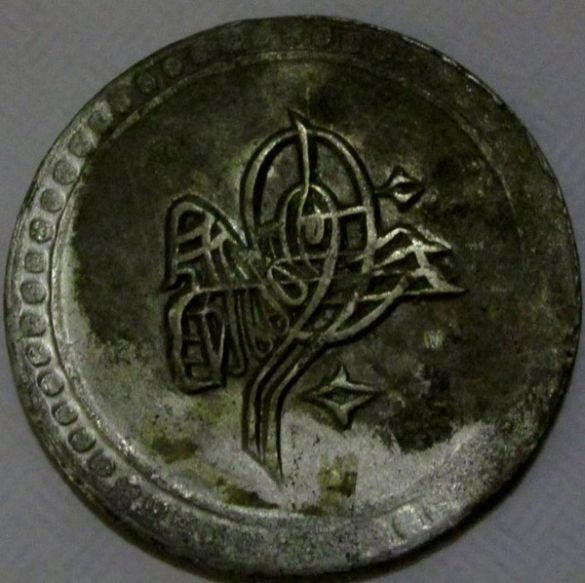 |
|
|
|
Moderator
 United States
14463 Posts |
the Krause image isn't the best, but looks like Egypt 5 Para from 1203 AH (1789 AD)  edit - corrected AD date, I think  |
|
New Member
 United States
5 Posts |
Quote:
Krause what does that mean? |
|
Moderator
United States
14463 Posts |
I was looking in the Standard Catalog of World Coins by Krause Publications. Many times "Krause" is used as a general term for their books, sorry
|
|
New Member
United States
5 Posts |
Oh Yeah,
and what might the value of this be?
|
|
Moderator
United States
14463 Posts |
I have the DVD/CD versions, so they were $25-35 depending on which year range and who the supplier was. The paperback catalogs are $35-65 depending on year range (around 1200+ pages each)
|
|
New Member
United States
5 Posts |
are you sure thats what it is because I am looking at pics online and I cant find one that looks exactly like it.. can you point me in a direction?
link me?
|
|
Moderator
United States
14463 Posts |
|
|
Moderator
Australia
17000 Posts |
The coin is from part of the Ottoman Empire, but not from Egypt. The mint name is on the reverse (non toughra) side, written in Arabic - "struck in Islambul", an early Ottoman name for Constantinople/Istanbul. You will find this coin listed under "Turkey" in the Krause catalogue.
But for a more precise identification, you'll have to tell us how large your coin is. The 5 para, 10 para, 10 para, 20 para, 1 kurush and 2 kurush all have the same design, but different sizes. There is no other indicator or mark of denomination on these coins.
Finally, the date: the "5" above the mintmark is not the denomination, but the regnal year; this coin was struck in the 5th year of the Sultan who came to power in AH 1203 or, in other words, the year AH 1207; this date converts to AD 1792-1793.
Don't say "infinitely" when you mean "very"; otherwise, you'll have no word left when you want to talk about something really infinite. - C. S. Lewis
|
|
Pillar of the Community
United Kingdom
1324 Posts |
Always thought the way to tell these apart was with those little symbols to the right (and in this case the left as well) of the Tougra....
ps. how can any coin be "super rare" if one doesn't know what it is?
Edited by andyg
04/01/2014 6:19 pm
|
|
Pillar of the Community
Australia
852 Posts |
Sap is 99% correct.
The writing isn't Arabic but Turkish.
Arabic, turkish (pre Ataturk), farsi and a few other languages all share a similar alphabet.
No different to English, French and modern Turkish all use the Latin alphabet but are different languages.
|
|
Pillar of the Community
Canada
2805 Posts |
Quote:
ps. how can any coin be "super rare" if one doesn't know what it is? I was also wondering this...  |
|
Moderator
Australia
17000 Posts |
Quote:
ps. how can any coin be "super rare" if one doesn't know what it is?
I was also wondering this... I am assuming Swriggs42 is simply quoting the seller from whom he obtained the coin, presumably unidentified. Don't say "infinitely" when you mean "very"; otherwise, you'll have no word left when you want to talk about something really infinite. - C. S. Lewis
|
| |
Replies: 12 / Views: 2,399 |
|





 Posted 04/01/2014 03:04 am





