| Author |
 Replies: 24 / Views: 5,152 Replies: 24 / Views: 5,152 |
|
New Member
New Zealand
7 Posts |
Hello I 'm new here , I have some 8 Reale coins which I have had for about 20 years, one in particular I would like some opinions on as to authenticity. This is a 1753 Lima mint 8 Reale coin   I will weigh this shortly. Any comments would be appreciated. |
|
|
|
Bedrock of the Community
United States
10284 Posts |
 to CCF I don't know but I found another that looks very close to yours with a bit more detail. Everything looks pretty darn close to me. Here's a link to more info: http://www.coinfactswiki.com/wiki/F...38-0115g.jpgHere's a image I made using that coin and yours for easy comparison. Your's is on the bottom.  Edited by TNG
08/15/2017 11:08 pm
|
|
Bedrock of the Community
United States
10284 Posts |
Everything looks a little bit thicker on yours, maybe as the details on the surface get worn they begin to get flatter and therefore larger. I am 65% for a legitimate coin. 35% I have doubts. Hope an expert pops in.
|
|
New Member
 New Zealand
7 Posts |
The weight is 26.2 grams
I will try to photograph the edge
|
|
New Member
New Zealand
7 Posts |
Thank you for the comparison illustration.
This coin was bought for me as a birthday present , I would like to think it is the real deal :)
|
|
Bedrock of the Community
United States
10284 Posts |
I hope it is real for you as well. I wish that somebody who knows more about these will give you better input than I have. Happy birthday!
Edited by TNG
08/16/2017 09:33 am
|
|
Bedrock of the Community
United States
10284 Posts |
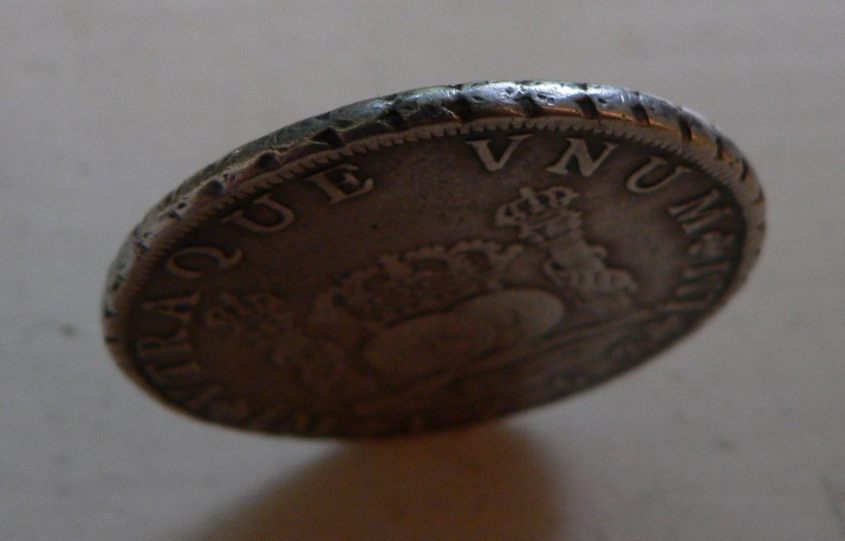
I have now decided that you have a pretty good fake. The denticles appear to be in random groups of 4's and 5's where they should be in more uniform groups all around. The inner ends of those denticles also look to just come to an end and look well, too perfect, where on the real reale of 8, they kind of flow sharply down to the surfaces.
The real points that stick out on the design is the area above the water and below the two hemispheres.
It is missing that infinity shaped detail and it just looks to float there above the water.
The castle base is going into the shield on the right and the lions crown is into the bar above it in the shield.
The R in VTRAQUE has a straight across bar at the leg of that letter.
The color just looks gray to me, like a cast coin. I would bet that on the edge you might see a weak seam.
I am now 85% this is a pretty good fake and 15% ( not even sure ) it might be real.
Sorry but the overall coin you have is just weak in many areas and slightly distorted.
|
|
Valued Member
United States
309 Posts |
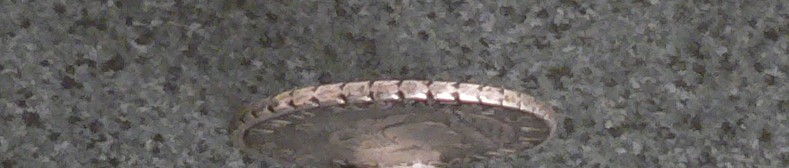
You coin looks good. The third side (edge) should be nicely "tulipped" and have no other design such as chevrons. Yours has "normal M's" in both mint marks which Gilboy says is a rarity of "S2" meaning he thinks more than 100 and fewer than 250 pieces are extant making it very scarce but just shy of rare meaning fewer than 100 pieces known. The regular mint mark was a combination of letters for LIMA having a dot over the "L" to represent "I" and a crossbar in the "M" to represent "A" giving all in a monogram. 1753 was the year that full production using three mills and six presses got going in high gear. The mint master "J" is Jose Rodriguez Casara.
|
|
New Member
New Zealand
7 Posts |
Hello Pistareen, thank you for your comments, the edge is nicely 'tuliped' they are a bit worn and have a patina, I will photograph the edge as this is also important.
|
|
Bedrock of the Community
United States
10284 Posts |
I sincerely hope Pistareen is right and I was wrong. Good luck on nailing this down.
|
|
Pillar of the Community
United States
4883 Posts |
Excellent photographs.
I certainly see details on the reverse that I deem worrisome.
Even allowing for some of the crudity that could occur with Spanish colonial issues of this era, the dentils are overall just awful. The transition from the "H" to the "I" is clearly off. There's a lump below the bar in the "A" that looks wrong. If I were presented this coin raw, I'd have reservations to a point where I'd probably pass on it. That's not to say there's no chance it's genuine, just that these as a genre are notoriously iffy.
What might be definitive in identifying this as a phony would be an analysis via xray fluorescence (XRF), which could also quite possibly distinguish between a modern numismatic forgery and a contemporary counterfeit.
Colligo ergo sum
|
|
New Member
New Zealand
7 Posts |
Edited by Robinson Crusoe
08/17/2017 12:30 am
|
|
New Member
New Zealand
7 Posts |
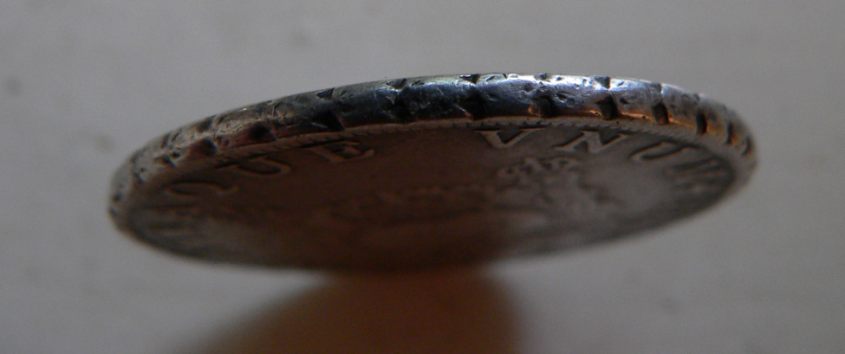
here is a view of the edge
|
|
Pillar of the Community
United States
5362 Posts |
A weight of 26.2 grams is fine for the type. These coins, as were most circulating silver coins based on intrinsic metal value, were made to wear quickly so that a loss of about 5% of total weight would be nearly slick (Fair to Poor using US terms).
When worn - at times the letters can look very slightly thicker due to the shape of a typical punch used to make the working dies. The sides do taper to keep the punches from jamming. Only rarely will this taper be visible without magnification. Here the limit may have been exceeded.
I too am bothered by the way the dentils have worn in. Not enough to condemn the coin but enough to be extremely cautious before making a decision.
I suggest starting with a density confirmation. The coin should have a density of 10.31 if the alloy is correct. You need to get access to an analytical balance accurate to better than 0.01 grams. A range of as much as 0.1 means the coin is very unlikely to be genuine.
Regarding XRF - test a spot that has very little toning or any discoloration. Again, a laboratory test is required to determine the trace contaminants present. Specifically look for gold and arsenic as trace contaminants.
One final issue that causes me to suspect the coin are the raised "lumps" in the fields and the odd discoloration seen on the final edge picture. An origin that can only be traced back 20 years is NOT adequate to preclude a modern forgery. I have run into forgeries of this date as far back as 1990 and they were of similar appearance and were silver.
|
|
Pillar of the Community
United States
1962 Posts |
This whole thread...........  |
|
New Member
New Zealand
7 Posts |
Thank you swamperbob for your comments , it makes me wonder if there any real ones out there ! especially learning that they were forging them in England in the 1790's. 200 years of forgeries kind of ruins the pleasure in collecting these anymore.
|
| |
Replies: 24 / Views: 5,152 |










 Posted 08/15/2017 11:13 pm