| Author |
 Replies: 24 / Views: 2,881 Replies: 24 / Views: 2,881 |
|
Pillar of the Community
Canada
3234 Posts |
Here is a strange cent and how would the experts here describe this cent as ?.. Not a Cud,..and not a woody..  ....although that might be a piece of wood in there..(and there is more inside) ..and what about that split rim crack that goes around the cent. How should I describe this cent ? It was bought complete (as the top pic shows) but with the loose flec of bronze showing but it arrived with that piece missing. It probably being picked off by the seller I'm thinking,.. and this is what I received..It wasn't in the envelope and I really checked and also asked him to check.. He probably did me a favor as I would never have picked at it and then would never have known what lay underneath.. ..but how to describe it properly ? I need an expert's description if possible.. 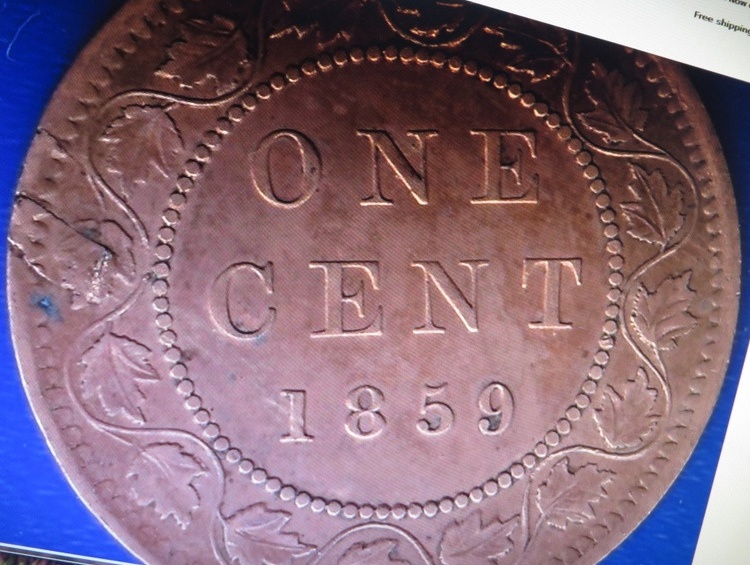 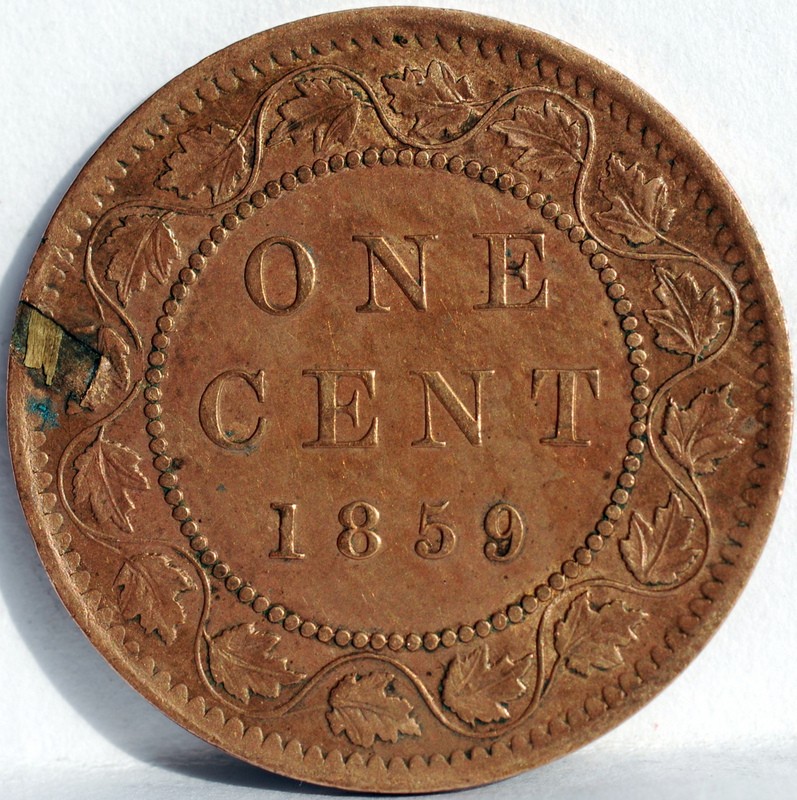 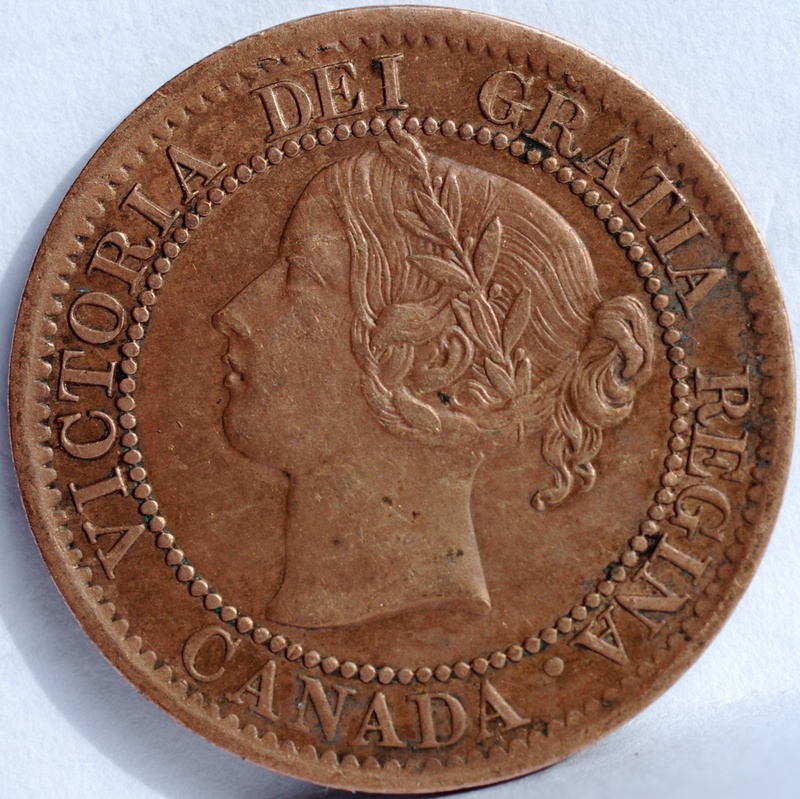 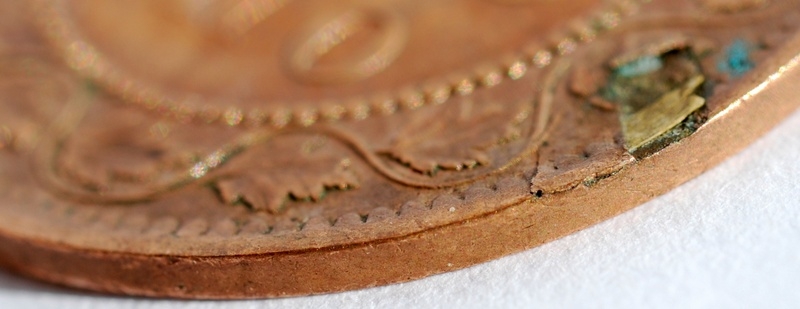 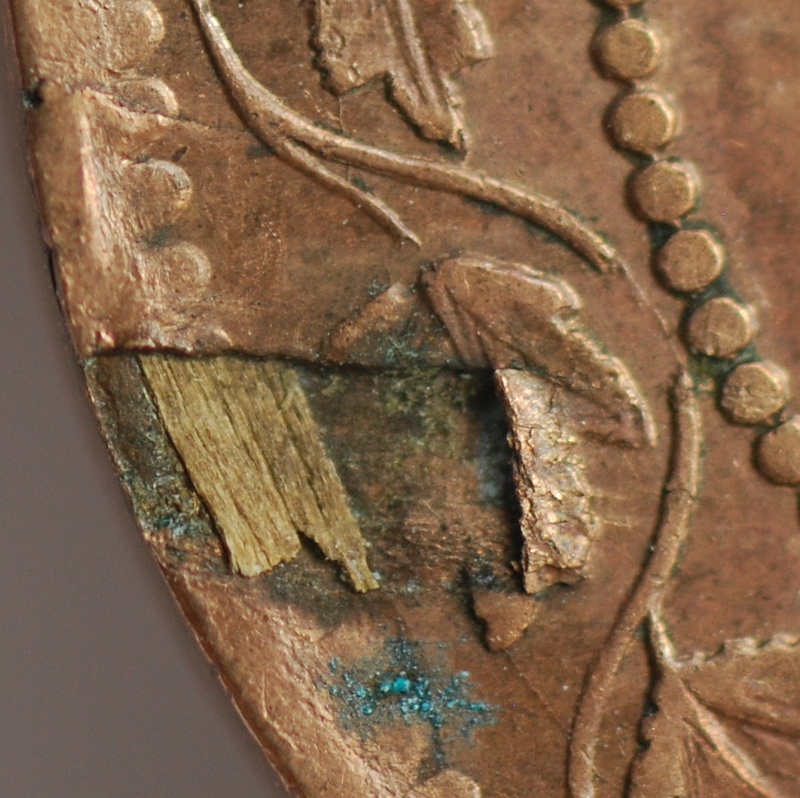 . Edited by DEVLEC
08/24/2017 08:16 am
|
|
|
|
Moderator
 United States
23522 Posts |
First and foremost I have to wrap my mind around how that piece of wood became embedded in the planchet, and we'll worry about the rest after.  Right now the working theory is that piece of wood was a deliberate effort on the part of a previous owner, to separate what was obviously a lamination. |
|
Moderator
Canada
10477 Posts |
I concur, someone, a long time ago, was using a toothpick or equivalent, to try and peel off a retained lamination - looks like they were only partially successful...
"Discovery follows discovery, each both raising and answering questions, each ending a long search, and each providing the new instruments for a new search." -- J. Robert OppenheimerContent of this post is licensed under a Creative Commons Attribution-NonCommercial 3.0 Unported License. See: http://creativecommons.org/licenses...0/deed.en_USMy eBay store
|
|
Moderator
Canada
10477 Posts |
I also edited your title... remember, these threads are searchable on Google, and relevant titles are important!!
"Discovery follows discovery, each both raising and answering questions, each ending a long search, and each providing the new instruments for a new search." -- J. Robert OppenheimerContent of this post is licensed under a Creative Commons Attribution-NonCommercial 3.0 Unported License. See: http://creativecommons.org/licenses...0/deed.en_USMy eBay store
|
|
Pillar of the Community
Canada
1463 Posts |
That is a woody, literally.
|
|
Moderator
United States
23522 Posts |
Quote:
I also edited your title... remember, these threads are searchable on Google, and relevant titles are important!! I split this out from the " Cud" thread. The title is on me. Looks like I'm due for a snack....  |
|
Pillar of the Community
 Canada
3234 Posts |
Quote:I split this out from the " Cud" thread. The title is on me Thanks SsuperDdave for helping on this one. I really appreciate any feedback from you all. This has been shared here before but I also thought that SsuperDdave being so interested in the Vicky cents might have missed it a couple of years back. The first photo is how it looked when I bought it. That piece of "whatever" was in the cent at striking time..IMO ..and somehow was rolled into the bronze strip. Okie also had an idea that it was somehow mixed into the stips ..but this was from his views on this a few years ago.. There would be a gap in the crack if that piece had been pushed in. Why push in that piece and not pry it open with a knife blade..? It's far too tight and there is just no space to do that. It could never have been pushed in like that and leave the flat fleck of bronze like showing in the first photo. I feel that the crack formed by having that piece inside and remember that the crack continues further around but not all the way. Is there a way to not disturb the cent and see what the fiber/wood does on the inside? Kind of like an x-ray to possibly have a different view of the interior ? |
|
Moderator
United States
23522 Posts |
Quote:
This has been shared here before but I also thought that SsuperDdave being so interested in the Vicky cents might have missed it a couple of years back.
My interest in Large Cents only goes back to late last year, so I'd likely have missed this posted before. The fun of this is, for me, in that the whole thing is so bizarre that even the correct explanation for its' coming into being must be bizarre. I have to assume that the process at The Royal Mint is similar to that of contemporary US minting: rolling stock, punching planchets, upsetting the rim, striking. However, a lack of knowledge of how the raw material was provided to the Mint (did they roll their own stock, for instance, or were planchets directly provided?) and how mechanized their operation was (how many chances to discover a bad planchet were there in the procedure?) means all I can do is speculate. The simplest explanation is as Okie said - it entered the original strip, maybe forced into the edge by the weight of the stored spool of flat metal - and somehow survived the rest of the steps in the process. I'm amused by contemplating how PCGS might describe it if they chose to slab it. |
|
Pillar of the Community
 Canada
5657 Posts |
Yep, I still think that it was inside the original planchet and the striking process caused the pseudo-lamination.
|
|
Pillar of the Community
Canada
1463 Posts |
I can see evidence of the wood being struck into the penny, so it was under the lamination in the first place imo
Edited by Alan
08/23/2017 8:19 pm
|
|
Pillar of the Community
United States
1101 Posts |
I enjoy seeing this one each time you post it DEVLEC. I agree with Okie and Alan. I think it was in the planchet when it was struck. I keep wondering how much farther it goes under the split, and if it is wood or some other material.
The pressure of rolling the strip would have flattened whatever it is and maybe squeezed out something that caused the metal to stay separated, and cause the corrosion it appears to have under the surface. I'm trying to use my imagination here to come up with something. That's a very wild guess.
|
|
Pillar of the Community
Canada
9904 Posts |
The planchets were produced by Heaton Mint.Perhaps the piece of debris managed to enter the crack during transit. Something like that occurring in one out of ten millions isn't far fetched.
"Dipping" is not considered cleaning...
-from PCGS website
|
|
Pillar of the Community
United States
1346 Posts |
|
|
Moderator
Canada
10477 Posts |
Quote:
That piece of "whatever" was in the cent at striking time..IMO ..and somehow was rolled into the bronze strip. Strips were rolled from long rods, which were poured from cast molds. The liquid bronze alloy would have burnt anything wooden "in" the mixture. The rolling processes was a gradational high pressure flattening of the bronze rod into a sheet of a measured thickness. At any time, during the annealing of the rods or strips, would have burnt any wooden debris inside the annealing furnace. Quote:
There would be a gap in the crack if that piece had been pushed in. Why push in that piece and not pry it open with a knife blade..? It's far too tight and there is just no space to do that. It could never have been pushed in like that and leave the flat fleck of bronze like showing in the first photo. Lamination edges are sharp... slide any coin with a retained lamination over a piece of rough wood and see what happens. Heck, even not-so-sharp features can catch wood fragments - slide your bare hand over a sheet of rough-finished plywood to see how many slivers of wood become embedded in your hand... I remain convinced that this planchet was not made with the wood inside, nor was the coin struck with the wood under the metal surface. If there was a retained lamination crack in this coin, then it is easily possible to get a sliver of wood under there... "Discovery follows discovery, each both raising and answering questions, each ending a long search, and each providing the new instruments for a new search." -- J. Robert OppenheimerContent of this post is licensed under a Creative Commons Attribution-NonCommercial 3.0 Unported License. See: http://creativecommons.org/licenses...0/deed.en_USMy eBay store
|
|
Pillar of the Community
Canada
5657 Posts |
I thought that they were rolled from small ingots, not rods. I think that the wood got in there in the "rolling" part.
|
|
Moderator
United States
23522 Posts |
Quote:
I remain convinced that this planchet was not made with the wood inside, nor was the coin struck with the wood under the metal surface. If there was a retained lamination crack in this coin, then it is easily possible to get a sliver of wood under there... I don't know. The strike certainly seems to have conformed to the piece of wood in the circled area of the image: 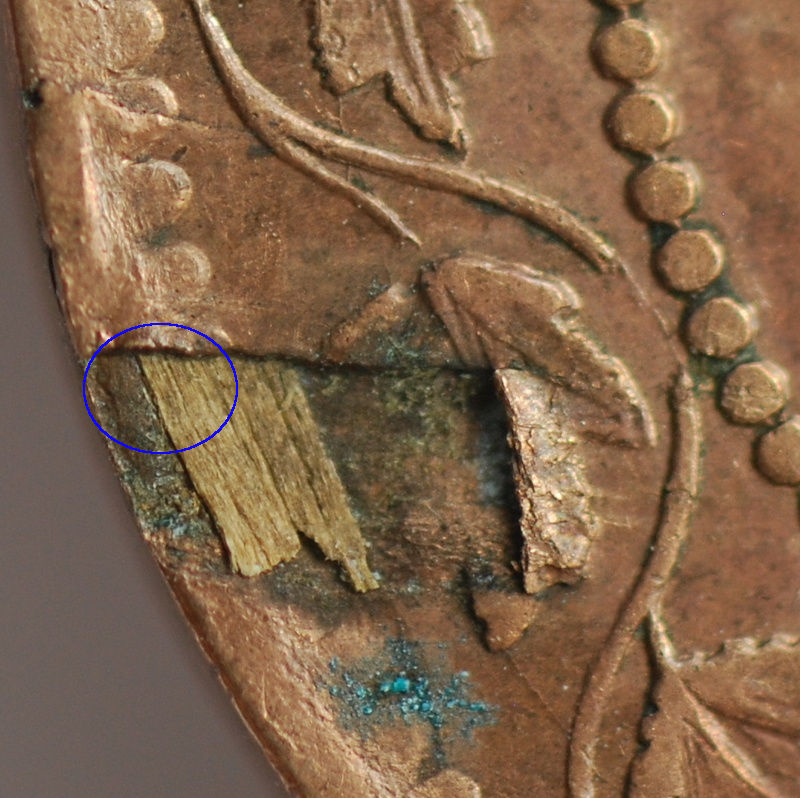 ....and DEVLEC's original auction image (albeit not perfectly clear) hints that the lamination is too flat to have had something forced under it. With an extraneous sliver of wood under it, one would not be able to force a lamination back to being that flat. One could assume that the seller did this, thereby delaminating the missing piece, but.... ....for scale, one of the beads on the reverse is approximately half a millimeter in diameter. Looking at the visual relationships presented by the images, it can't be imagined that the sliver of wood noted could be more than a tenth of a millimeter in thickness - two sheets of paper - and that's an overly-generous estimation, I think. I sincerely doubt that a piece of wood that thin could be "forced" anywhere. |
| |
Replies: 24 / Views: 2,881 |









 Posted 08/23/2017 4:49 pm


