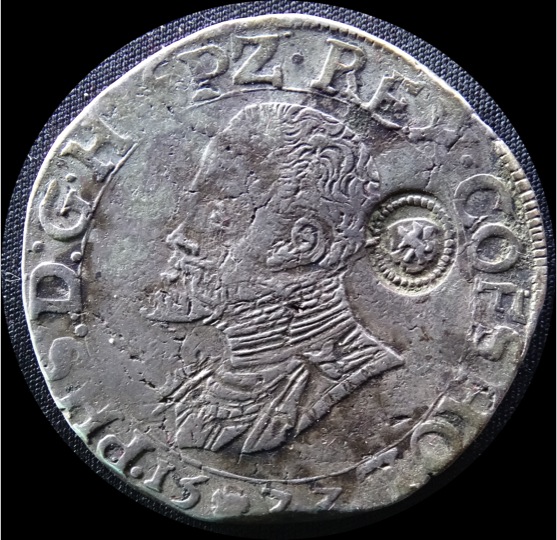
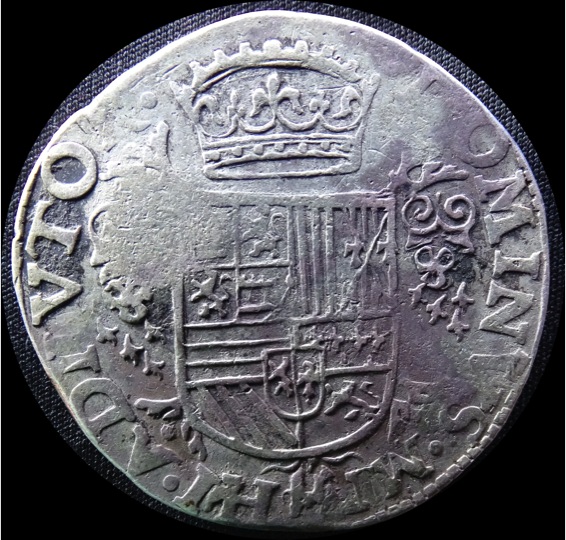
Quote:
Problem solved...!
.

Quote:
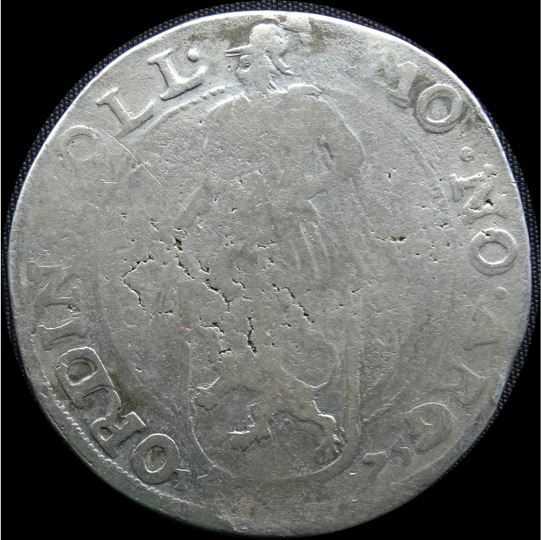
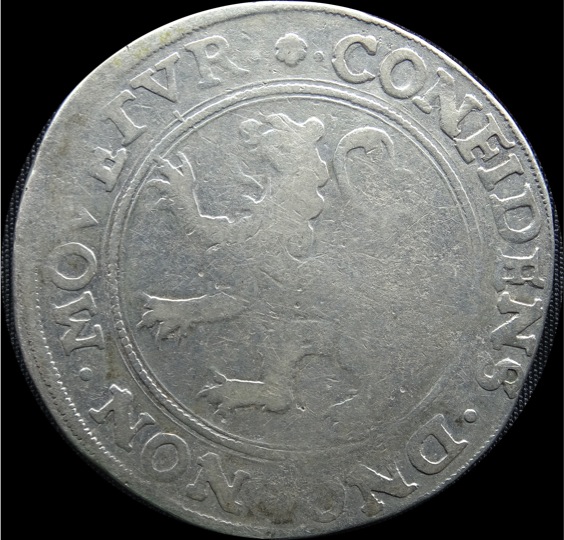
It seems the design of the figure on the obverse is more primitive than yetserday's
yes, indeed tdziemia ! this evolution in a few months of time (type 1a => 1b => 2) is
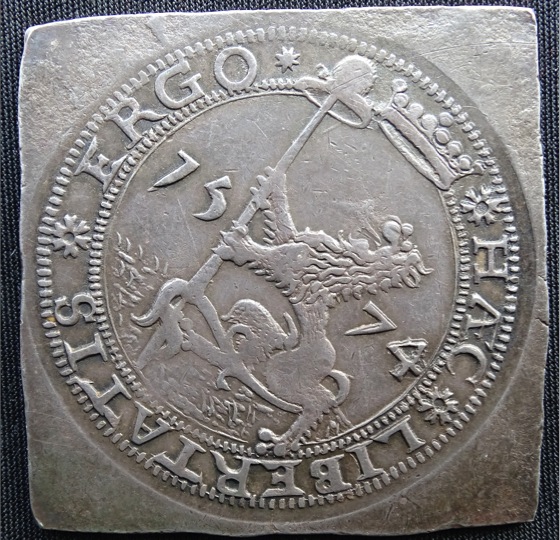
striking, every time I think about it; I believe that with the first coins of the autonomous province, there was still no idea what could be the new face on the coins now that the face of the king was removed. A ghost like knight (type 1a) turned into a mocking figure (type 1b) and finally in the strong knight (type 2) which would remain on the Leeuwendaalders for more than a century in all provinces.
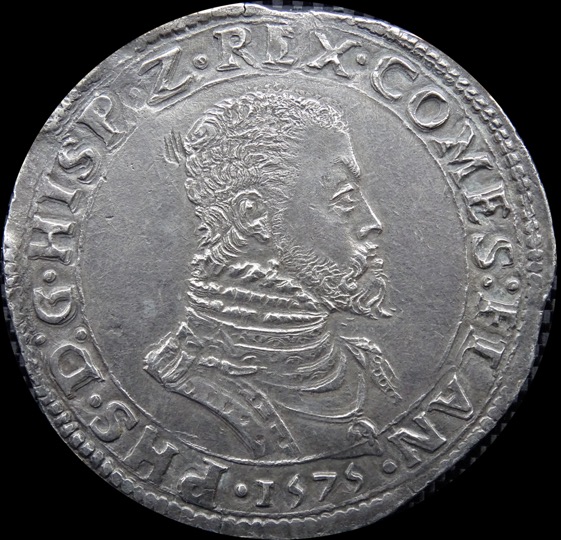
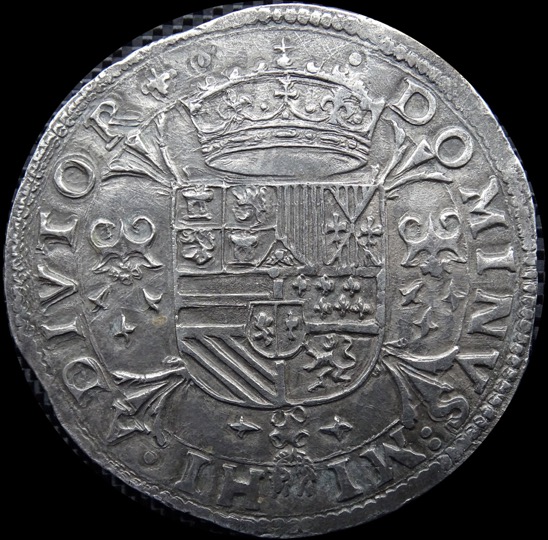
1575 is a key year and collected for a long time just in the opposite manner of OFEY, concentrating on a few years of local history - so here are three more jetons of 1575 and bit more of history those crucial years in the struggle of the Netherlands for independence:
the first (Dugn.2656 from Brabant in the Spanish Netherlands), alludes to
hard times (a person holding equilibrium in heavy winds and battered foundations) IN ADVERSIS CONSTANS

the second (Dugn.2647 from Dordrecht in Holland) mentions the peace negotiations between Philip II and the revolting provinces; a disagreement about religious tolerance which Philip did not want ended the peace talks

the third jeton showing a burning bible (Dugn.2649 from Dordrecht in Holland) alludes to the fundamental difference between the revolting provinces and Philip II about religious tolerance.

Don
Alva de Toledo, the duke of Alva, remembered in the Netherlands as the
"iron duke" was in the Netherlands since 1567 to crush the first and second Dutch revolt. He commanded a superior army, the best of Europe with experienced and hardened
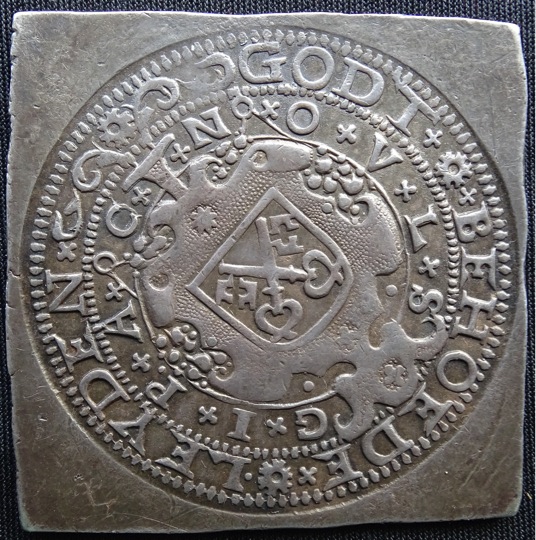
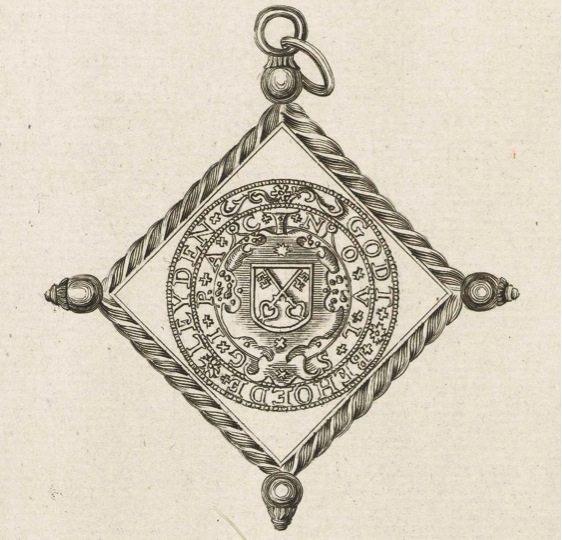
tercio's. But Alva's forces met in 1572-74 with heavy resistance of the Dutch cities that were under siege in these years (we'll see Haarlem and Leiden as examples); what was intended as a rapid overwhelming crushing victory became a long-term operation that drained resources from Spain.
Philip II had to face the problem of providing enough money (silver mined from the new world) to pay the large army of Flanders and because of severe economic problems at home, the money supply to Flanders became a problem.
This caused serious delays in paying the wages of the soldiers who started mutinies by the end of 1575, after the siege of Ziekikzee in Zeeland. At this point both parties saw an opportunity for peace negotiations in Breda, which failed.
So the mutinies of well trained Spanish soldiers who were not controlled anymore and plundered the country were a plague to Brabant for more than a year ; this problem really got out of control to a catastrophic level by the concerted action of different mutinous bands joining together with the aim to plunder the rich metropole of Antwerp. Defenses came to late and the troops massacred the city for several consecutive days. The plundering and massacre of Antwerp in november 1576 is one of the worst events of the 16th century and contributed to the decline of its economic importance in the region causing the star of Amsterdam to rise. see
https://en.wikipedia.org/wiki/Sack_of_AntwerpThe peace negotiations in 1575 in Breda were completely justified as both sides were exhausted - if only peace could have been reached at this moment ....... But it went otherwise.








 First Page
 Previous Page




 Posted 09/10/2019 02:51 am