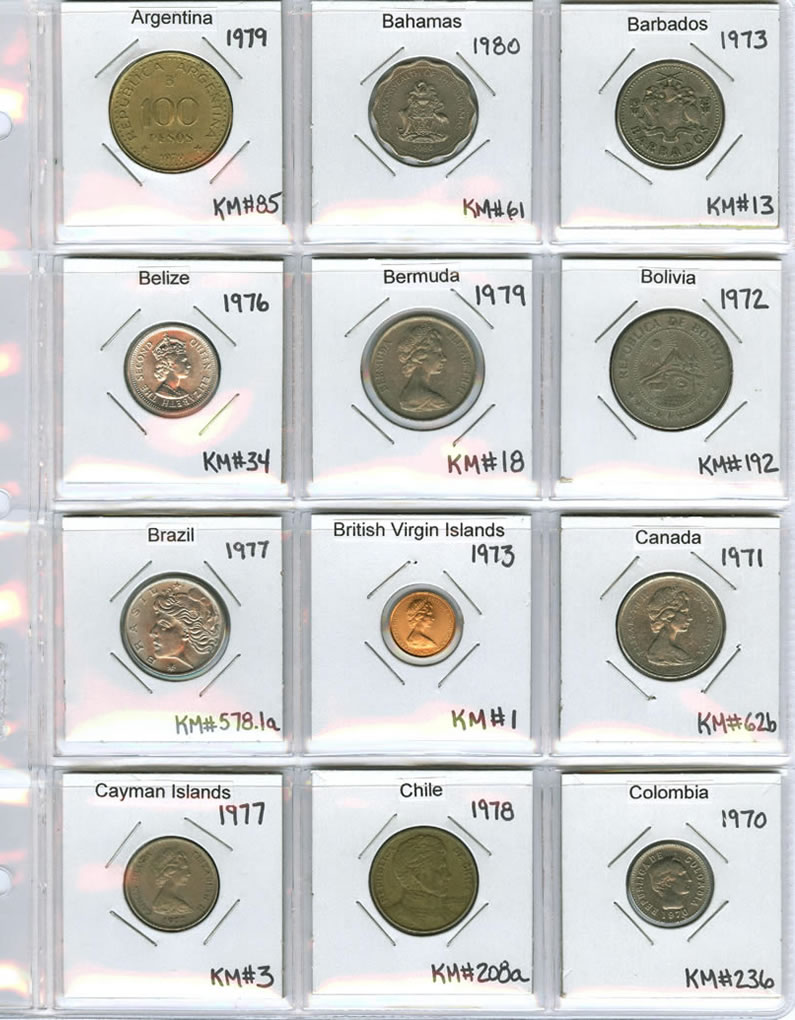
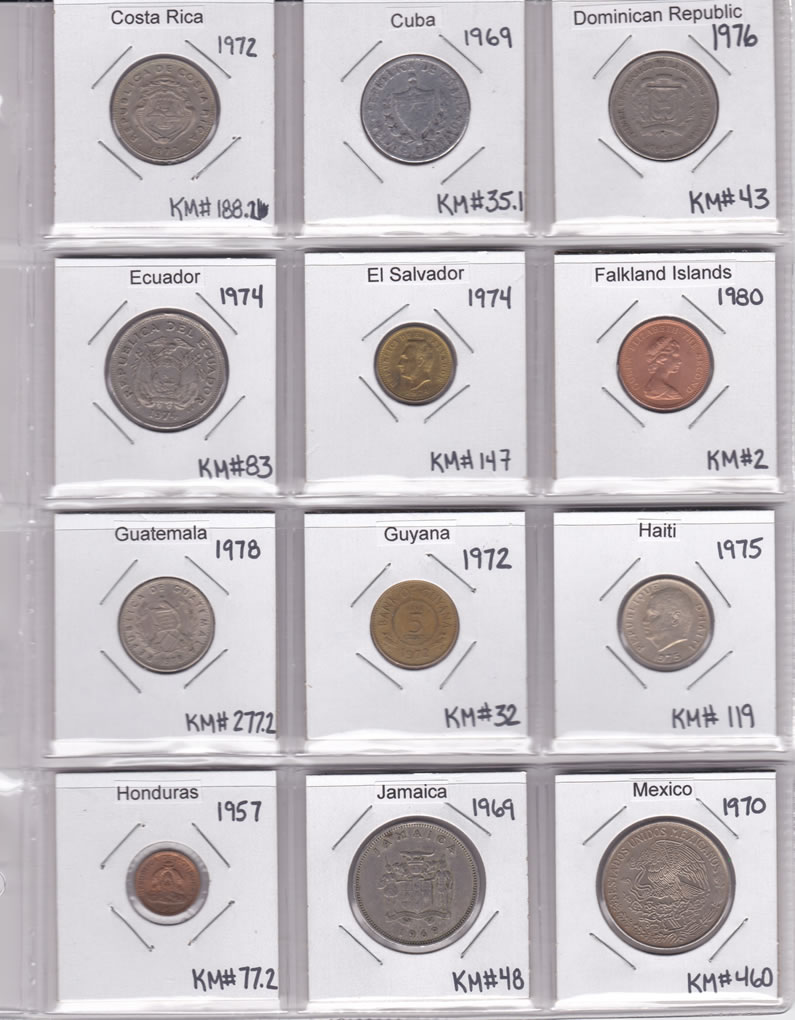
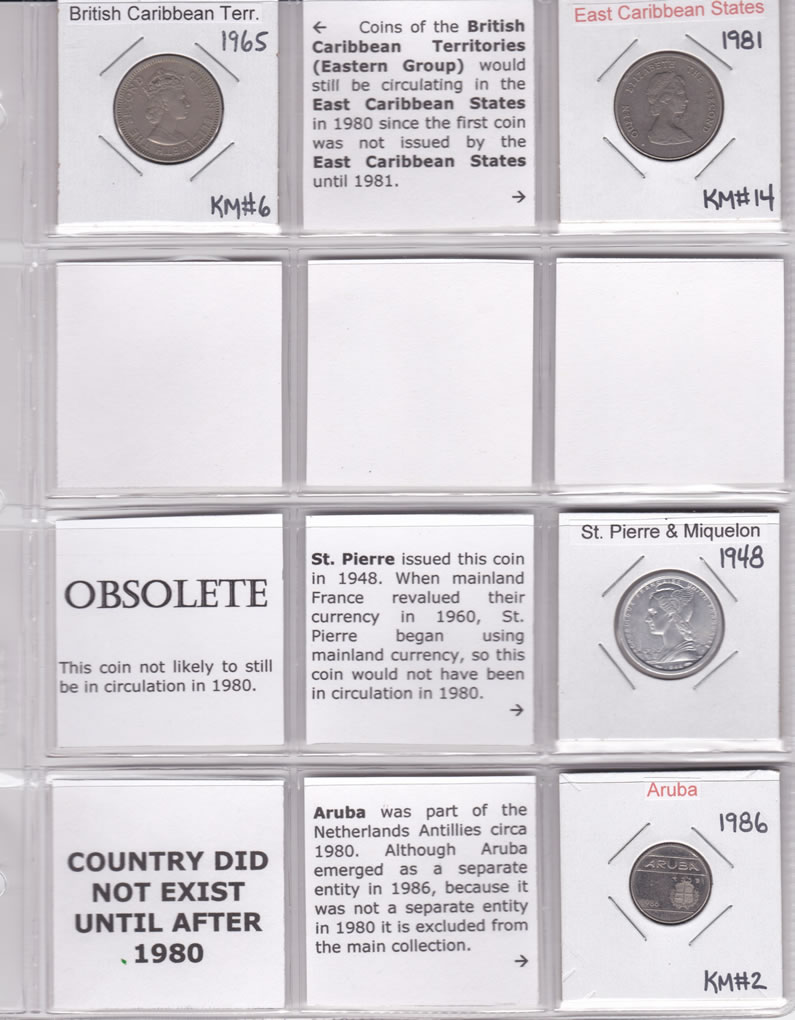
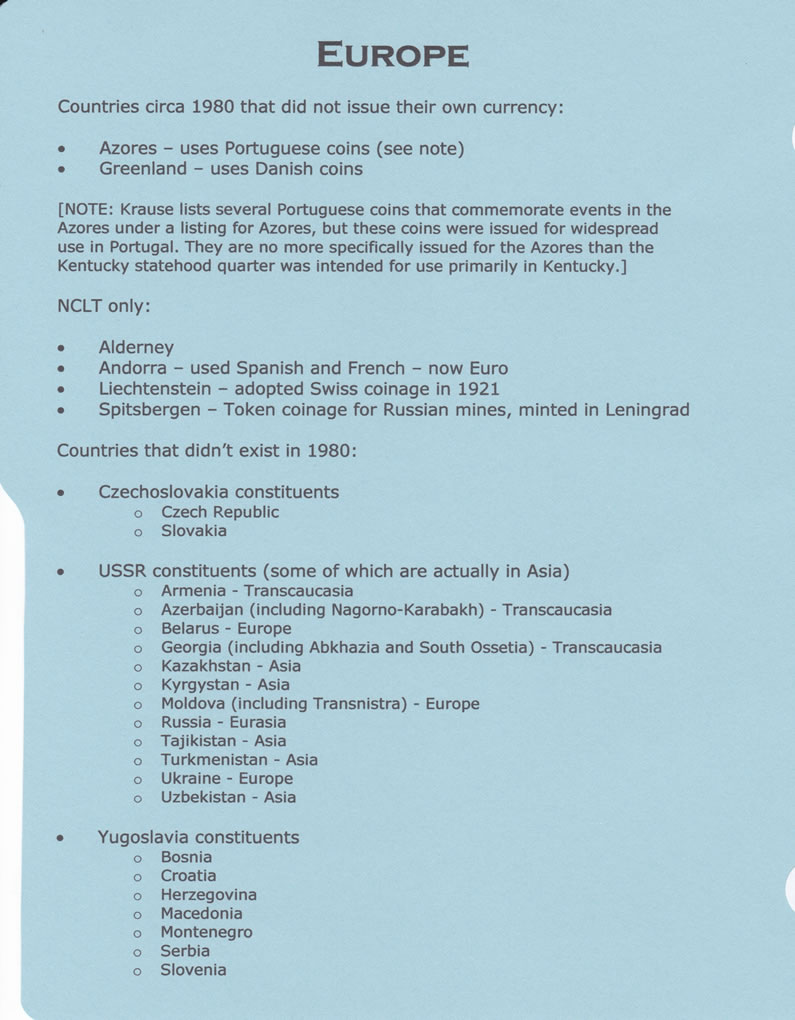
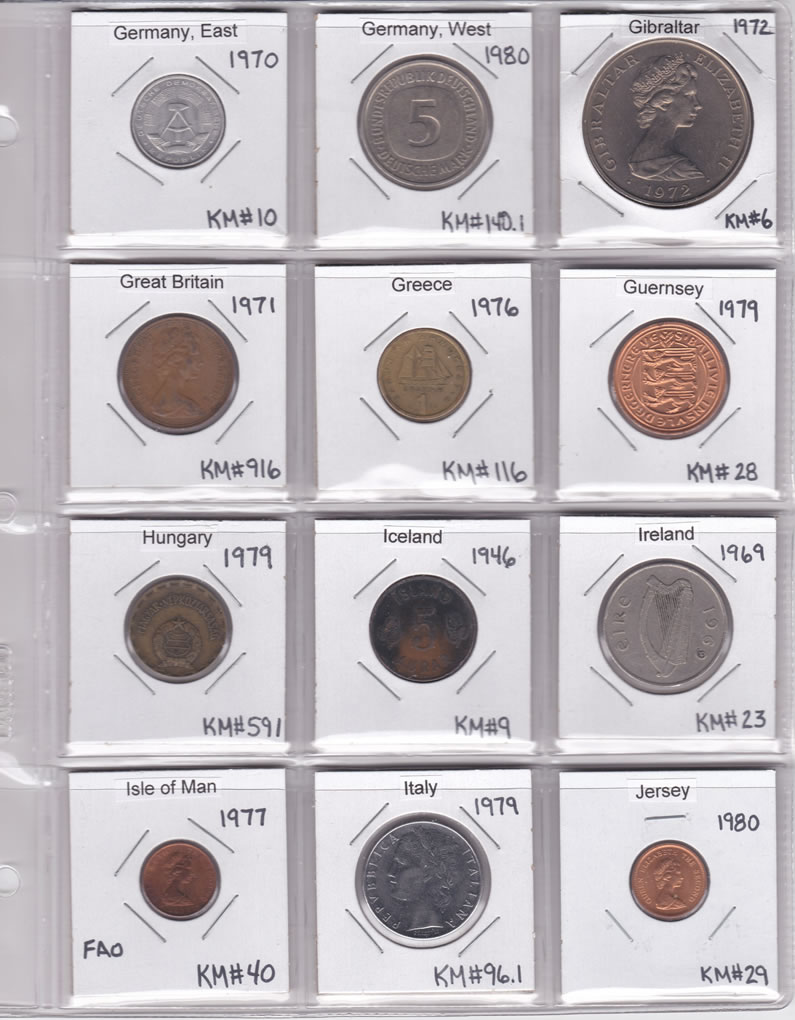
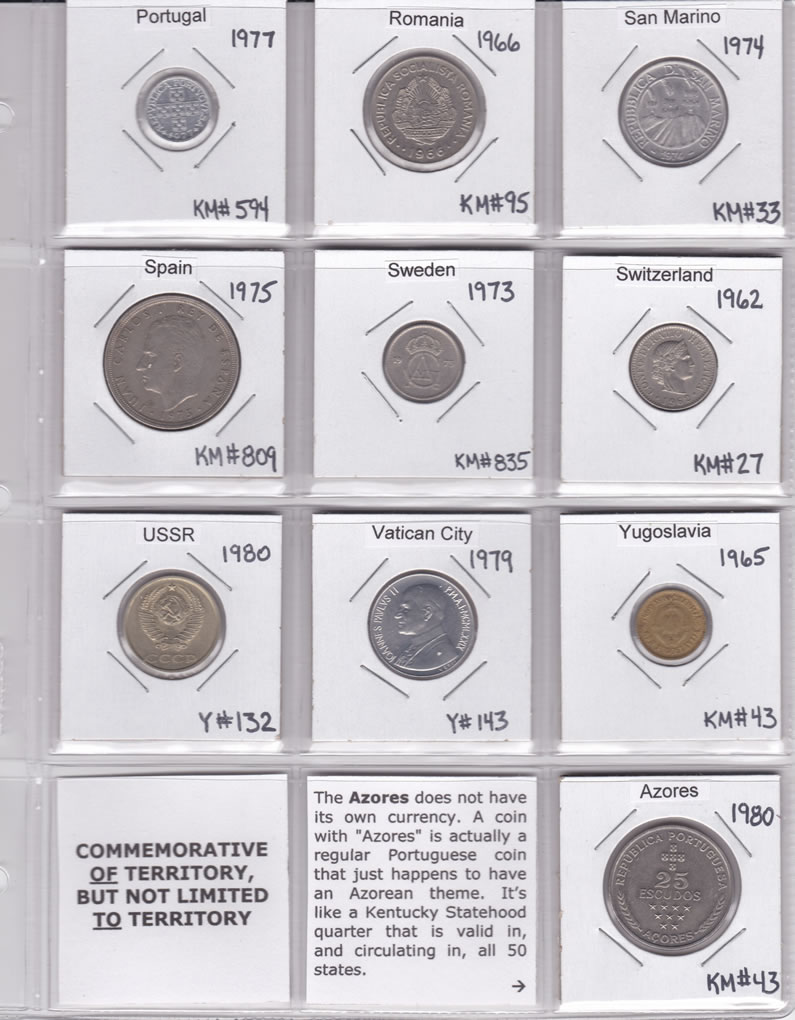
Thanks for all the kind words, but if anyone takes issue with any of my decisions, feel free to chime in. I was torn on several coins, especially the British Crown dependencies and overseas territories.
So, for your questions:
Quote:
What was the hardest coin to acquire and what was the easiest?
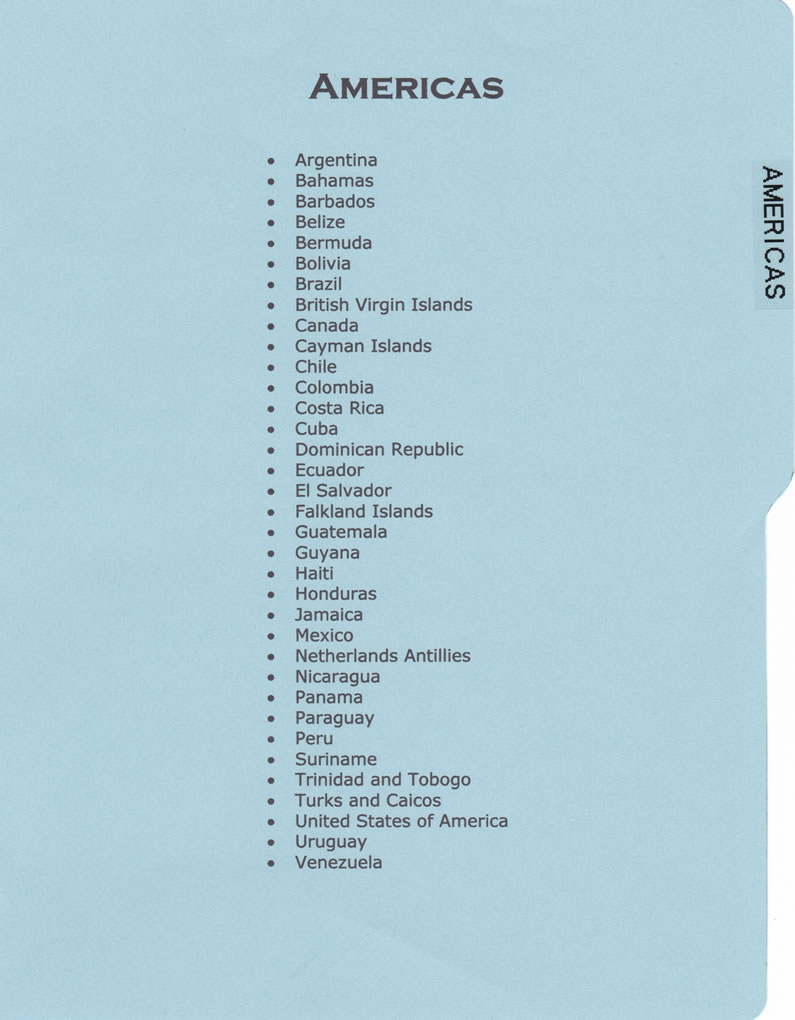
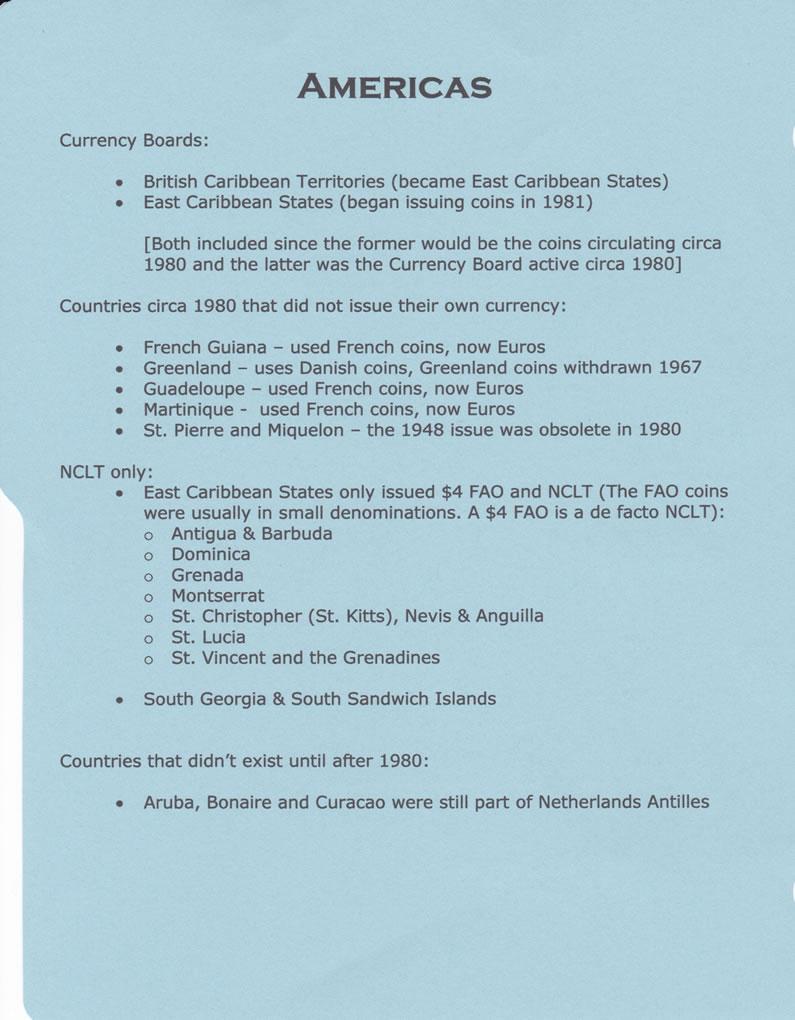
Nothing was terribly difficult to obtain, but finding sources for coins from Cuba and North Korea can sometimes be a challenge depending on U.S. laws at the time. Of course the easiest were the coins I already had from earlier trips to Mexico, Canada, the Caribbean and Europe.
Quote:
What coin has the highest value and what coin has the lowest value?
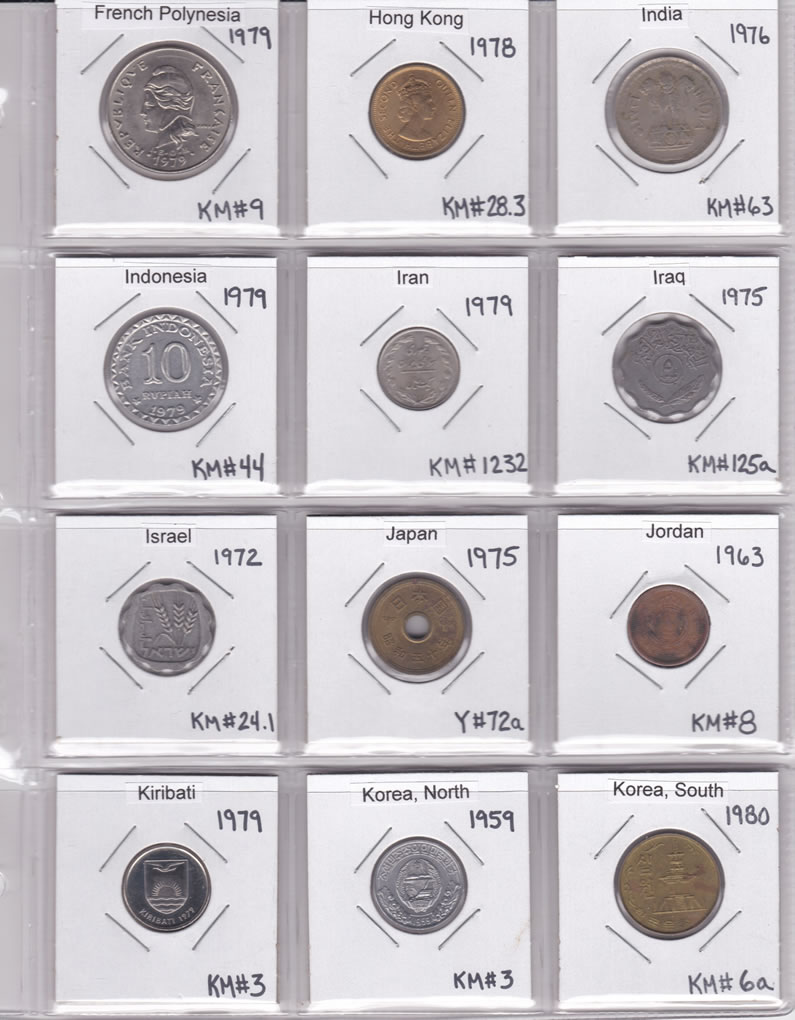
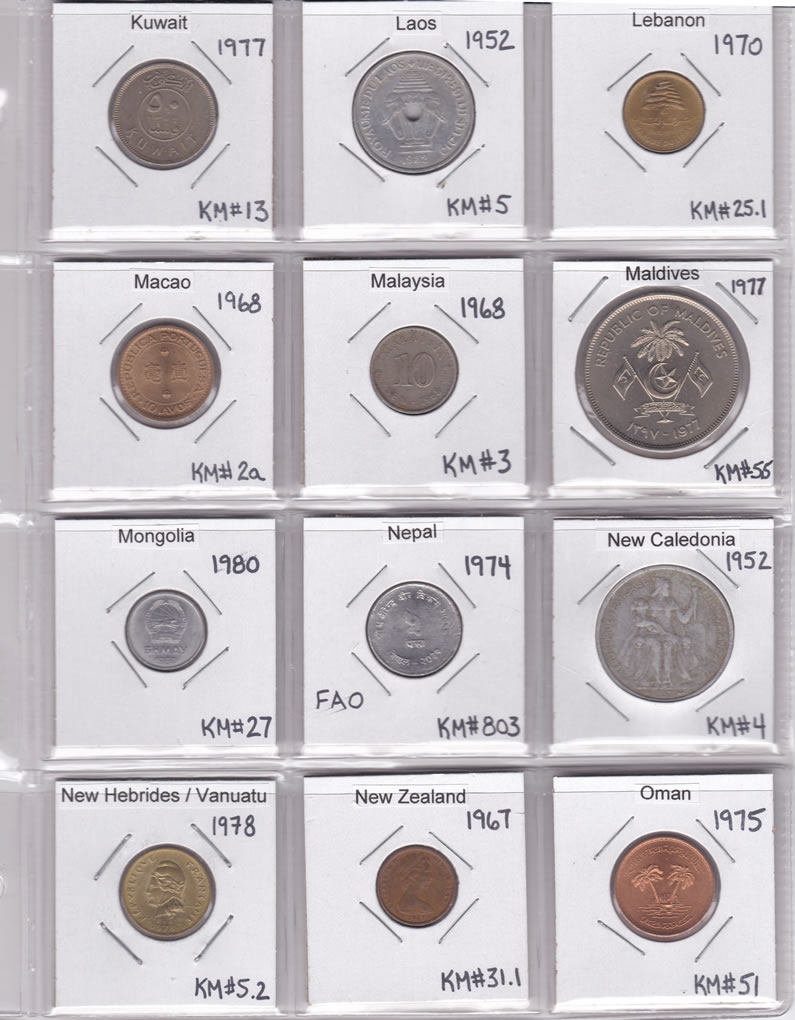
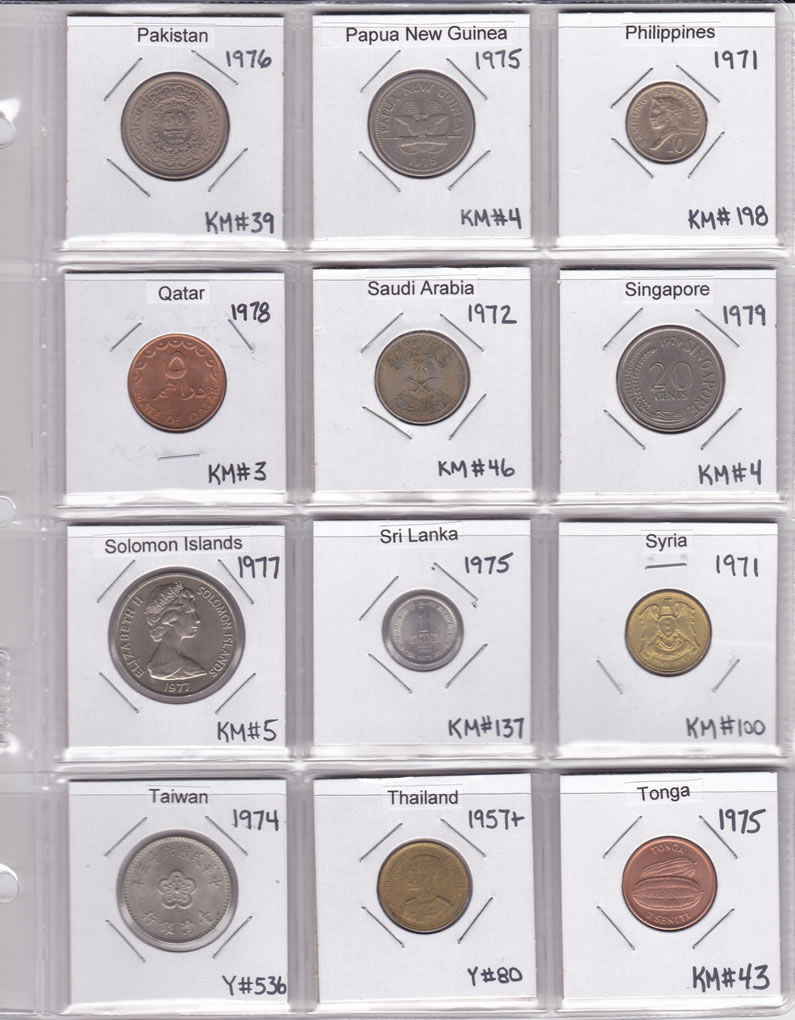
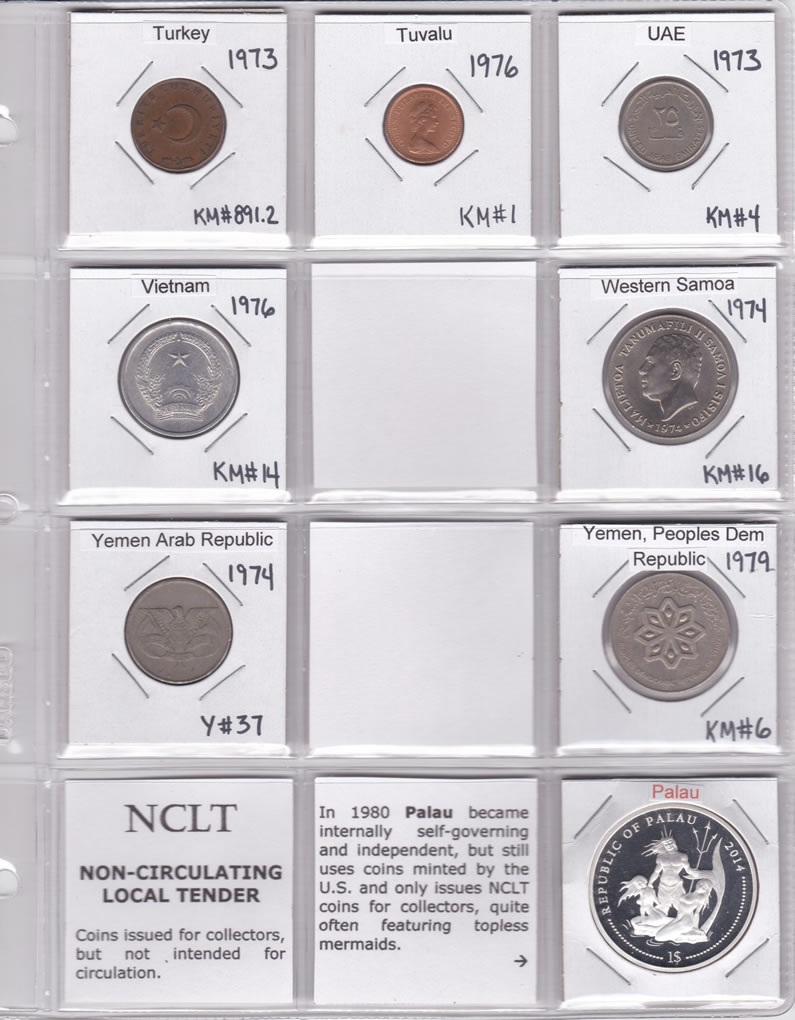
I probably spent the most on the coin from Palau and second most on the one from Faeroe Islands. The lowest cost would be the West German coin because I had that from a trip to Germany in the 80's and I went back two months ago. I took all my old coins from Germany and dropped them in a tip jar since they can turn them in at the bank for Euros. I would have dropped the coin in this collection into the tip jar as well, so it was free. As far as lowest value, that's hard to say. Some obsolete coins have no financial value but do have a numismatic value. I'm not sure how to answer that. The Mexican coin I got in the 1980's prior to the 1000:1 reform, so it's pretty much worthless.
Quote:
What would the retail value be on the set?
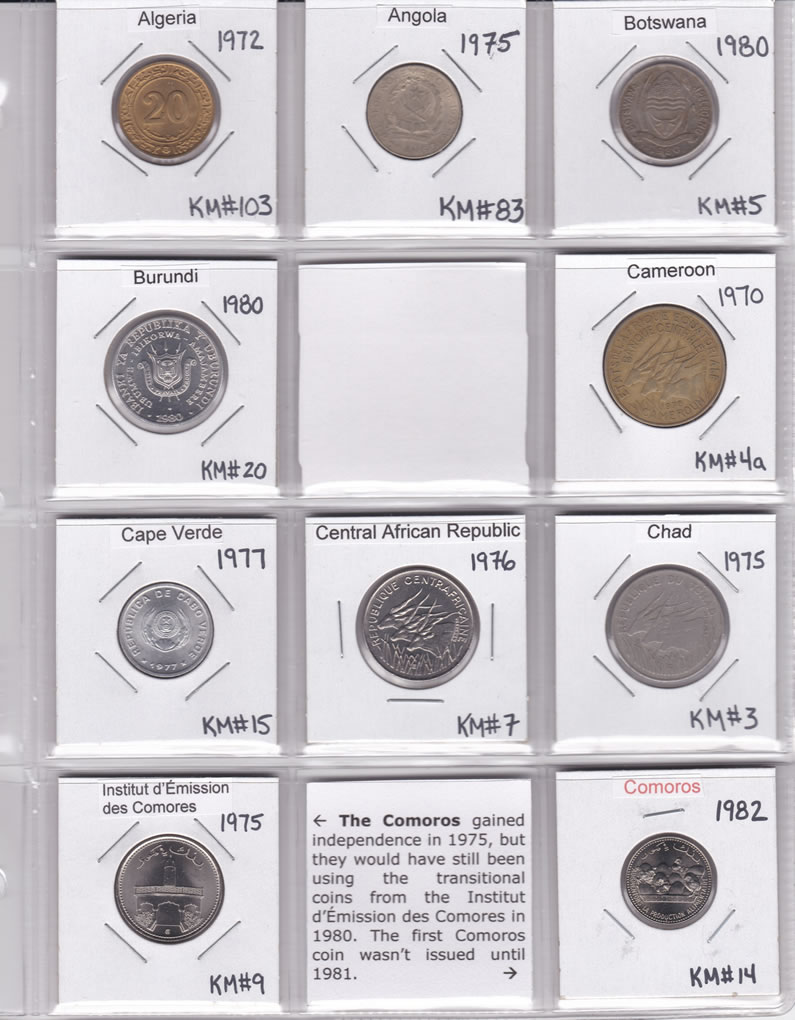
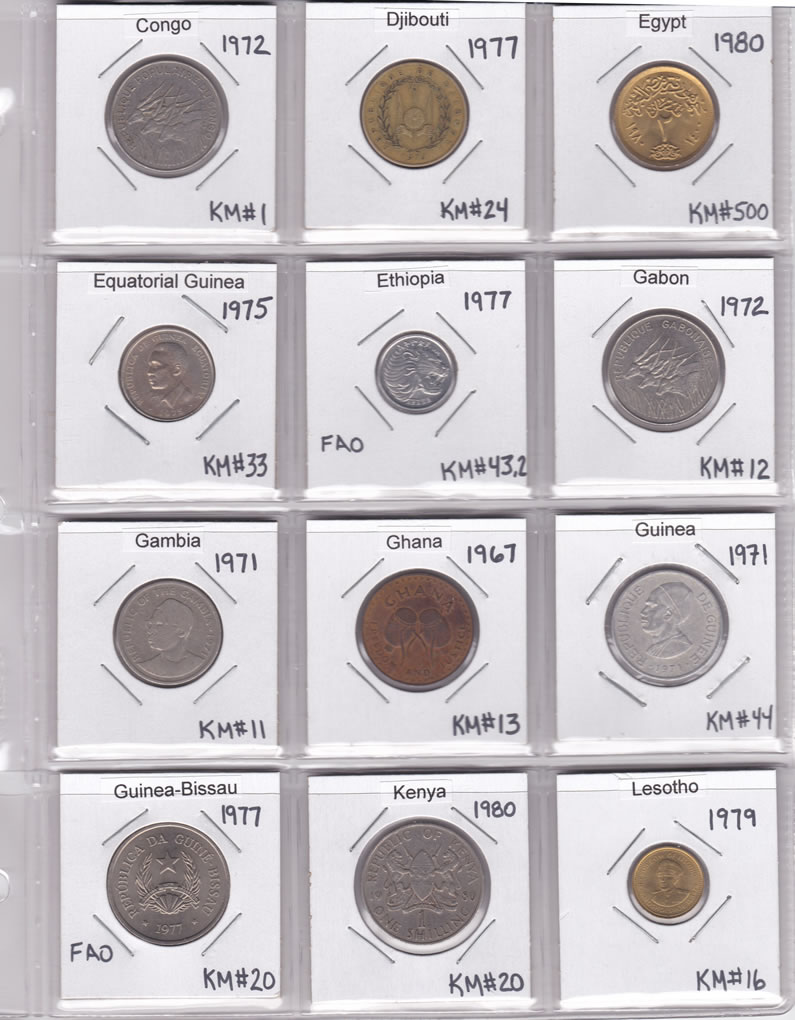
I didn't keep track, but figure $60 for the Dansco binders, slipcases and pages, about $5 for mounts, staples, card stock, and ink (plus another $3 because I had to redo a lot of stuff as I went along), and the cost of the coins. I'm just guessing, but probably about $700 total for all the coins, so $768 retail value would be close. However, I probably spent at least $250 in postage costs, so the more coins you already have or can buy without paying shipping the cheaper you can do it.
Quote:
What was the most interesting or surprising thing you learned while doing your research?
There were three things that stood out:
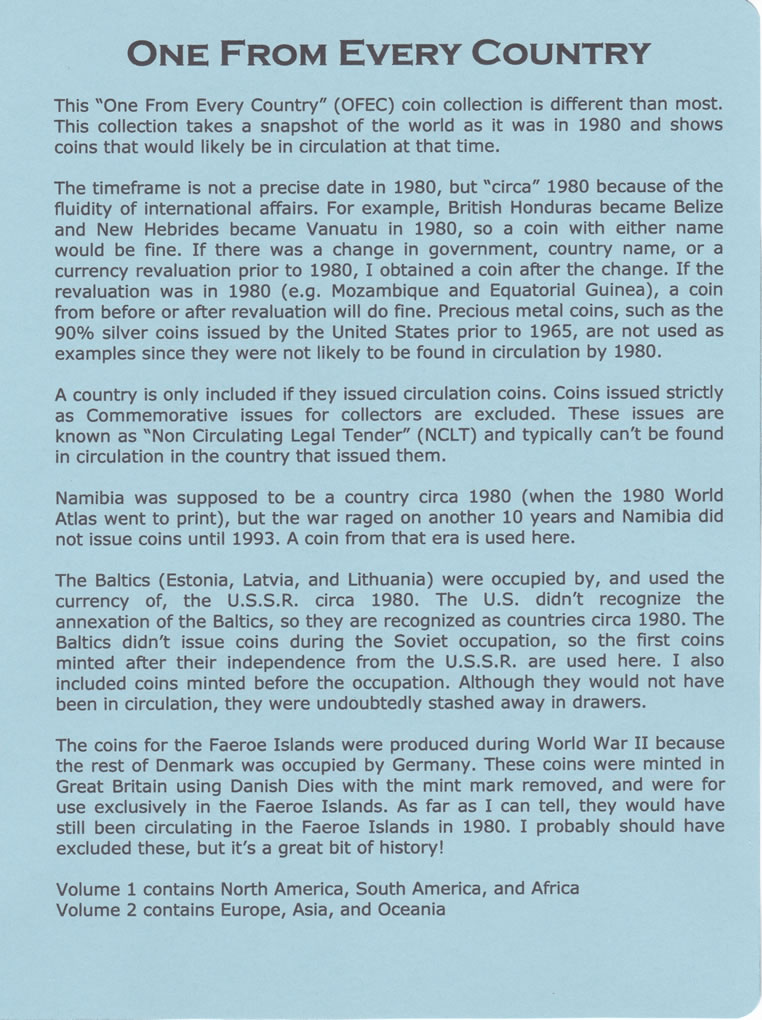
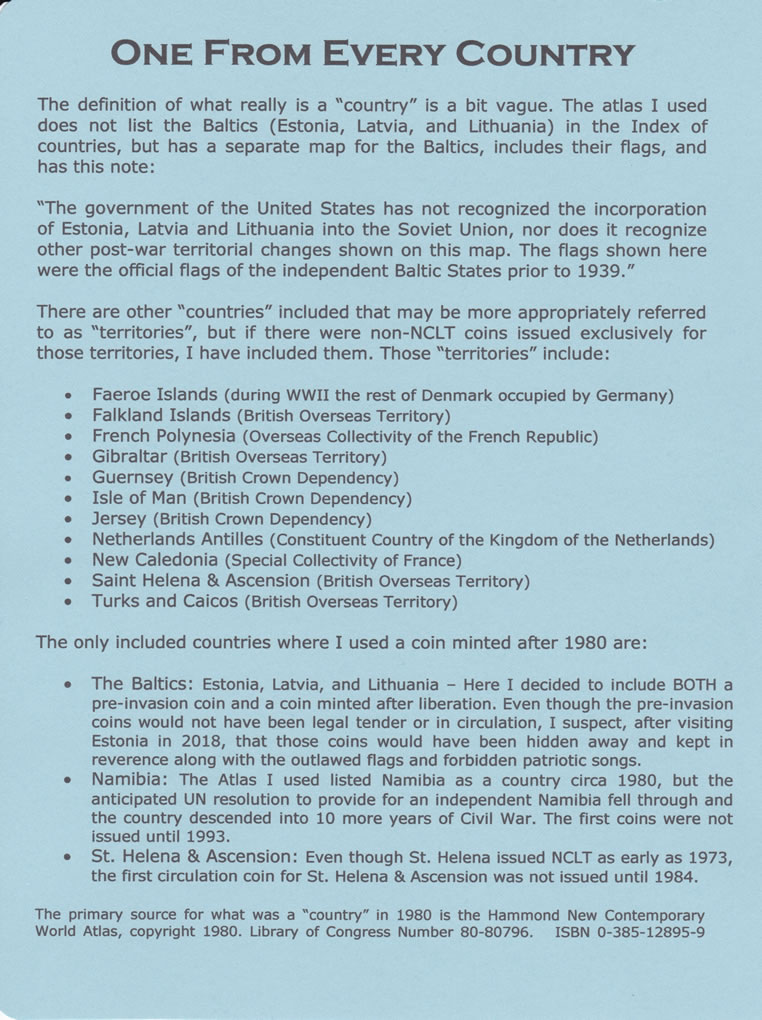
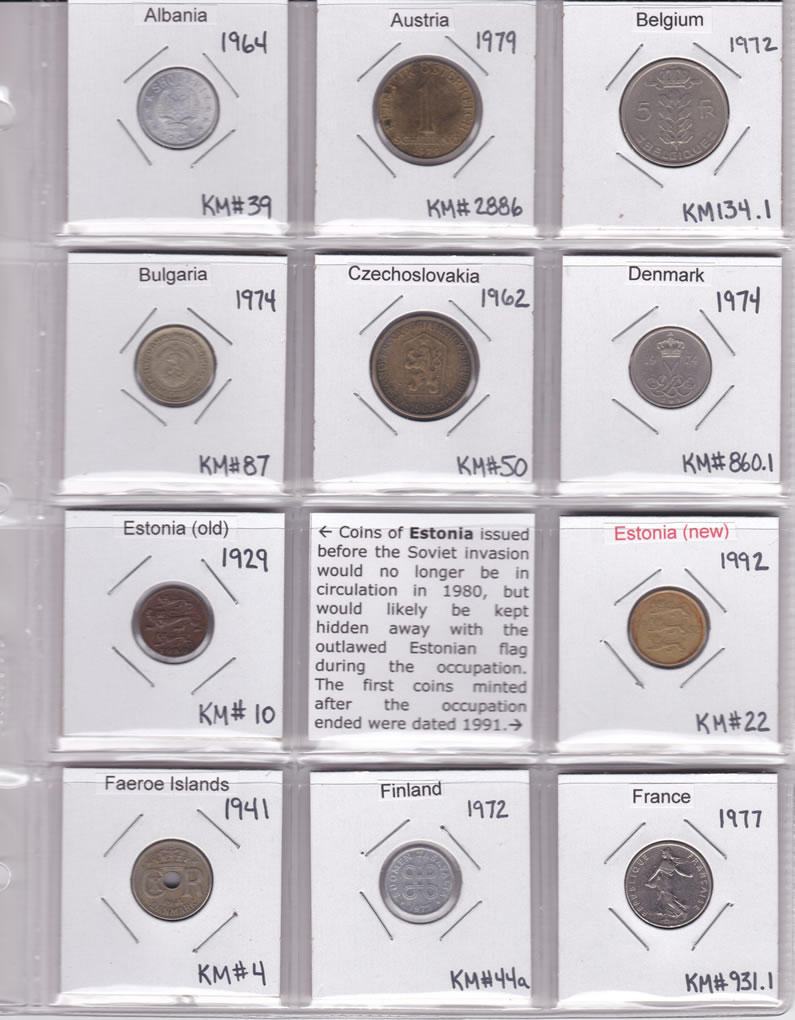
1. The Faeroe Islands coin issued during WWII because the rest of Denmark was occupied
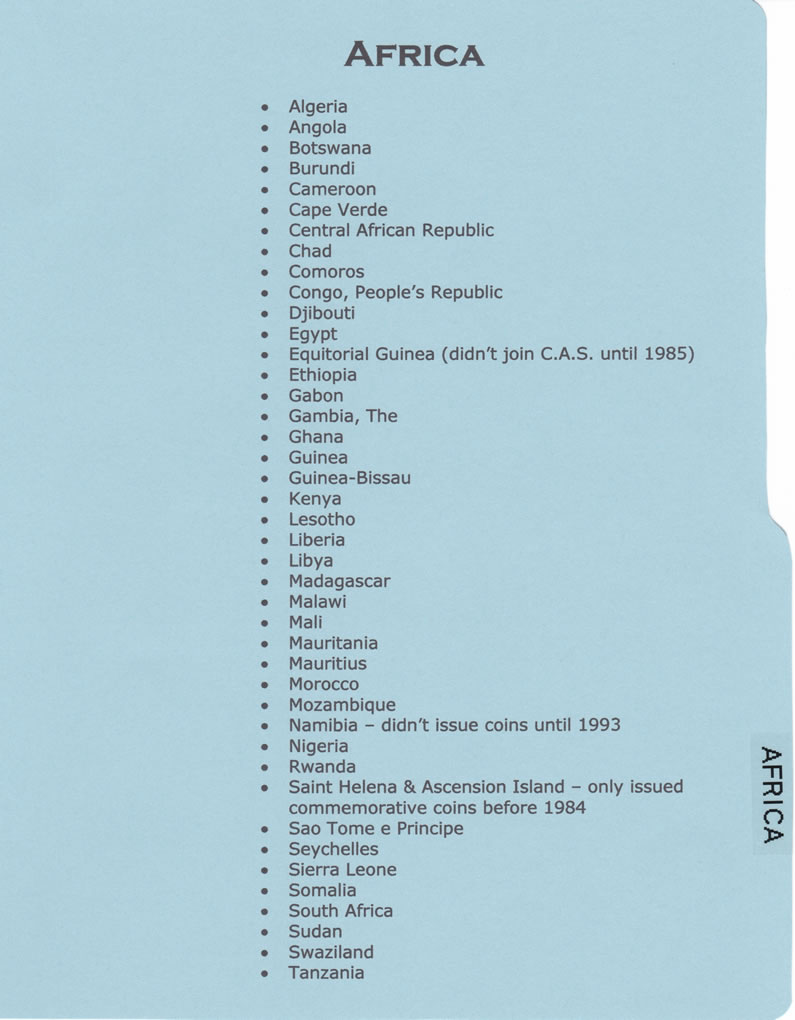
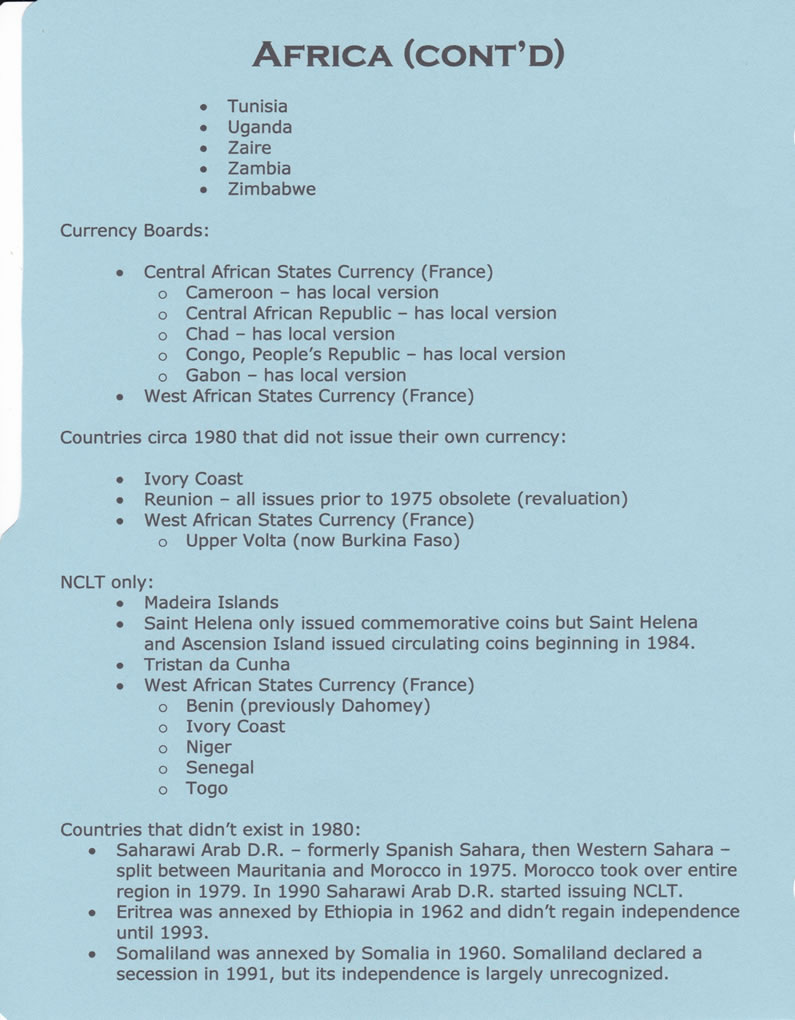
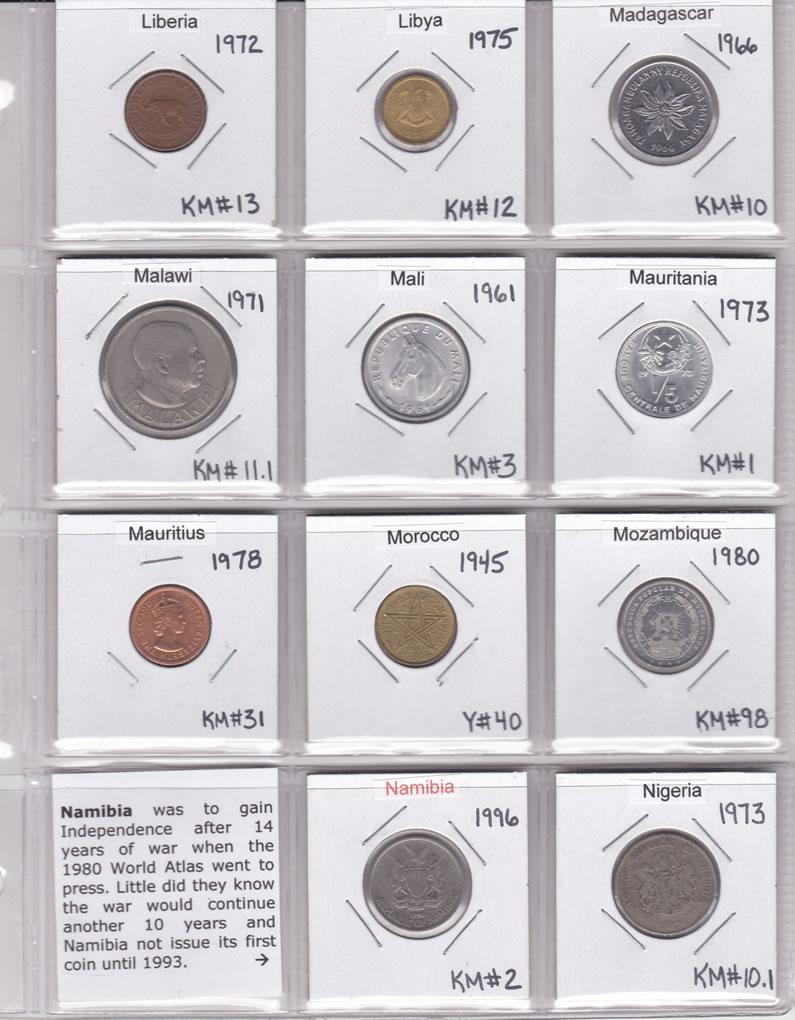
2. The fact that Namibia was in the Atlas because it was assumed that the UN plan would go into effect and Namibia would become independent, but the war lasted another 10 years
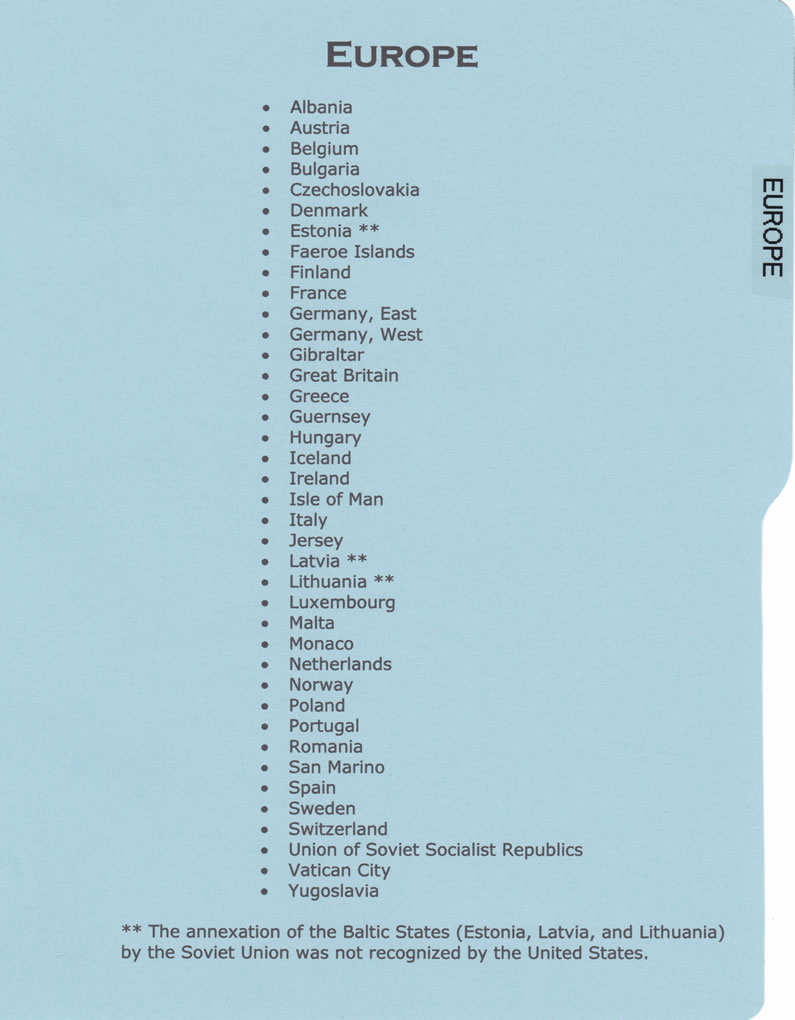
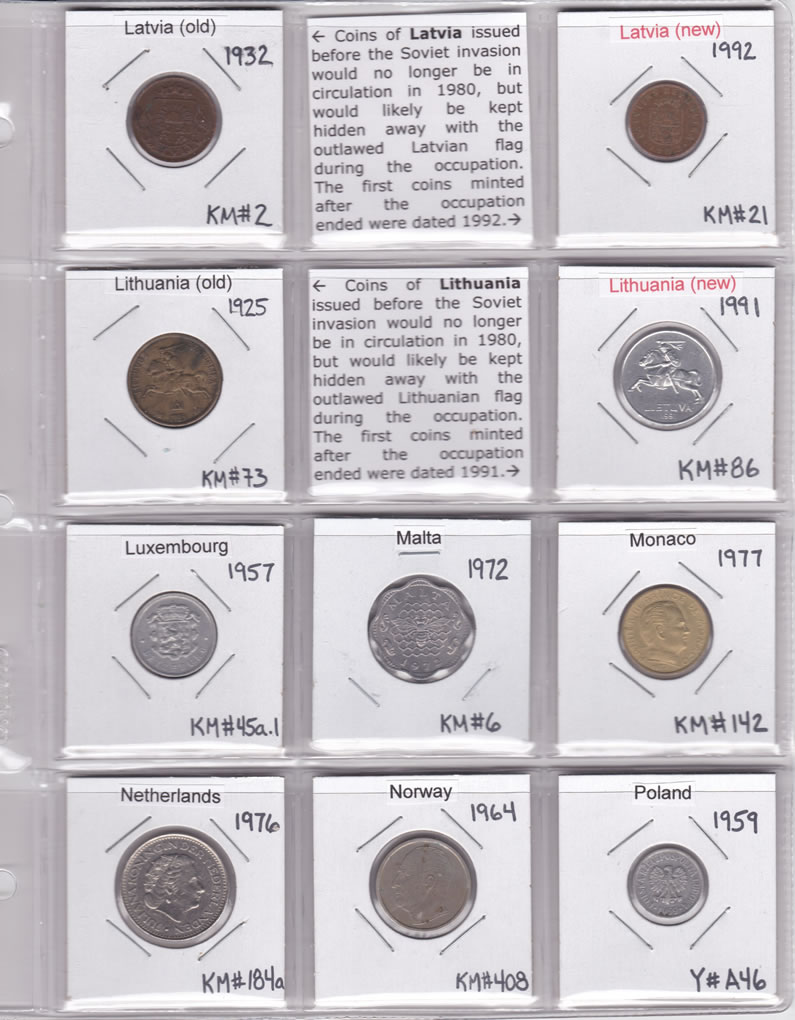
3. The idea of collecting pre-invasion Baltic coins. Those coins would have been obsolete in 1980, but I visited Estonia about 6 weeks ago and learned about how everyone seemed to have an Estonian flag hidden away even though they were outlawed by the Soviets, so I imagine a lot of old coins were also kept around as keepsakes. Who knows, maybe some folks used them for pocket coins! It would be fun to learn more about the Baltics and the role old coins played, if any.
Quote:
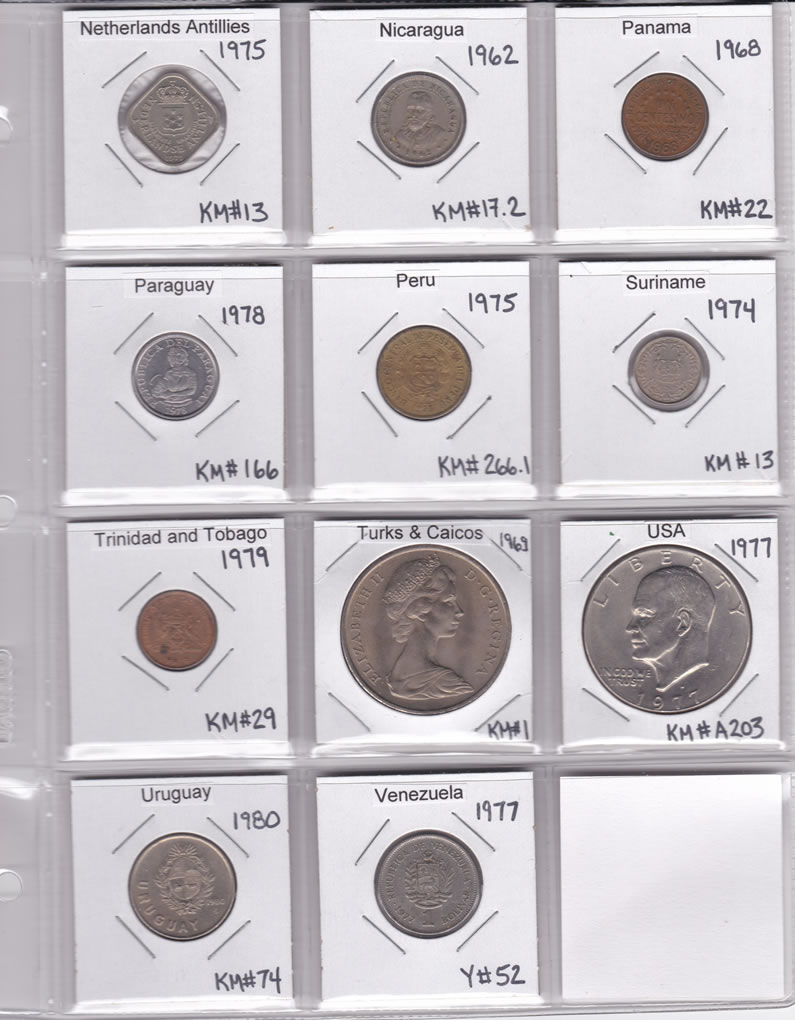
I love your choice for the USA slot. An excellent decision.
Thanks! I wanted to highlight the effort to re-introduce dollar coins in the US during the 70s.
Lars












 Posted 08/13/2018 05:16 am


