| Author |
 Replies: 19 / Views: 2,823 Replies: 19 / Views: 2,823 |
|
Valued Member
United States
212 Posts |
I've found a few other "spiked head" 1994 Philadelphias online, including in archived discussions here, and in CURRENT sales on ebay, but I can't find any SOLD ones, to get an idea of the value. Also I haven't seen any where the crack extends this far, and is such a nice straight spike (seen some where the crack bends forward toward the forehead). So my question is, would a die crack like this likely fetch at least the cost of having it graded? At this point I have not yet sent a coin in for grading/slabbing. I know it almost automatically increases value, but as a single parent with low income, I can't afford to risk net losses. I have some other error coins set aside including ones identified in VV, but the whole rabbit hole of "to grade or not to grade" just keeps them set aside for now. And I especially have no idea whether a die crack adds a worthwhile premium. Oh, one other question: Is there a difference between "spiked" and "speared" devices? 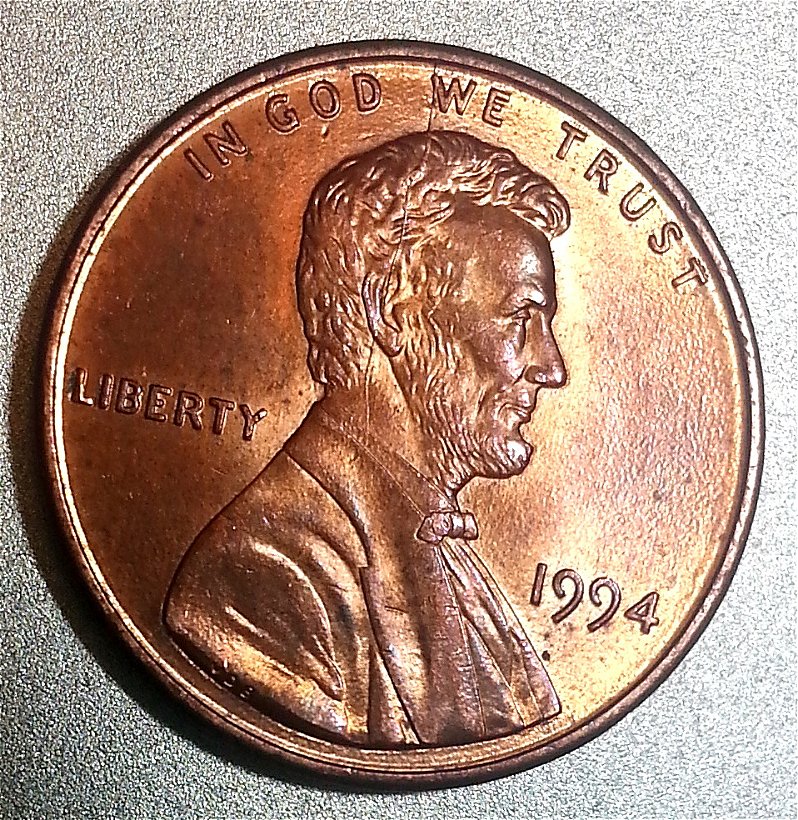 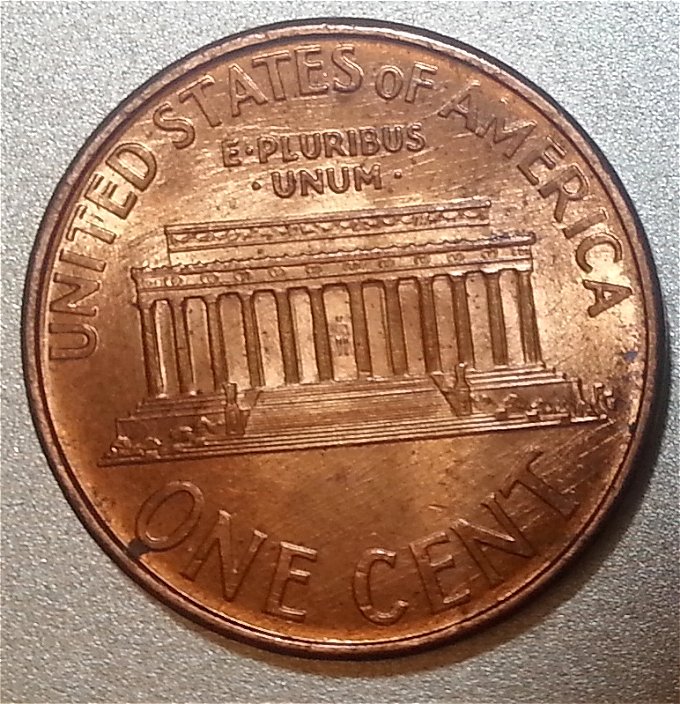 |
|
|
|
Pillar of the Community
United States
4424 Posts |
Quote:
would a die crack like this likely fetch at least the cost of having it graded? No. A coin with a die crack like this would likely only sell for a few dollars. Quote:
Is there a difference between "spiked" and "speared" devices? "Spiked" and "speared" are just nicknames for die anomalies that make it look spiked or speared. Calling it one or the other is purely subjective. "Spiked heads" refer to die cracks that go from the head to the rim. |
|
Moderator
 United States
34563 Posts |
I agree with the tanman and would only add that a nice example of a die crack like this is worthy of saving in a 2x2.
"If you climb a good tree, you get a push."
-----Ghanaian proverb
"The danger we all now face is distinguishing between what is authentic and what is performed."
-----King Adz
|
|
Pillar of the Community
United States
6196 Posts |
It is remarkably similar to SKH-1C-1994-12, but it crosses the W just a hair too far east and it bends slightly between crossing into the hair and the ear. So reasonably sure it is an unlisted Spike Head. As for value, no, these do not have value. I sold 10 Spike Head new discovery plate coins (the actual coins used on cuds-on-coins.com) for $20 and was happy to get it. I will sometimes photograph and submit a new Spike Head because I believe in documenting error coins, but there is no money in Spike Heads. And that, in my opinion, is why you can't find any that have sold, because they don't sell. Suggest you consider submitting it for consideration as a new listing on cuds-on-coins and if accepted label it and keep it as a memento of your addition to the knowledge of error coins.
|
|
Bedrock of the Community
United States
94367 Posts |
Nice example, definitely not worth submitting.
|
|
Valued Member
 United States
212 Posts |
Okay thanks everybody. I believe and accept what you're saying, but can I rant for a second? Ha, and please, for the sake of this newbie's threadbare morale at this point, let me know if you've encountered this crisis at any point in your time in the hobby. --Almost every day in the +/-3 months since I first decided to look at my dad's jar of wheaties, I have found myself utterly baffled by examples of what DOES or DOESN'T add monetary value. This 94 Lincoln is only the most recent example, but a good one. Here I am squinting WITH magnification to see if there is any doubling in the columns of the reverse, then just when I'm about to chuck it in the 're-roll' tub, my NAKED EYE catches a spike/spear/slice/lightening bolt, whatever you want to call it, going right through the skull of our (arguably) most beloved President. I fetch the magnifier again, note that it's definitely a die crack and not a scratch from circulation use, I note that the coin looks pretty good for a quarter-century "in the wild," and find other examples online, confirming this wasn't a one-off. I've already learned other examples of the hard lessons likely encountered by most if not all newbies (mistaking DDD and MD for actual doubled dies, getting excited about an over-zealously corrected die clash, etc.), but even still, I have to admit I let my fantasies fly with this head spike. Now OF COURSE I appreciate honest answers and lessons learned even when they are disappointing, and I appreciate that at least there are groups interested in cataloging various cases of "weird but not marketable" but I wonder if I'll ever wrap my head around the reasoning behind the market. WHY can an error on some mundane device (like a letter or part of a building) and virtually impossible to see, be more valuable than an obvious, stark, and COOL one? I mean, if I someday find myself getting a bazillion bucks for a coin because two letters are 'this' far apart versus 'that,' or whatever minuscule difference, I'm not going to ask the buyer "What is wrong with you?" but I can't deny I'll be thinking it. |
|
Valued Member
United States
212 Posts |
Oh, and I almost forgot--while searching for sales of this die crack, I came across this PCGS listing of 'speared bison' sales (link below). --Not life-changing money, but at least worth grading if the coin is at least a MS63. So what makes 'speared bison' more desirable than 'spiked Abe'? http://www.PCGScoinfacts.com/Coin/Detail/84159 |
|
Pillar of the Community
United States
6196 Posts |
Price is dictated by demand, but what causes that demand can vary widely. Rarity is one thing that shapes demand, but not the only thing. Popularity is probably more important. There is no lack of 1955 doubled dies, thousands have been graded, but they easily fetch $1000. There is only one known Retained Cud on any 1935-D Lincoln Cent, but it recently sold for $19.50. See? Not rarity but demand. So finding things in demand is where the money is. Which means, in general with Lincolns, looking for CherryPickers' Guide varieties on MS-64 grade or higher coins because these are in demand by the folks looking to put together registry sets. Almost every coin I've ever found worth over $50 was in uncirculated condition, as that is where the demand is. As for the whole "speared" thing vs "spike" thing...that's easy. A Spike Head is a specific error type defined more or less as a die crack that goes from the rim and enters (not stops at) the head. They can look like anything and all will be Spike Heads. A "speared buffalo" or "speared eagle" or "spitting horse" are all just things people made up to say what a die crack or die gouge or something else looks like as it relates to the design. There was a thread on these about a year ago and I put up photos of my "falling coconut" die chip on a quarter. They are kinda neat, and can become quite popular if they are the focus of an article in a coin magazine where people can become more widely aware of the them. They have very little numismatic value but can command some high prices. Anyway, that's sorta the story. Lots more to it, but if you are scanning coins in bank rolls looking to make some cash I'd call that a long shot. Other than a couple like 99 Wide AM, 84 DDO-001, 83-D DDO-001, 95-D DDO-003 most anything you find isn't going to net much profit. Most do it because it is honestly like finding bits of treasure, and to collect them. But seriously, we all started out finding a bunch of MD and now there are some here that consistently find some seriously good coins. It's a progression and once you get it down it's actually quite possible to find a truly top coin every now and again. The coin I found and posted last night, 1987-D RPM-003 lists at $60 for MS-63, so they're out there. |
|
Valued Member
United States
212 Posts |
Yeah I get WHAT the trends are, just don't understand the 'WHY's, which I guess you'd have to ask literally each person considering making a purchase. I don't buy coins at all but if I did, I would pay more for this coin than a 99 Wide AM, any day. I think I just managed to stumble into the weirdest hobby in the world, from my perspective. I keep wondering if I'll still be doing it, say a year from now, or if I'll look back and not recognize who I was during this time. It feels like an addiction to keep trying, keep looking, almost like lottery tickets (which I have never bought), but with at least the delusion that I can increase my odds in ways you can't with lotteries (e.g. knowledge). |
|
Pillar of the Community
United States
2376 Posts |
Not to put a damper over your excitement but had I been in it for profit when I first started I probably wouldn't still now be flipping coins under a loupe , thirty years later.
The value of my good finds is fun to find out but it's just a way to keep score. The value of the usual find is to me the fun and excitement of that first glimpse.
In all these years I think I have sold two variety/error coins but given away many more than that.
I hope you can find that "thing" That keeps you going because this is a super hobby
|
|
Valued Member
United States
212 Posts |
But isn't any sale over face value a profit? That's another thing about it that makes it better than true gambling; lottery tickets aren't refundable but coins are, 100%. It's more an investment of time though. I am thinking I will try to sell lots, not individual coins.
|
|
Pillar of the Community
United States
4424 Posts |
Quote:
But isn't any sale over face value a profit? Theoretically, yes. But in reality, not so much. The amount of time it takes to find these coins, take pictures of them, list them on ebay, ship them, and actually find a seller only to get the $1 leftover after ebay fees really isn't worth it. The time put into this is not worth the minimal profit unless you enjoy it, or you are a collector. I strongly believe that going into this hobby with the sole purpose of profit is a terrible idea. After being on this forum for two years I have learned most people who are concerned only about profits and value seem to quit soon after they start. The people who stick with the hobby are interested in collecting and/or "the hunt" of looking for errors and varieties. Selling and profits are, and should be, secondary. |
|
Pillar of the Community
United States
5196 Posts |
 Tanman2001 |
|
Pillar of the Community
United States
8715 Posts |
As for the value, it's all in the demand. The 1937 "3 legged" Buffalo nickel sells for high prices, but it's only a case of a grease filled die/overpolished die. Yet a Lincoln Cent with a similar amount of Struck Through Grease will sell for far, far less than the 1937 nickel. It's the demand that drives up the prices. |
|
Bedrock of the Community
United States
17884 Posts |
Quote:
--Almost every day in the +/-3 months since I first decided to look at my dad's jar of wheaties, I have found myself utterly baffled by examples of what DOES or DOESN'T add monetary value. You're in good company. I've been studying and/or collecting coins for over 50 years and I still don't understand why people pay significant sums for some items. Edited by Conder101
11/12/2018 08:07 am
|
|
Bedrock of the Community
United States
62064 Posts |
Because they see what they think is valuable.  When they go to sell them, they come here, and get mad at us telling them it is worth what it says on the coin. |
| |
Replies: 19 / Views: 2,823 |










 Posted 11/10/2018 2:18 pm


