| Author |
 Replies: 68 / Views: 7,713 Replies: 68 / Views: 7,713 |
|
Pillar of the Community
586 Posts |
Edited by Waynoah83
08/15/2020 02:56 am
|
|
|
|
Moderator
 United States
56855 Posts |
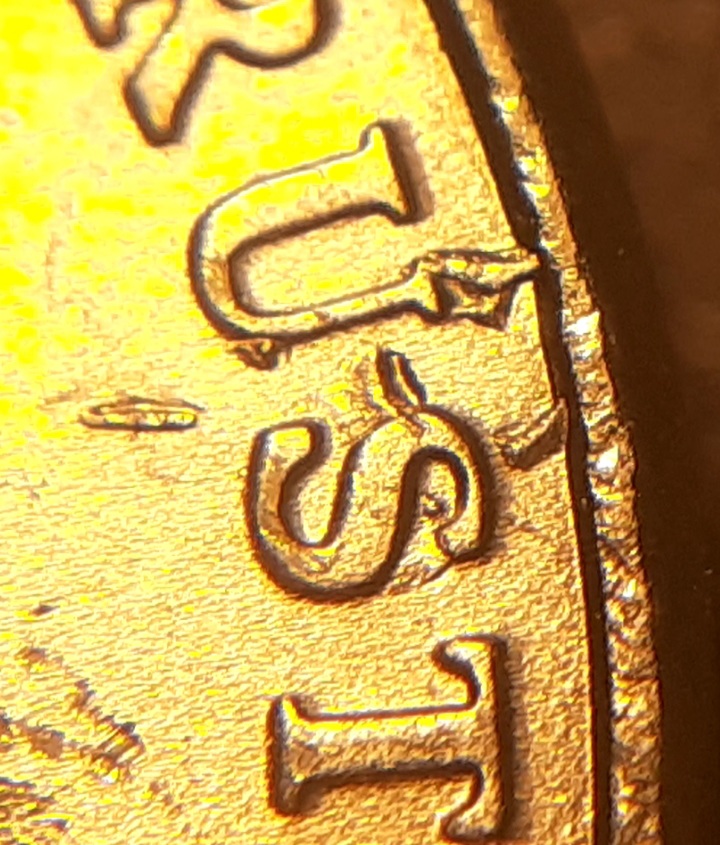
Not dropped letters,PMD of some sort? John1  |
|
Pillar of the Community
 United States
2386 Posts |
Struck through...? Nice Nic...I like it!
smat
|
|
Pillar of the Community
United States
2189 Posts |
Quote:
Not dropped letters,PMD of some sort?
John1 I agree with John |
|
Moderator
United States
34553 Posts |
I agree damage because for each raised area, I see an adjacent and corresponding gouge.
"If you climb a good tree, you get a push."
-----Ghanaian proverb
"The danger we all now face is distinguishing between what is authentic and what is performed."
-----King Adz
|
|
Pillar of the Community
United States
3207 Posts |
If the anomalies are raised above the coin's surface, they're not a struck-through.
|
|
Bedrock of the Community
United States
62064 Posts |
|
|
Pillar of the Community
 586 Posts |
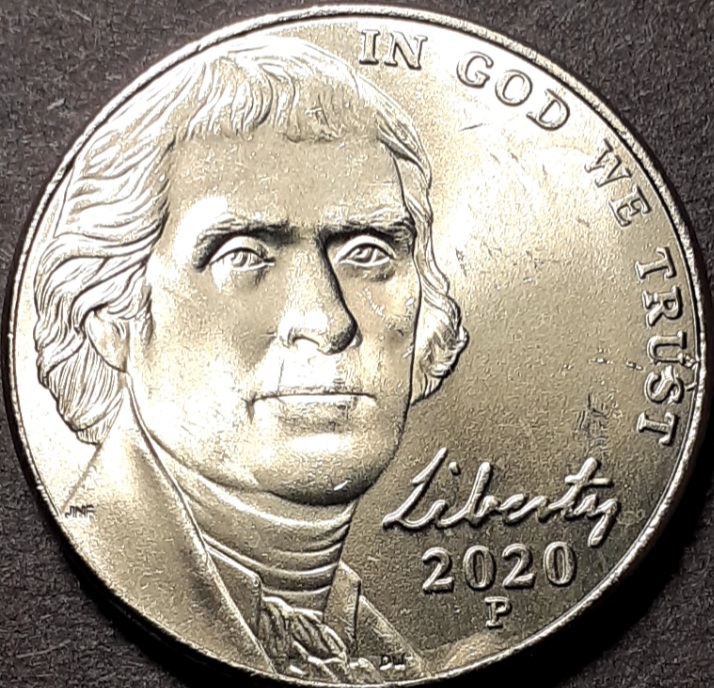
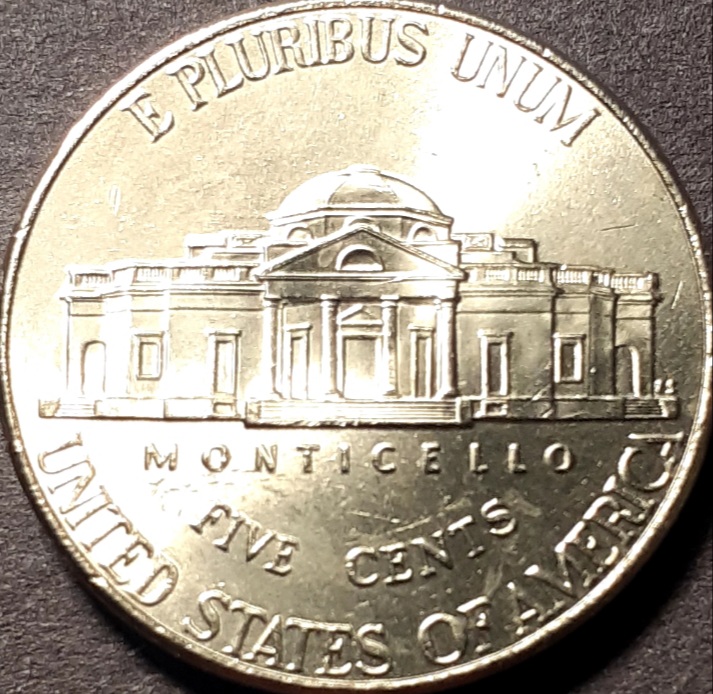
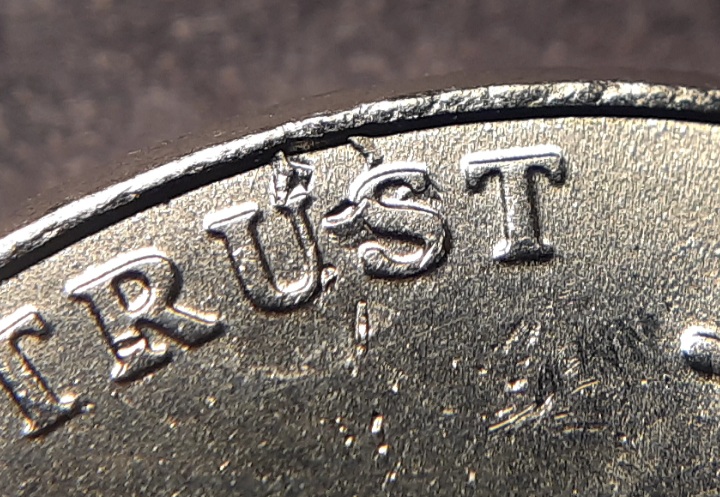
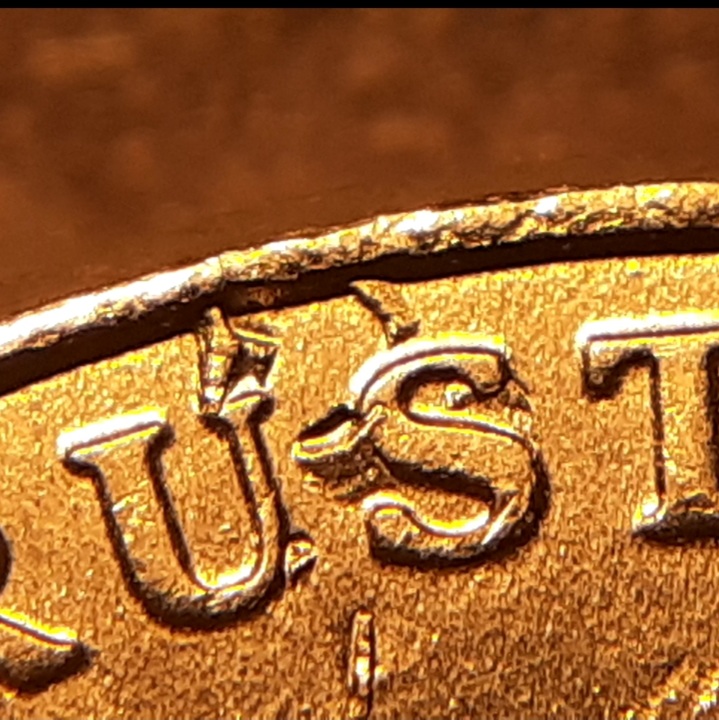
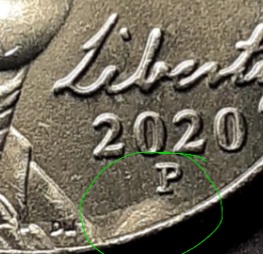
I appreciate the feedback but like Nick10 stated and which I included in the description, all these areas are raised. I know not having the coin in hand makes it hard to tell the difference between incused areas and raised because it happens to me all the time. I'm no Mike Diamond but I assure you all the areas I circled in green in the edited photo from above are all raised. The part of the S that is affected is actually raised a bit higher than the S itself. It's not glue. I even tried to pry at an area with a toothpick to see if it was some other foreign object or metal shaving and it is part of the coin. The areas in question were caused by some sort of die event, I'm leaning more towards an unusual clash. Not claiming to be an expert but isn't it possible a working die broke and a piece or pieces broke loose and got stuck between the planchet and the opposite die causing basically a clash and wasnt noticed right away. Or maybe when changing out one die it hit the other die and caused a clash that isn't the usual negative copy but some sort of Frankenstein clash? Maybe it's the first legitimate RPM in decades and it's one of a kind and now I own it? (Calm down everyone. That last part was a joke. I know that there really is no such thing as an RPM) cause you can call it peredoilla or whatever it is, but those look like devices, specifically I was thinking the CA from the reverse. I'm gonna go with Funky Frankenstein Clash or FFC for the novices, or some dude at the mint still had mayonnaise on his hands from his sub at lunch and dropped a die on the ground. Prove me wrong....here is said picture I mentioned in chapter one of this reply  |
|
Pillar of the Community
586 Posts |
Sorry coop. I was dictating while you responded but I answered your question in one of the chapters of my reply. They are just as much a part of the coin as the devices that should be on the coin. I'm gonna see if I can get some diff angles and maybe that will help.
|
|
Bedrock of the Community
United States
62064 Posts |
They maybe raised, but my question is can they be moved? I see two colors on that area on those devices, like something peeled off the tops of those devices. (lower loop on the 'U' and 'S' of Trust)
|
|
Pillar of the Community
586 Posts |
  I tried a couple different lighting changes. |
|
Valued Member
United States
358 Posts |
|
|
Pillar of the Community
586 Posts |
|
|
Bedrock of the Community
United States
62064 Posts |
It can't be a dropped letter issue as they are incuse. (The area would be pushed in, in the shape of what was struck) If it is raised on the coin, then that would be die damage. I can't tell for sure if the metal was moved to a new location after the strike from coin contact or not? Some areas look curved like it was hit by something making it incuse. The area near the rim looks like it is raised, but doesn't resemble the design of the die. So I'm not sure from what I see that I can identify the issue.
|
|
Pillar of the Community
United States
2189 Posts |
Quote:
What kind of damage? Who knows how it was damaged, We are not experts on how coins are damaged. If it was done during the minting process someone here would explain it but how damage occurr's after the strike is pure speculation. Quote:
Prove me wrong. That's not how it works.The burden of proof is on you since your the one making the claim of an error |
|
Pillar of the Community
586 Posts |
Okay. I'm gonna give a rundown of what I've done to the coin. Initially I used a little warm soapy water and cleaned it up and nothing changed or fell off. The water did not reconstitute a dried up booger that fell off to reveal a normal nickel. It looks identical to when I originally found it. After looking at the coin under between 25 and 50+ times magnification for the better part of an hour, putting it aside and coming back to it an hour or two later, using a toothpick to try to pry or move a little raised piece without damaging it, I came to the conclusion it was caused by an event with the die. Being raised and pretty much the same height as far as I can tell as the other devices on the obverse, and actually a little higher on that part of the S you were questioning coop, I figured it was a legit abnormality caused during the minting process. Since I posted it I have tried to move every raised abnormal area, poked the smaller ones and right by the rim with an exact knife and even rubbed a little acetone on the smallest raised part just in case my initial conclusion that it easnt glue was wrong and it's still exactly hi ow I initially described it. My pictures arent the best but the the area above the U looks like part of an F or T. The other area that is curved is almost perfectly so like a C or an O, and like I said to start with, they are all raised. I know this usually when the die gouges answer comes out
|
| |
Replies: 68 / Views: 7,713 |







 Posted 08/15/2020 08:37 am