| Author |
 Replies: 8 / Views: 947 Replies: 8 / Views: 947 |
|
|
New Member
United States
49 Posts |
|
|
|
|
Moderator
 United States
34539 Posts |
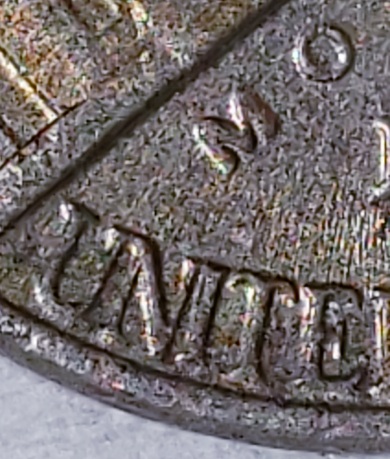
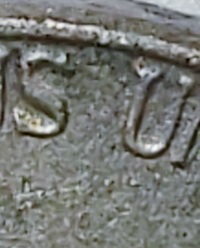
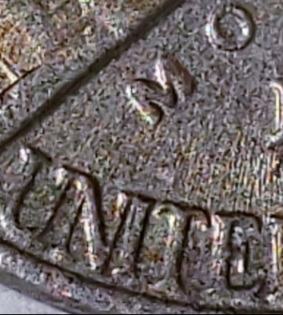
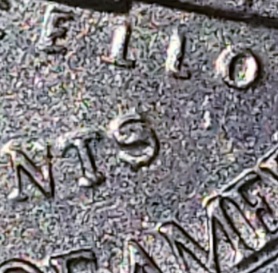
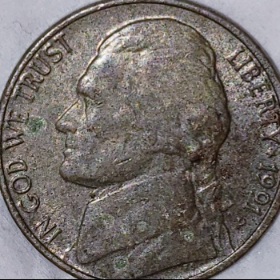
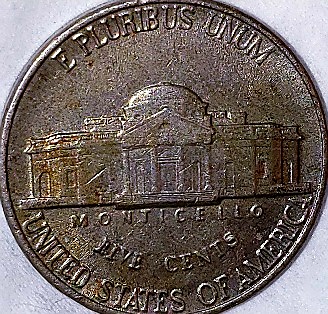
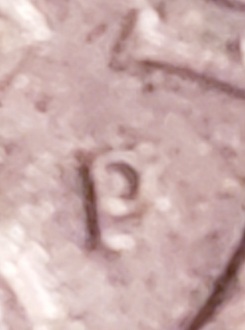
@frank, I do see striations in the field near indicative of a tired die. I am struggling though with your pic of the mintmark. Any chance of a more in-focus pic?
"If you climb a good tree, you get a push."
-----Ghanaian proverb
"The danger we all now face is distinguishing between what is authentic and what is performed."
-----King Adz
|
|
Bedrock of the Community
United States
19533 Posts |
Agree with the Die Deterioration state of the coin. At first glance, the mint mark appears normal, but close-in and sharp photos might clarify if anything is going on. Thanks. |
|
Moderator
United States
56855 Posts |
In regards to the mint mark,it isn't a RPM or a OMM. Does that help any? John1  |
|
Bedrock of the Community
United States
10065 Posts |
Looking for random anomalies on coins and hoping they match up to something collectable will take you a lot more time, wasted effort, and disappointment repeatedly finding out you have nothing but post mint damage. Spend some initial time at places like error-ref.com, doubleddie.com, varietyvista.com, conecaonline.org, coppercoins.com etc. to find what actual and collectable coin errors look like. A good way to start is, for instance, separate a bunch of pennies by date. Go to varietyvista.com and, date by date, use the reference there to see what errors are known for that specific coin/mint mark. Look for those specific errors/varieties using the pictures provided. After doing this for awhile you will KNOW what an actual error looks like and not have to waste time on face value and damaged coins.&  How much squash could a Sasquatch squash if a Sasquatch would squash squash? Download and read: Grading the graders Costly TPG ineptitude and No FG Kennedy halveshttps://ln5.sync.com/dl/7ca91bdd0/w...i3b-rbj9fir2 |
|
Pillar of the Community
United States
509 Posts |
As Spence pointed out, the striations (also known as flow lines) which are the thousands of tiny linear lines flowing in the direction towards the rim, are a dead giveaway that the die producing a coin is simply slap wore out. As a result, a worn out die will produce many things on a coin, predominately on Nickels it seems, that can lead you to see things that are sometimes assumed as errors. I don't see any errors on your coin but better pics are always a good idea. Practice on your coin pics and you will no doubt get better and clearer photos before you know it.  |
|
Bedrock of the Community
United States
62064 Posts |
Die flow lines on the fields tell the story of a wearing die. Keep in mind they will probably polish a coin more than once before they retire the die. Looking at the devices, I'm guessing it was already polished once, and ready for another one at this point. After the third polishing the devices really start to fall apart:  So this die is just about half done in its life span. Several hundreds of the thousands more nickels will be struck with this die. |
|
New Member
 United States
49 Posts |
Thanks for the instruction. I know you get these same questions over and over from newbies like myself. I do spend a lot of time searching without enough knowledge of differentiating between collectible and big "nothings". I do need to educate myself more. Thanks for the references...and your patience. I'm sure I will still be bugging all of you for help though.& |
|
Bedrock of the Community
United States
10635 Posts |
It's good to continue to ask question as that's how you learn! We really don't mind questions and are happy to help. As mentioned, the various error reference sites are very good, plus don't forget, you can search any topic here on CCF from the text box atop every page here. CCF is your friend; use all our resources and you'll be a pro in no time! Again, ask any questions you might have, we'll help if we can!  |
| |
Replies: 8 / Views: 947 |
|







 Posted 11/26/2021 07:15 am





