| Author |
 Replies: 13 / Views: 2,724 Replies: 13 / Views: 2,724 |
|
|
New Member
United States
27 Posts |
I'm sure this is a misunderstanding, but did the philadelphia mint produce 40% silver clad bicentennial quarters? this is a 1975-6 no mint mark bicentennial that weighs 5.72 grams. it was "teetering" between 5.72 and 5.73 so I'm led to believe there's a small chance this is 40% silver clad. I may have misunderstood something though. I wont get my hopes up yet. (edit: I think it may be important to note, every other bicentennial querter I weighed on this scale was between 5.50g and 5.61g) 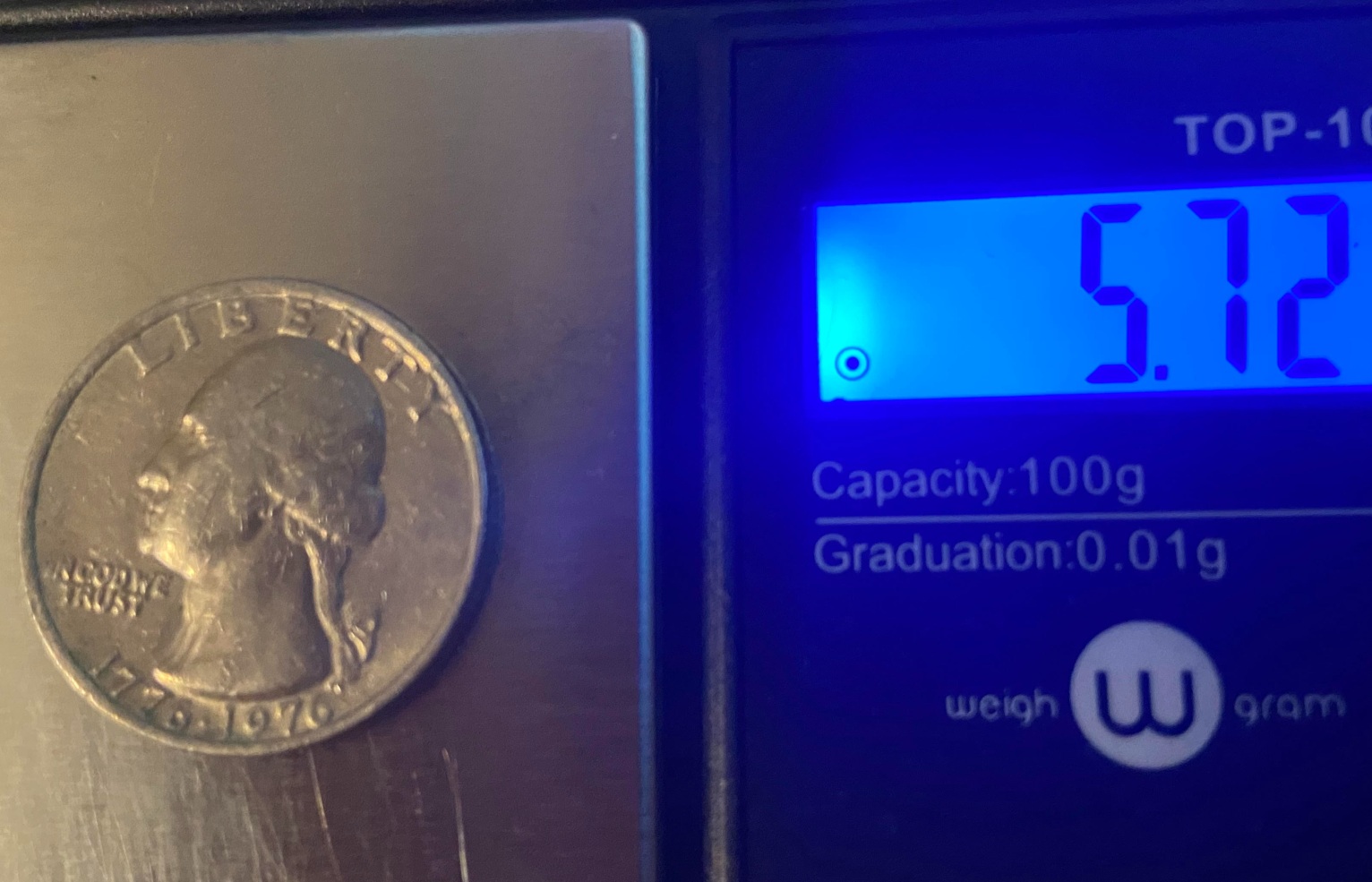 Edited by Dcjbiggie
09/08/2022 01:11 am
|
|
|
|
Pillar of the Community
United States
3848 Posts |
First glance, it looks regular clad. Can you add a photo of the edge?
Suffering from bust half fever. Want to learn how to attribute early half dollars by die variety? Click Here: http://goccf.com/t/434955Shoot me a PM if you are looking to sell bust halves. |
|
New Member
 United States
27 Posts |
Yes I will take a pic asap. It does have the copper showing but I was under the impression a 40% silver piece would still have that. Maybe that's what I misunderstood. Is it possible for a regular clad bicentennial to be this heavy?
|
|
New Member
United States
27 Posts |
sorry, I'm still new to all this so I thought the only difference was weight. 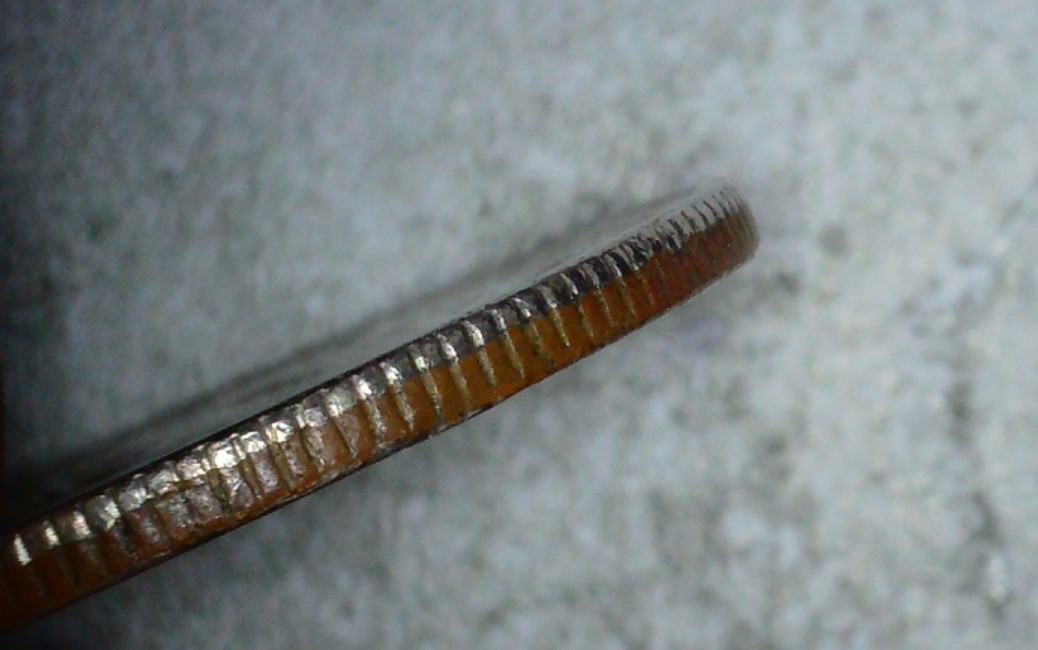 |
|
Pillar of the Community
United States
1675 Posts |
There is an allowable Weight Tolerance for US coins, they don't all hit the target weight, which is 5.67 for quarters. Your coin is very close to the correct weight and is well within acceptable tolerance. Even a bit heavier would be perfectly normal. |
|
Moderator
 United States
56855 Posts |
Normal copper clad coin. John1  |
|
Moderator
United States
34539 Posts |
Yes weight is an important characteristic to check, but not the only one. Here is a link to an earlier thread with much the same question as yours: http://goccf.com/t/377472"If you climb a good tree, you get a push."
-----Ghanaian proverb
"The danger we all now face is distinguishing between what is authentic and what is performed."
-----King Adz
|
|
Bedrock of the Community
United States
19536 Posts |
|
|
Bedrock of the Community
United States
94367 Posts |
 to the CCF! |
|
Bedrock of the Community
United States
62064 Posts |
Here is the weight chart with also the tolerance levels for each denomination. (Only gold coins are weighted at the mint for exact weight) 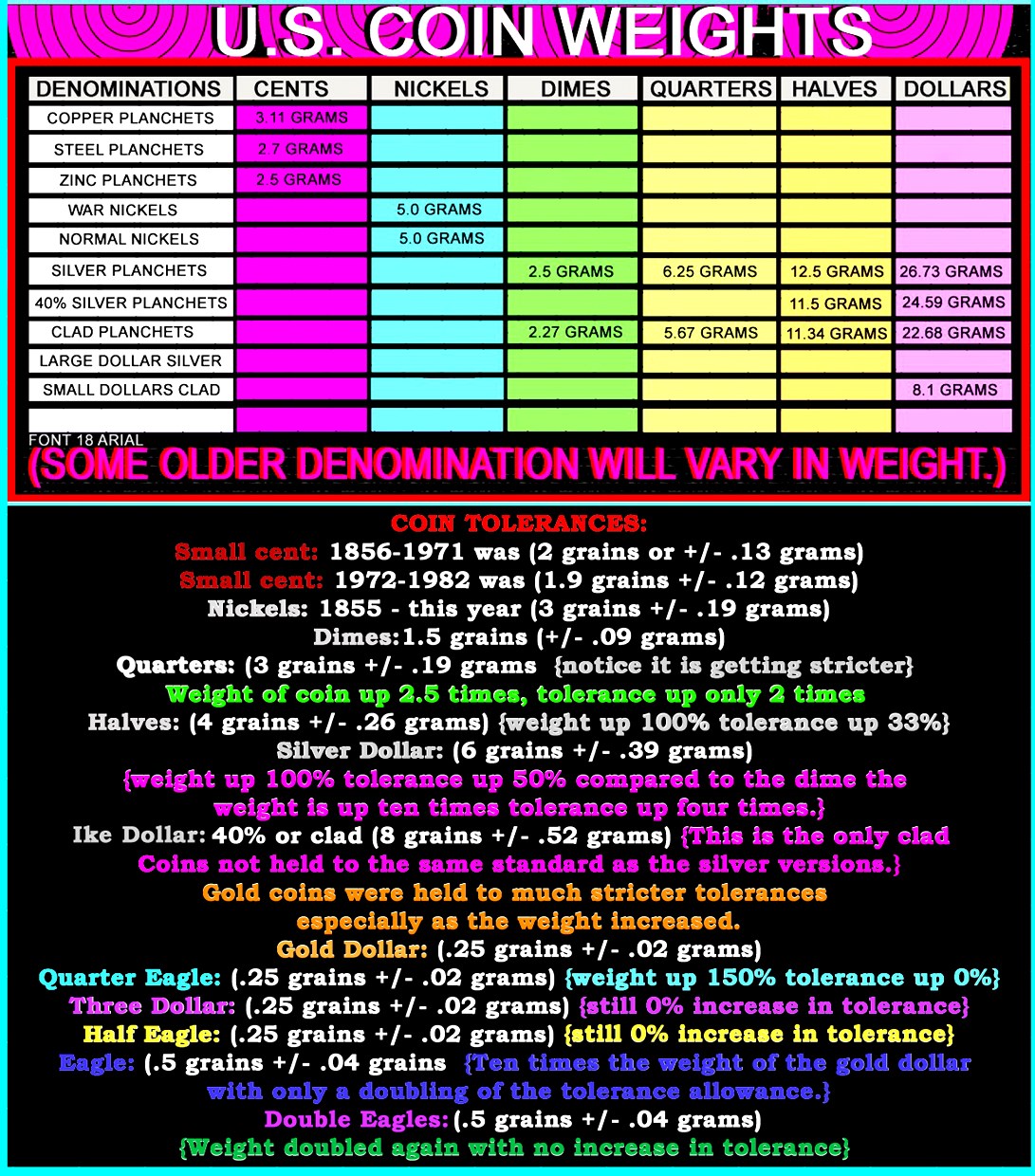 |
|
Pillar of the Community
Canada
6244 Posts |
The Silver clad bi-centenary was only in San Francisco and no connection with Phil Mint for coins rolls. In any way the S rolls could be find in Denver and Philadelphia. For the knowledge: The rolls are approve with an + or - .05 tolerance.
|
|
Moderator
United States
105948 Posts |
|
|
New Member
United States
27 Posts |
got it! thanks guys! I think the problem was that I saw somewhere that the actual 40% silver (S) once were 5.75?g and I thought that was the only difference. still learning. for example I figured the difference was the "40% silver" part was the "shiny" part so I was expecting to see "copper/silver" on the rim and don't remotely have the eye for it yet. maybe I should buy a silver coin so I can compare the metals. god knows I'm not finding any. lol
|
|
Moderator
United States
105948 Posts |
Good luck in your search for the silvers.
|
| |
Replies: 13 / Views: 2,724 |
|








 Posted 09/08/2022 01:22 am


