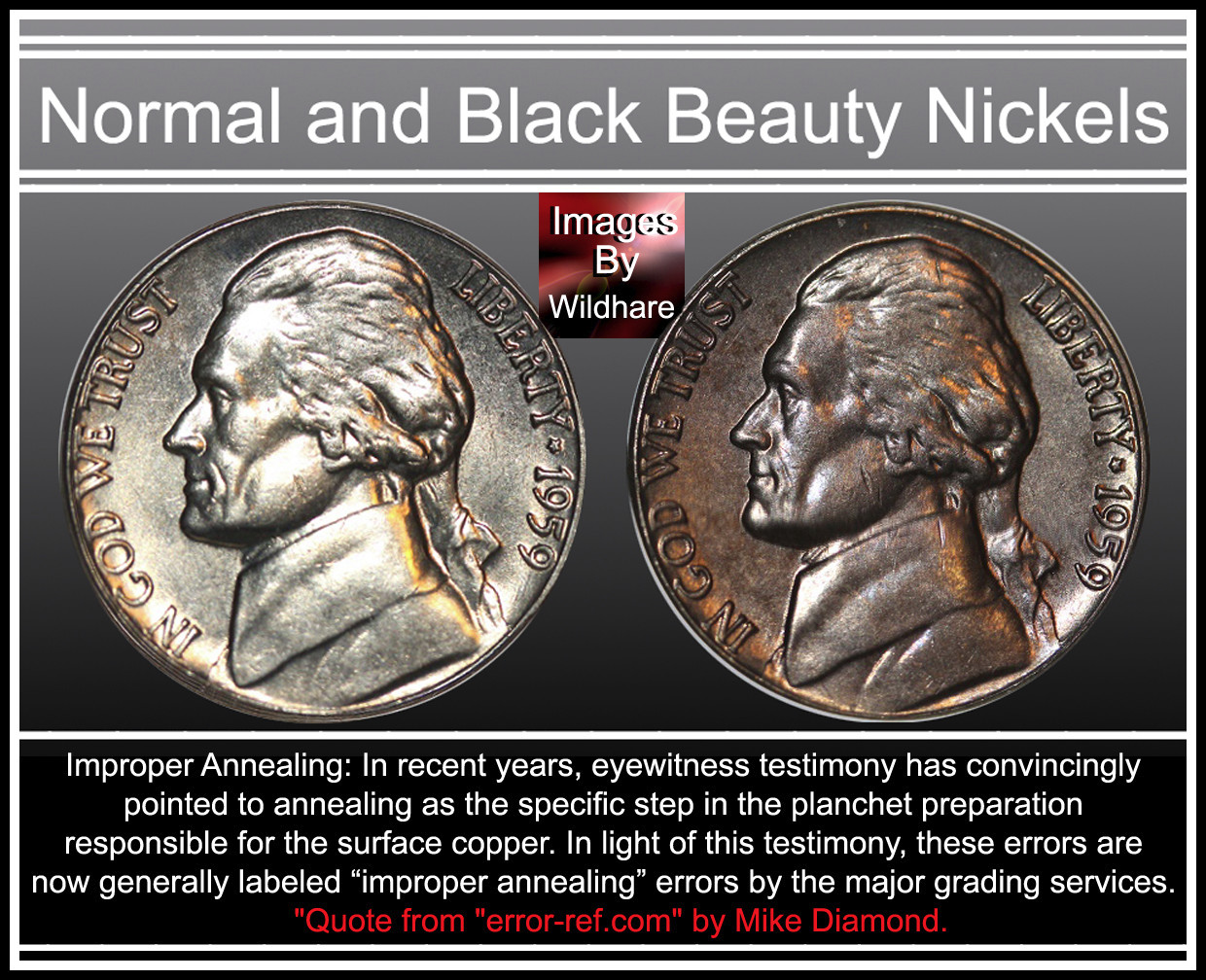
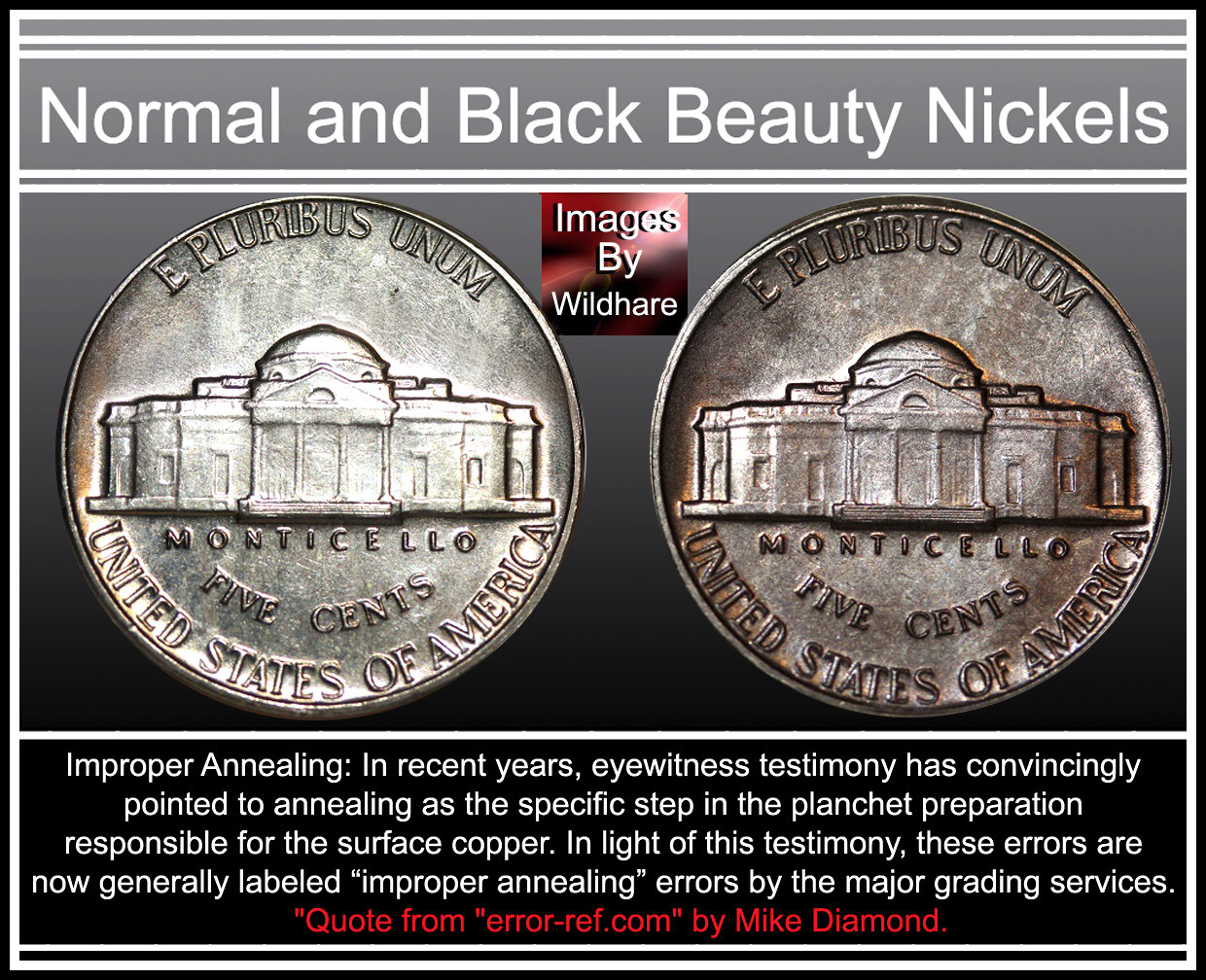
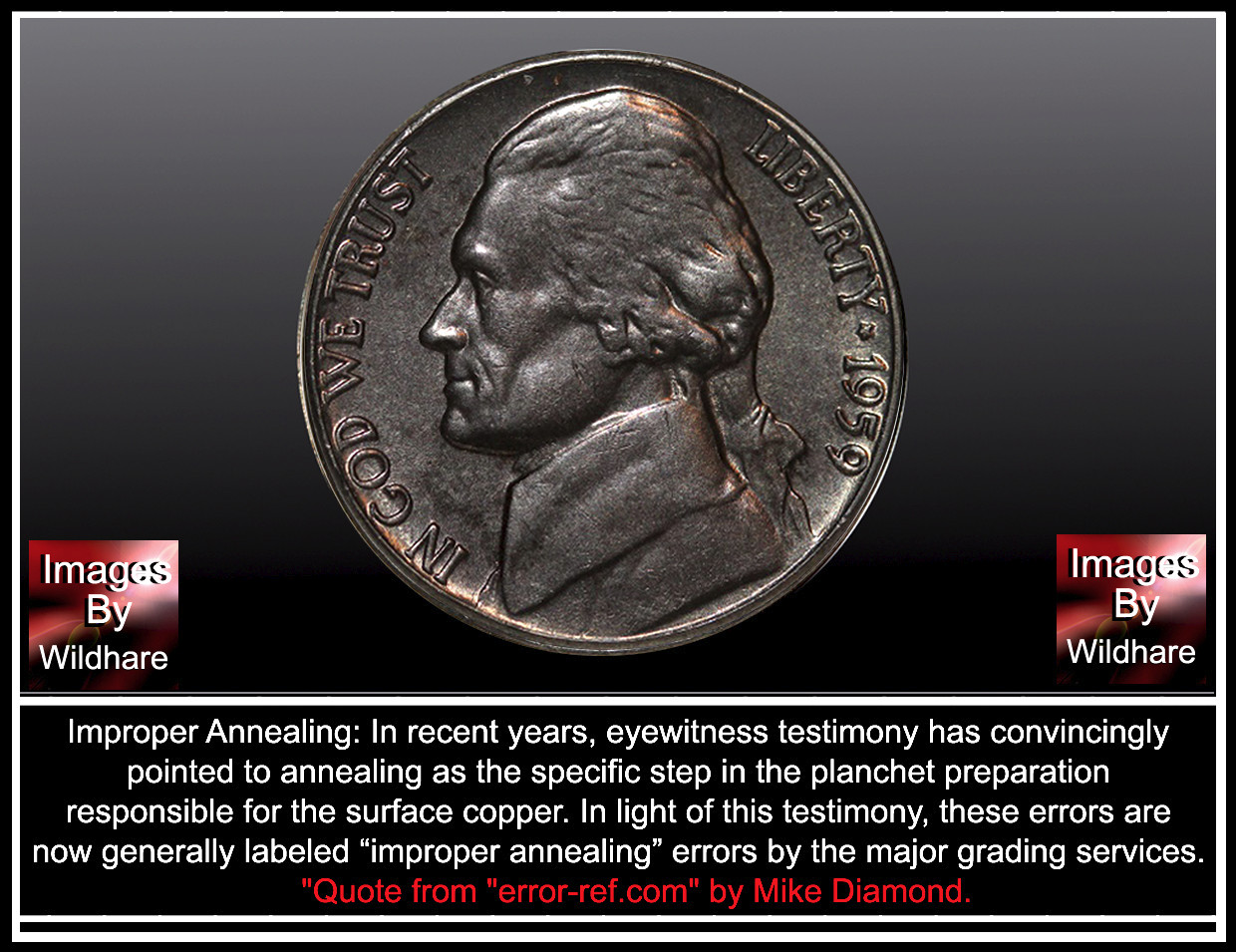
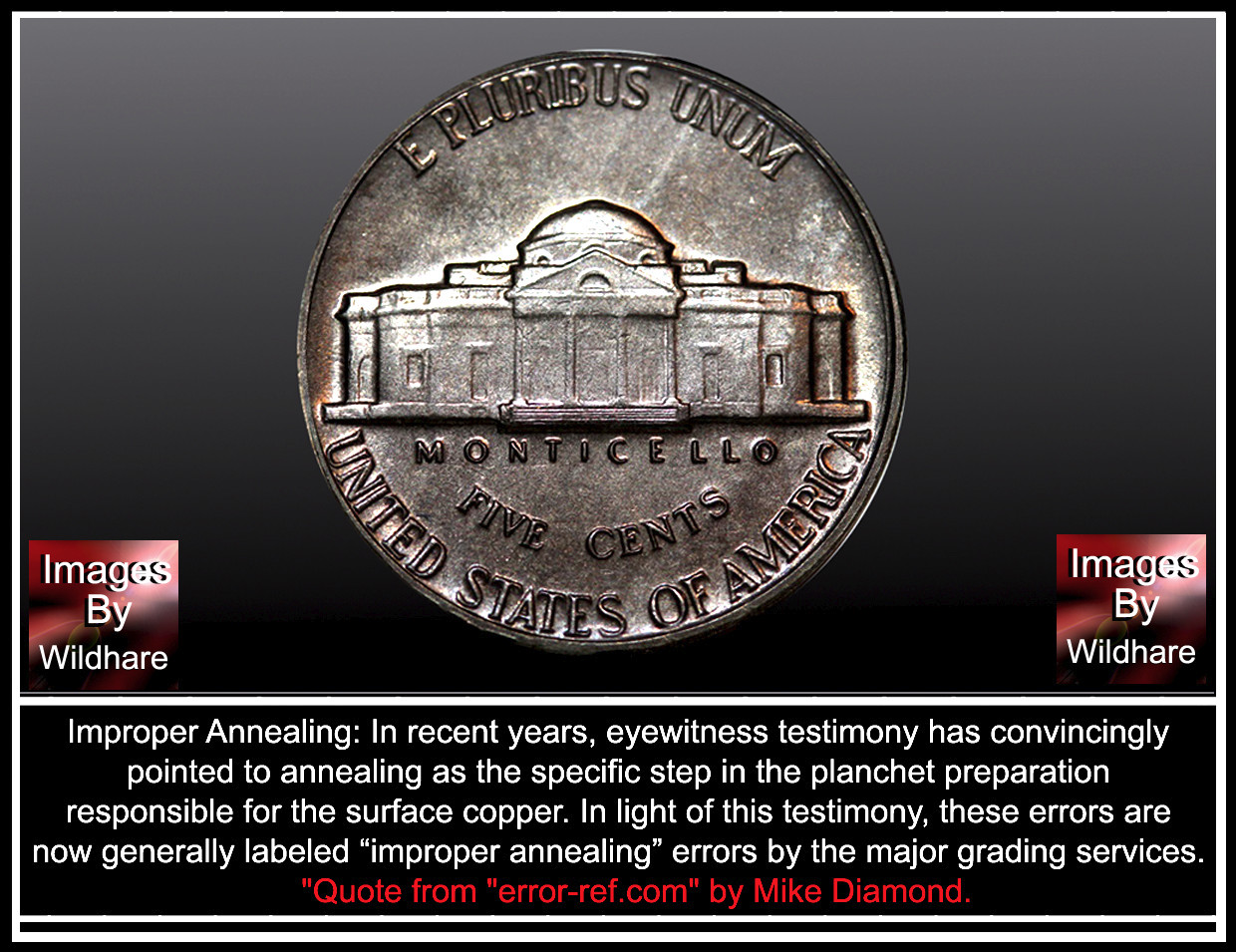
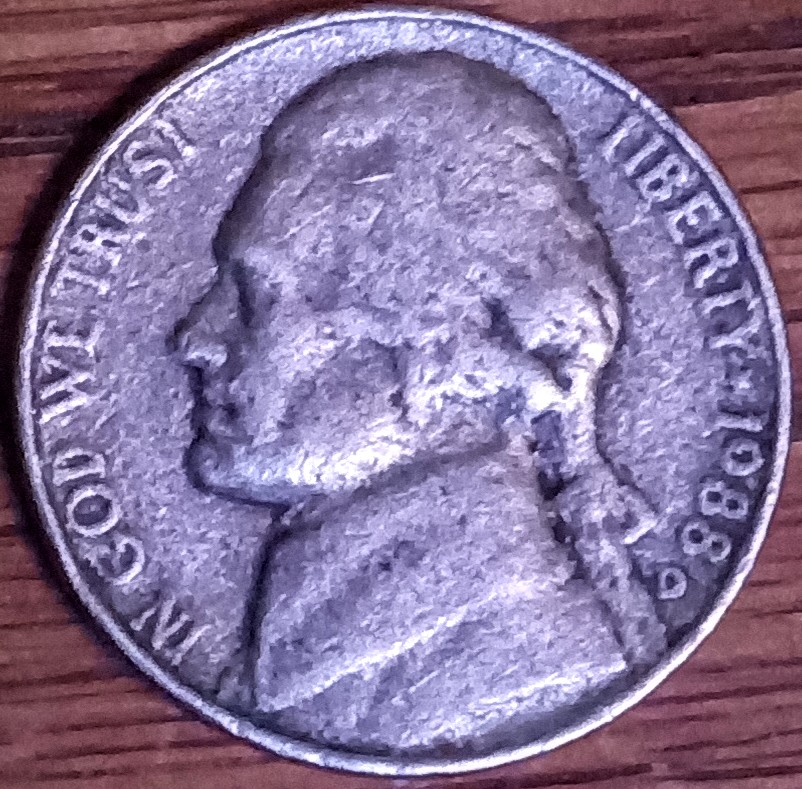
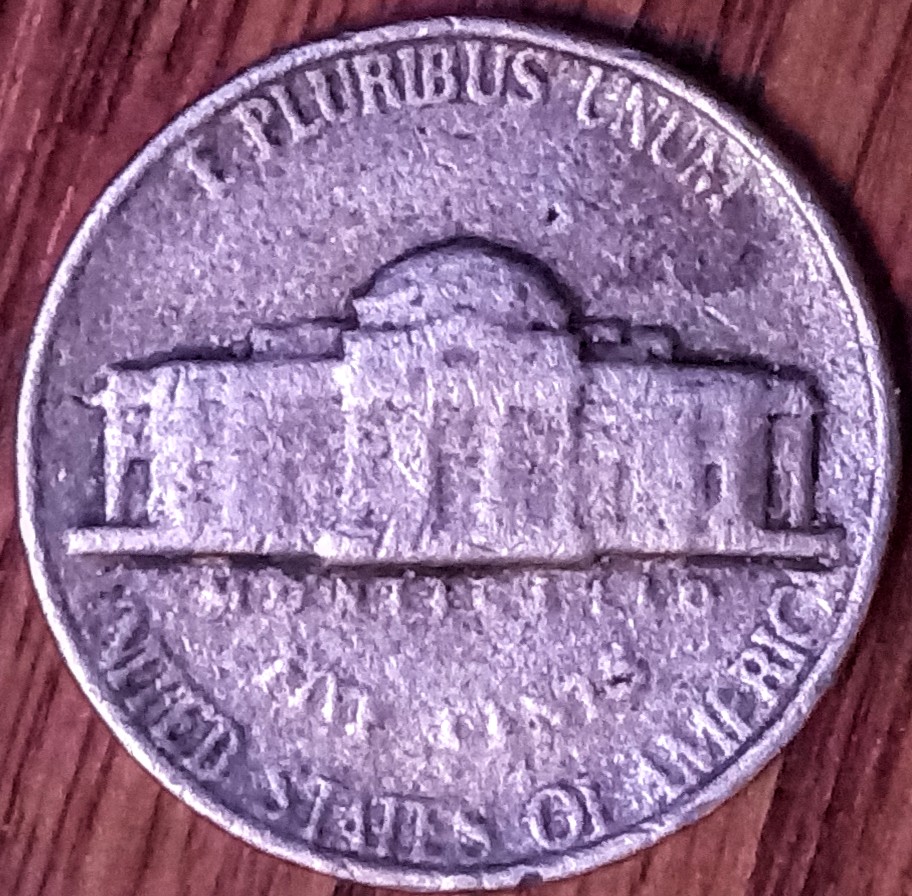
Good morning. I came across this coin when I received it back in change. It weighs to spec at 5.0 grams. I've stared at it under magnification too long and my eyes are starting to play tricks on me so I thought I'd let you all have at it. Here are a few images.....
I'm seeing a well-circulated/worn nickel--may have spent some time in a mildly corrosive environment, and perhaps a short stint in a commercial-grade dryer. Over several decades of roll searching, I've come across similar looking pieces.
Looks like the discoloration is from environment as the alloy used for nickels and the outer clad layers on dimes, quarters, and halves are susceptible to environmental damage also resulting in a darker appearance. Unless you are getting them from mint bags or rolls it would be hard to know exactly what its been exposed to during its circulation which this coin clearly has a lot of, and would then no longer have some of the mint luster. The weight is typically different if it were to be on a foreign planchet for example.
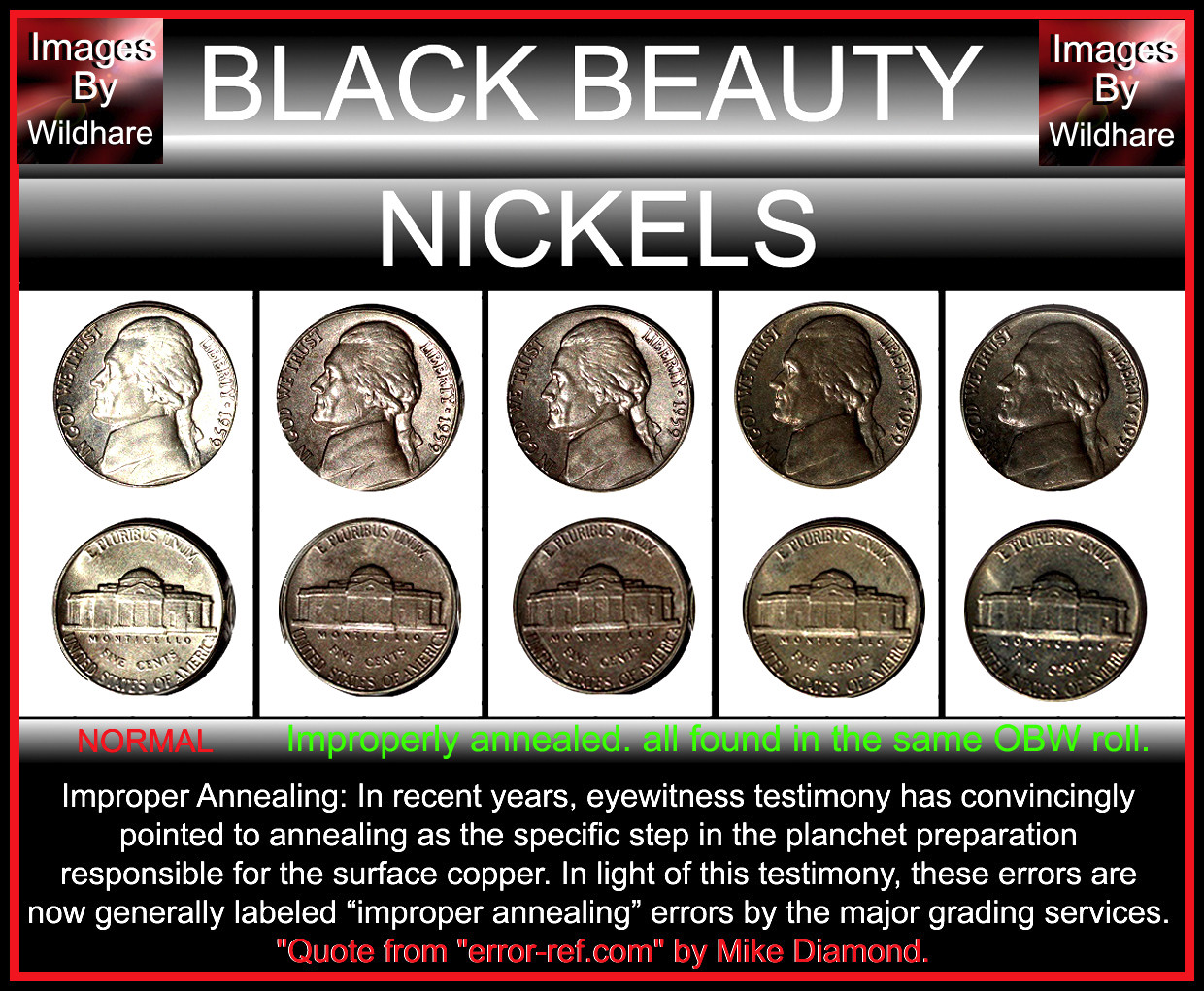
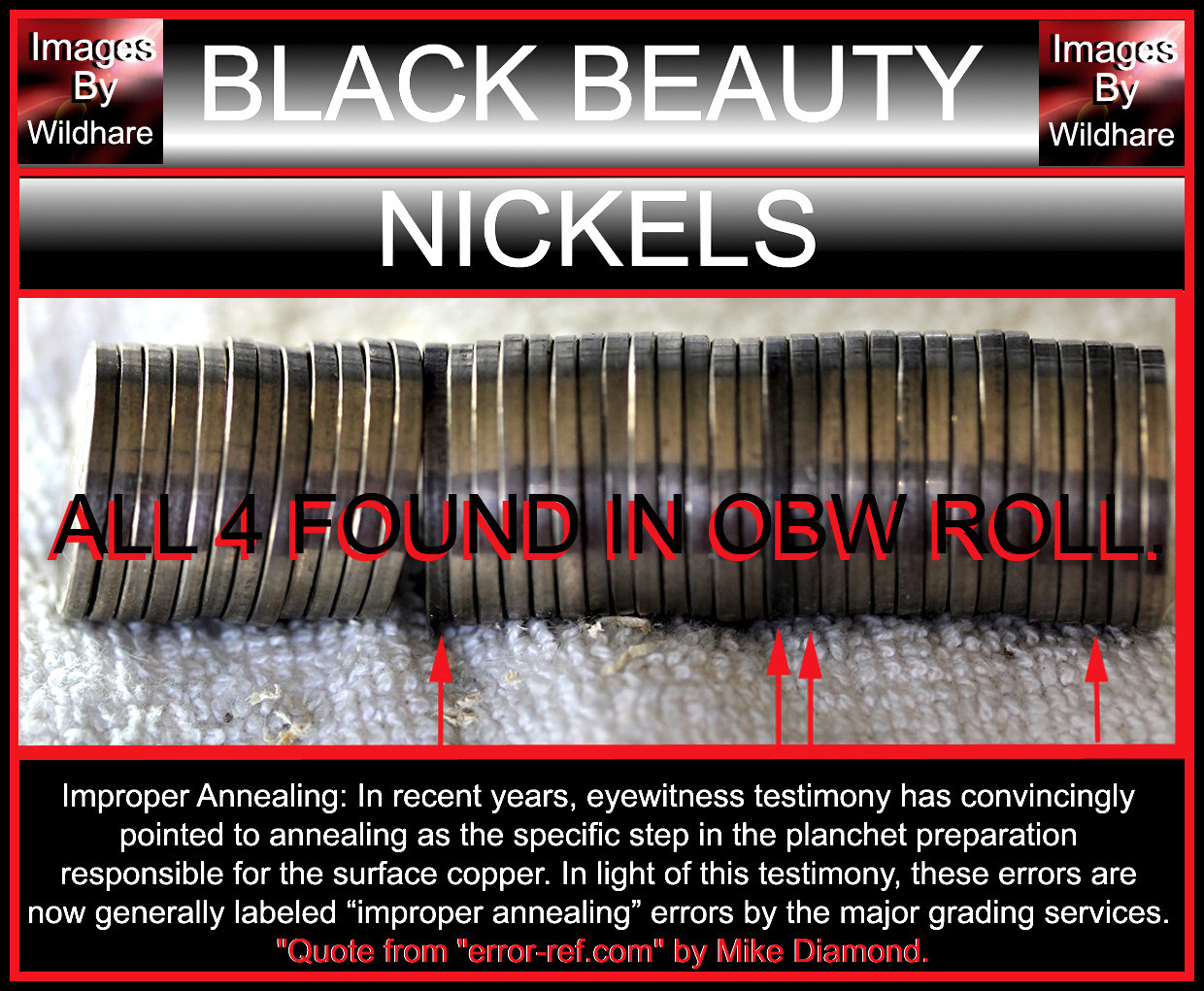
Another one you can learn about are Black beauty nickels which seem to be the result of improper annealment, the process by which planchets are heated to prepare them for striking at the mint and these are error coins. It seems these nickels were left in the furnace a bit too long, producing a darker color that can range from gunmetal gray to jet black. Some also think they may have an improper alloy mix. Improper annealment can be found in all denominations actually, but 1959 nickels are particularly known for this error. Also Denver coins apparently are not usually found with improper alloy mix.
Thanks for all of the responses. I'm aware of Black Beauty nickels and environmental damage. When it comes to environmental damage or a coin that's been tampered with, the weight is usually lower than it's weight when leaving the mint. And it's egg shell/orange peel appearance is consistent over the whole area of the coin. Not just the low or high areas. I've never seen any chemical that would give this coin it's appearance. And dryer heat? I've heard that for years. I have to argue that theory. You could take much higher gear, much higher, from a nother source other than a commercial dryer and still would not be able to alter a coin. I'm not arguing or questioning anyone's knowledge here, and there's a lot of it, I just feel there are explanations other than the norm that may be possible. What may they be I don't know. But the door should be left open for compromise, not just "This is how it is and that's that". Now it's time to get my bashing from everyone I'm sure. Sorry, it's just fun and makes collecting even funner when there's reason to search for more possibilities....
Alot of people mistakenly think that a Dryer Coin is damaged from the heat. You are right about the heat from a dryer not being anywhere close to melting the surface of the coin. It's damage from the coin being trapped between the drum and the frame or drum holder in the dryer. It rattles around being smashed, ground, and smeared. I don't think your coin is a Dryer Coin. Something altered the coin after it left the mint. All I can say is it's from something in the environment that it has been in for the last 35 years.
Disclaimer: While a tremendous amount of effort goes into ensuring the accuracy of the information contained in this site, Coin Community assumes no liability for errors. Copyright 2005 - 2026 Coin Community Family- all rights reserved worldwide. Use of any images or content on this website without prior written permission of Coin Community or the original lender is strictly prohibited. Contact Us | Advertise Here | Privacy Policy / Terms of Use






 Posted 02/26/2023 07:39 am


 Seems it's done it's job. Thanks, Doug.