| Author |
 Replies: 33 / Views: 5,013 Replies: 33 / Views: 5,013 |
|
Pillar of the Community
 United States
6873 Posts |
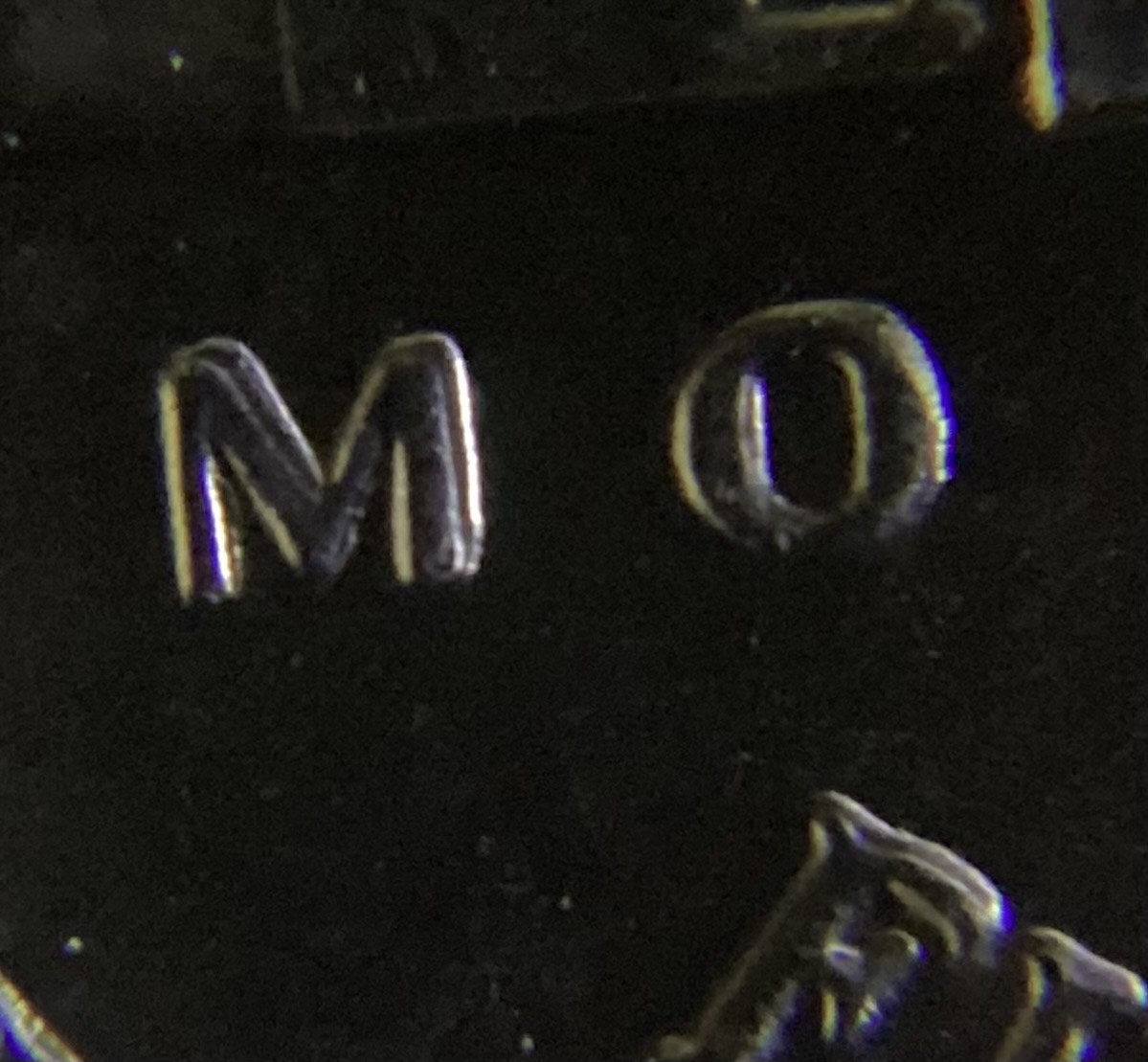 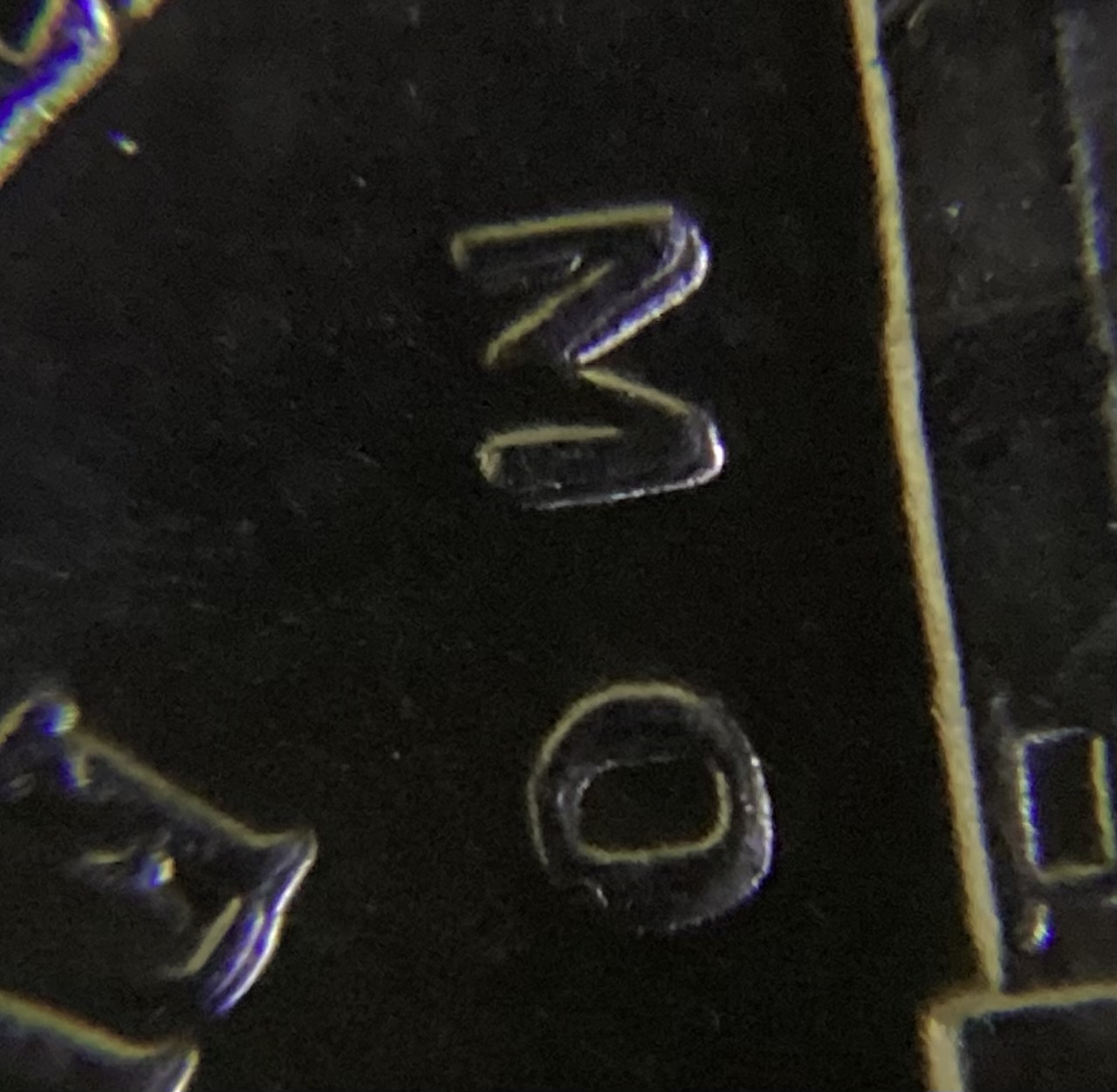 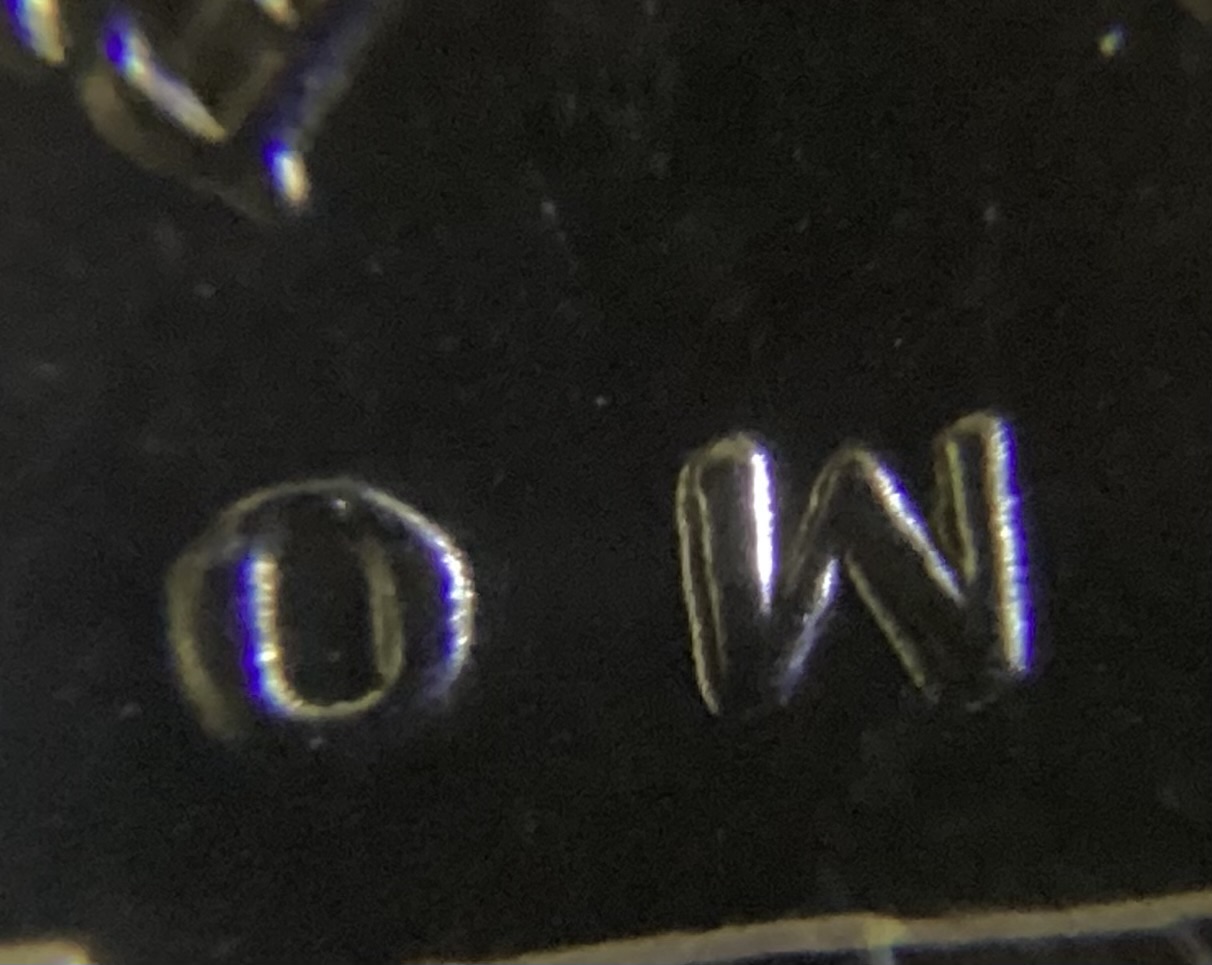 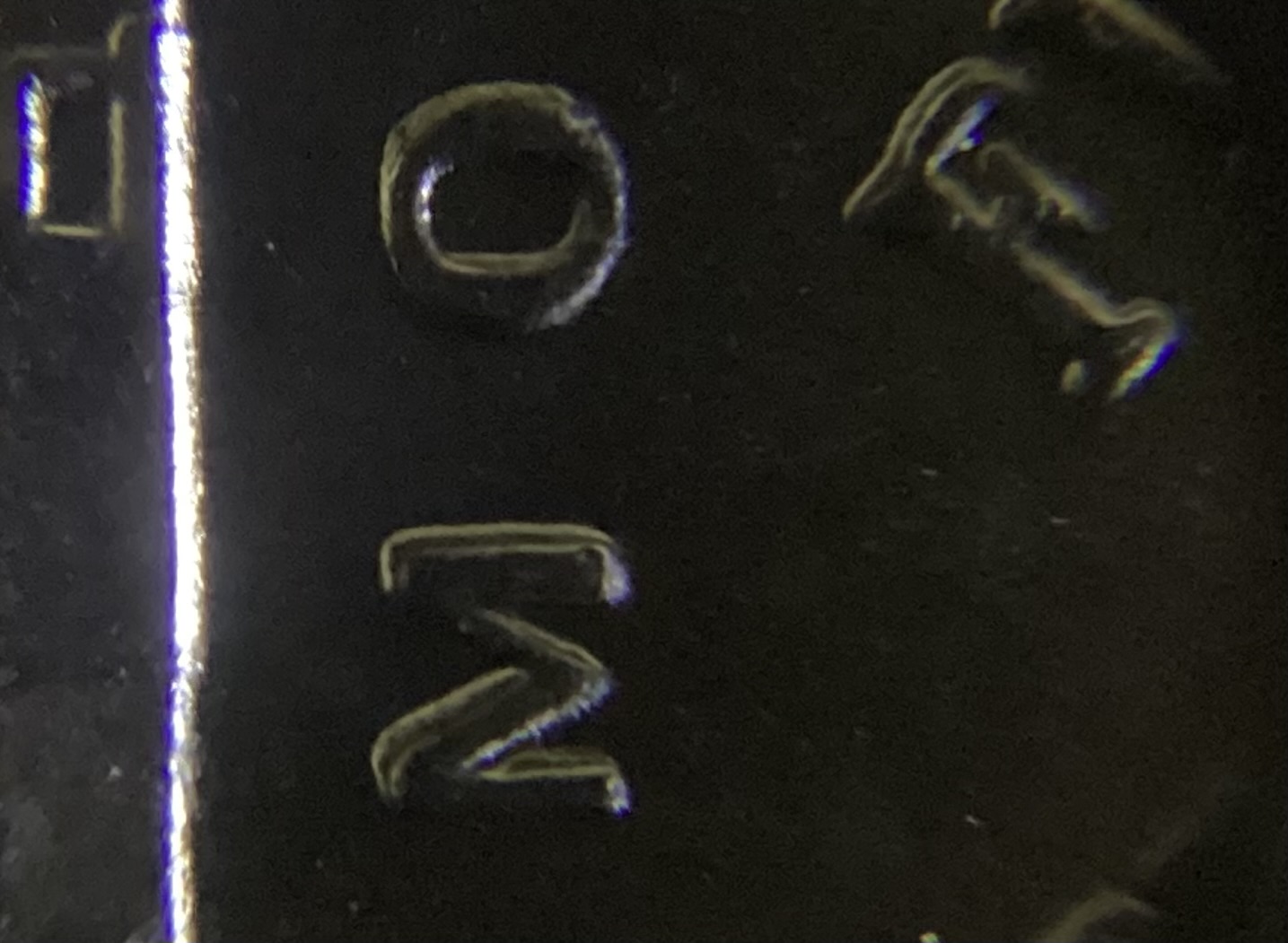 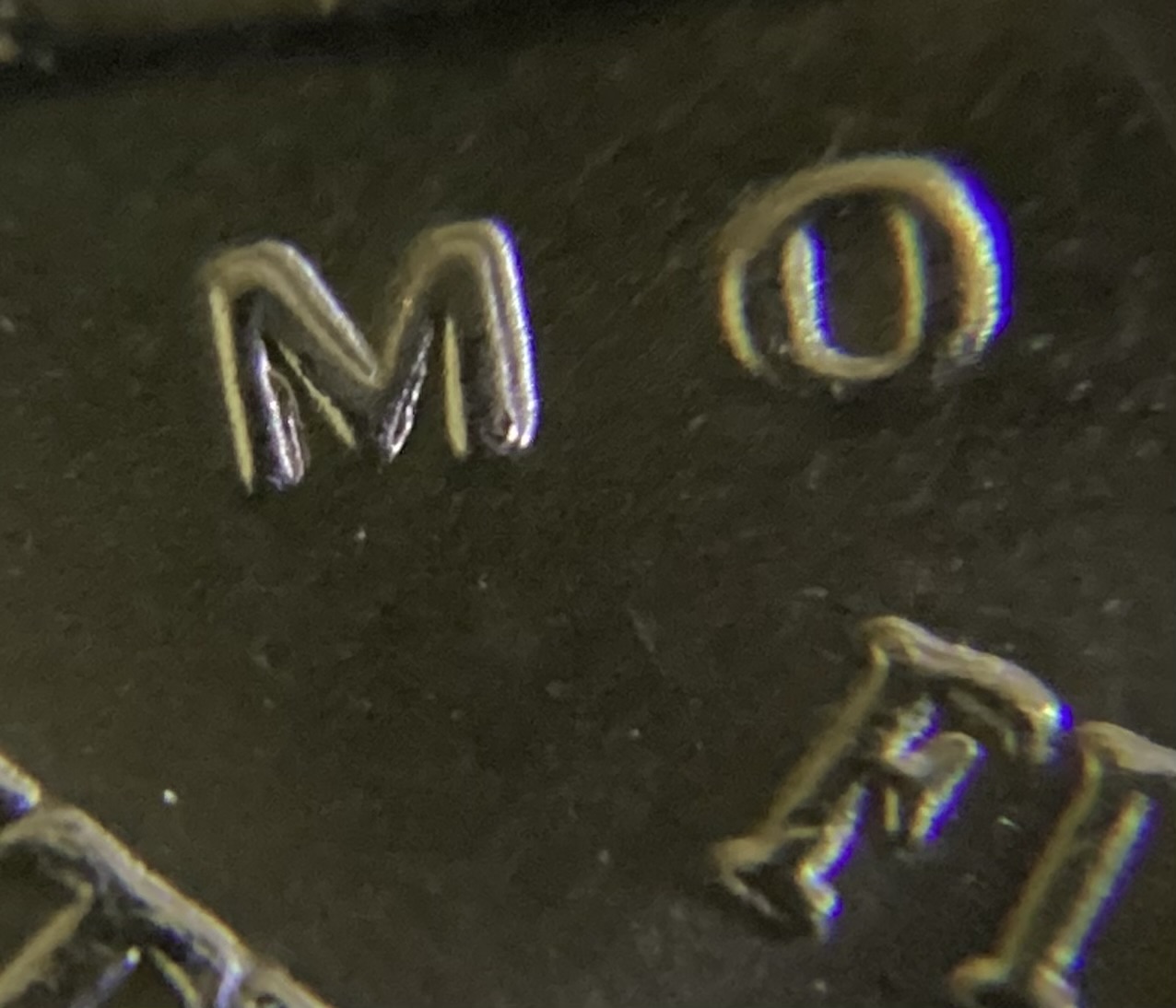 I ran across this unusual M while examining my CRH nickels tonight. As I swept clockwise from the last A in America, I noticed what I assumed was light DDD or MD across the tops of the letters. Once I got to the M in Monticello, I was no longer so sure. I will take better pictures tomorrow in the sunlight. I preserved the original orientation of the coin in these pictures. I know some of you prefer everything normalized via rotation, but this helps me to visualize better how the coin is turned relative to the light source. Opinions?
|
|
|
|
Moderator
 United States
56855 Posts |
Fuzziness and light glare are making it difficult to evaluate for me anyways. John1  |
|
Valued Member
United States
301 Posts |
I agree with John1, how about some straight on shots of both Obverse and Revers then a straight on close up of ares of interest.  |
|
Pillar of the Community
United States
3207 Posts |
the M's notching at upper left gives it the chance of being a doubled die, but better photos are needed
|
|
Pillar of the Community
 United States
6873 Posts |
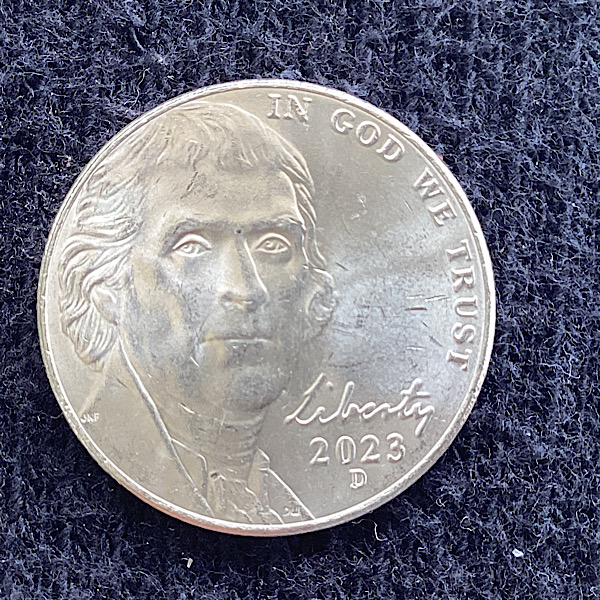 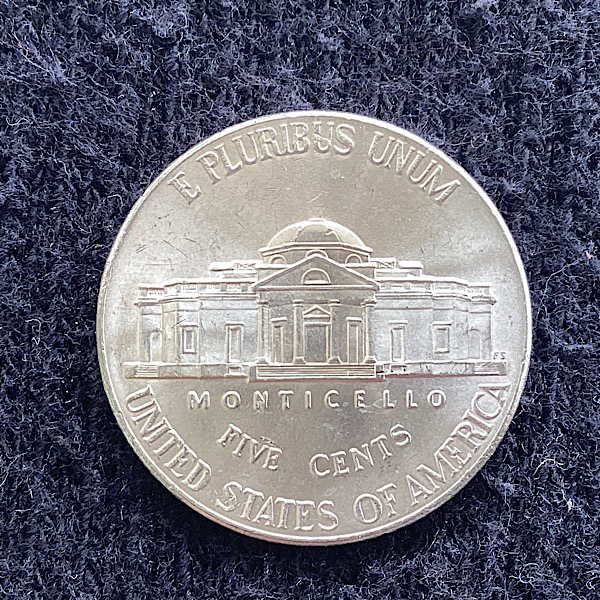 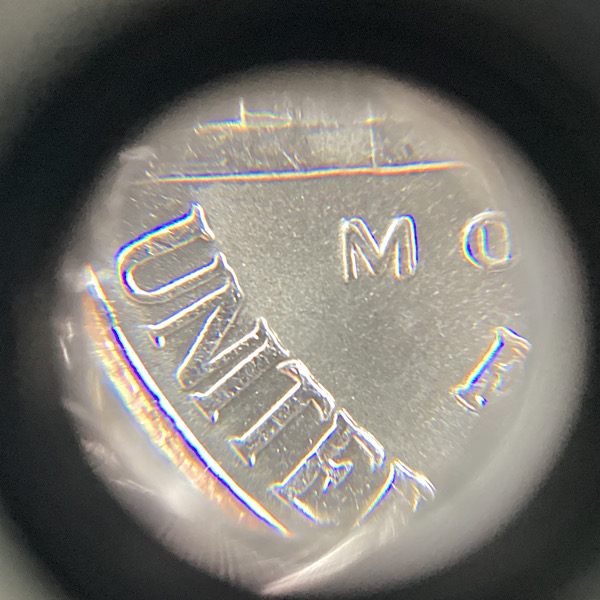 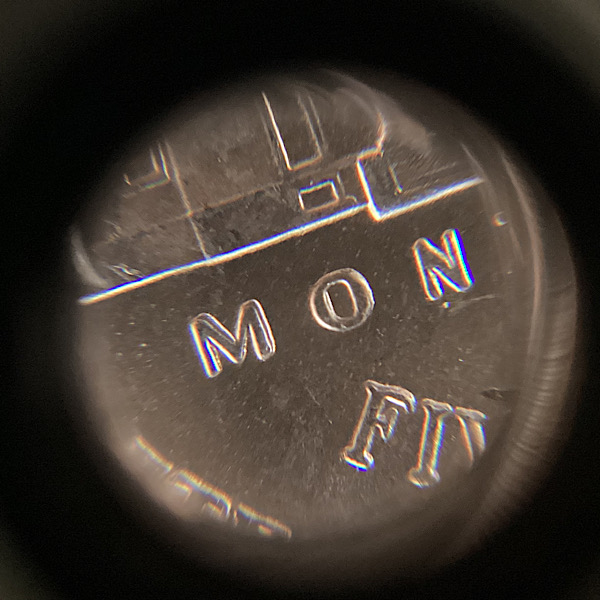 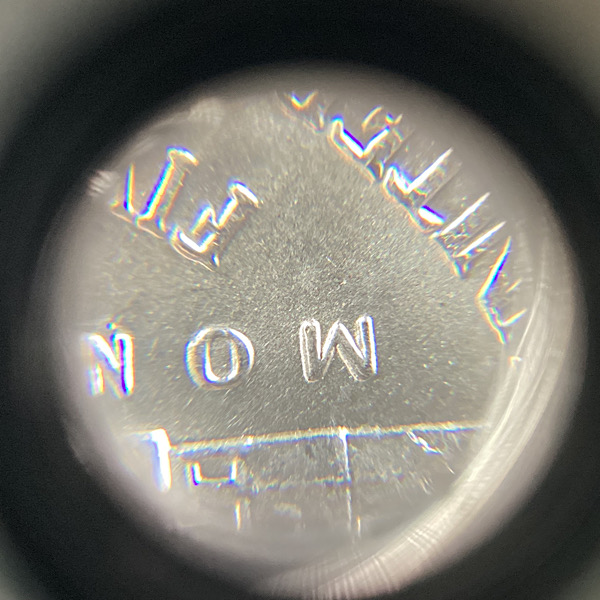 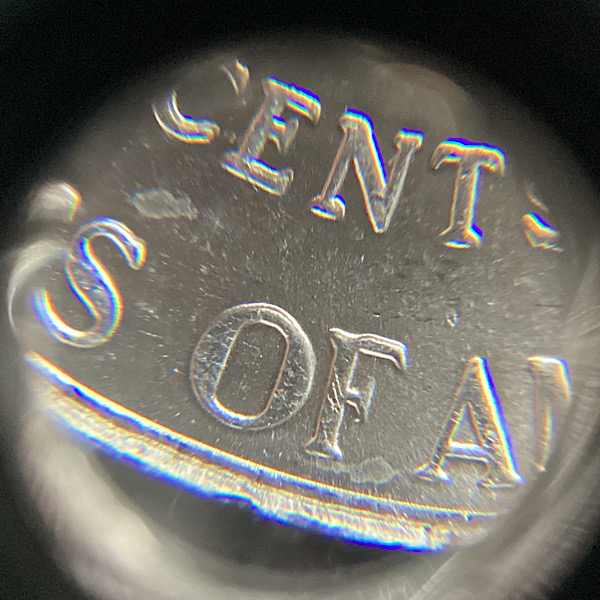 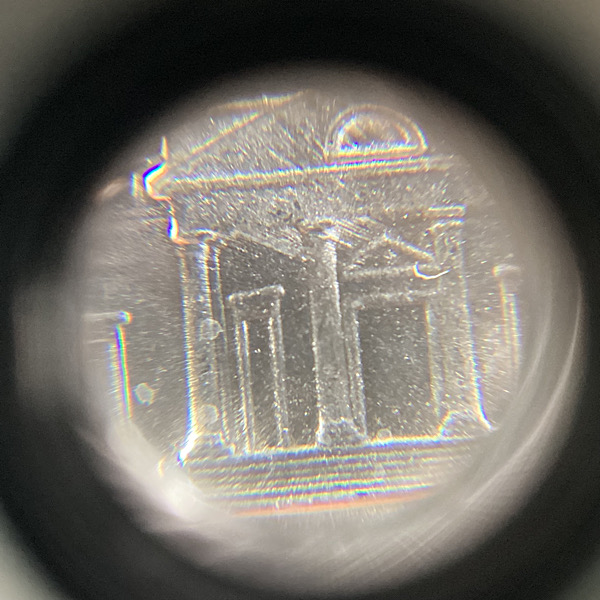 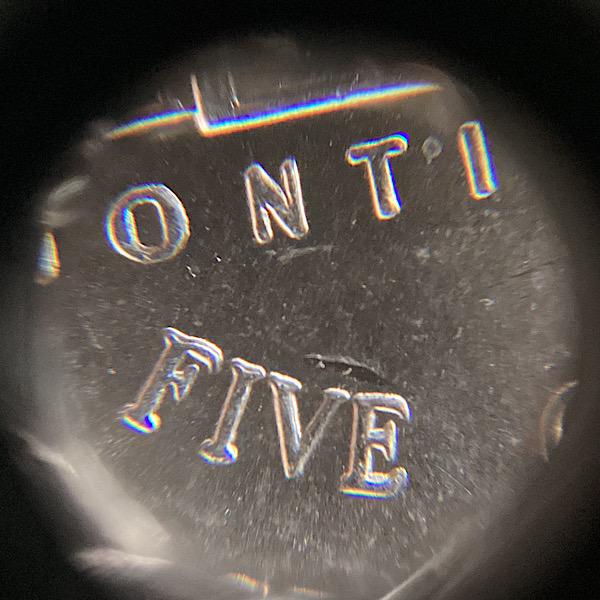 This time in diffused sunlight. The image of the door shows some radial flow lines forming, so this is probably not an early die state. Devices are still pretty crisp, though. The E in Five shows some Die Deterioration on the middle serif from all directions. The top of the I looks weathered as well. There is some ghosty lines on the top edge of United. However, the M in Monticello, and the OF in USoA, both show really high metal on the doubling. The M has rounding to it, the metal isn't just crushed into a shelf like typical push doubling. It's also in the situation where the M outline would be much too fat if we incorporated the excess metal. So what is going on here? Some weird DDD type, Wexler's abrasion doubling, Coop's die movement doubling, some form of actual die doubling? |
|
Pillar of the Community
United States
3207 Posts |
the M still looks like a doubled die candidate, but the lack of similar doubling on other elements makes me suspicious, tough call
|
|
Pillar of the Community
United States
6873 Posts |
I really don't know how the masters make the call between Class V Pivoted Hub Doubling and some yet-to-be-established form of Mechanical Doubling. Class V doubles don't seem to reach the same height as the full device. I guess you'd have to propose a pivot point, and then see if all the devices displayed a fan-shaped move in that particular direction? A pure Class IV offset will shift the whole design. Apparently a IV+VIII will produce an effect towards the rim on one side only. The VIII Tilted Hub also produces a lower and twisted doubling. VIII is the one associated with single squeeze hubbing, which would be used on current nickels. The examples on VV are the 2005 doubled trees OIV reverse, and a 1964 nickel date which bears a passing resemblance to the M here. My guess is I'm going to hit the limit of my puny magnifier before we sort that question out. |
|
Valued Member
United States
301 Posts |
If I may impart another opinion on a possibility for a seemingly centralized Doubling accruing , is the Tilted Hub Doubling " https://www.error-ref.com/?s=Tilted+hub+doubling+In this 1 or two devices will show the doubling, while all others devices seem to have escaped the inherent flaw. |
|
Valued Member
United States
301 Posts |
Ok I didn't realize you hit on that I mentioned, putting my comment together on my phone is awfully slow. But with that this thread has been a wonderful brain cooker for sure.  |
|
Bedrock of the Community
United States
78133 Posts |
You could send it to a variety attributer, if you think it's a Doubled Die. I agree that it's a tough call.
Errers and Varietys.
Edited by Errers and Varietys
06/21/2023 2:57 pm
|
|
Pillar of the Community
United States
6873 Posts |
The first ERef example is so extreme that it's an obvious double, probably to the unaided eye. The second example (the bar under the L in Liberty), I honestly don't know how you visually distinguish that from what Coop called die movement doubling. The ERef entry did contain some interesting text that I hadn't understood before: Quote:
Again, this could be the result of an accidental meeting of the hub and die after completion of the hubbing process. I had considered the possibility of the striking die bouncing on the coin to produce mechanical push doubling or other MD. But I had never really thought that the hub might bump the die again during die manufacturing. I thought the contact between the hub and die was super controlled, particularly in the modern single squeeze process which probably has all sorts of precision computer controls, hyper precise examination tools, and tooling built with incredible machining accuracy. |
|
Pillar of the Community
United States
6873 Posts |
Quote:
You could send it to a variety attributer, if you think it a Doubled Die. I agree that it's a tough call. Sure, a TPG, CONECA, ANACS is always an option. But how much does that cost? $50 all-in? There is no current DDR listing for any 2023 nickel. A true doubled die is a 1% case, even after we chew on it for a whole thread. Realistically, the entire VV catalog for post-2000 Jefferson nickels is incredibly thin. Mostly it's tiny slivers of lines in the middle door of Monticello. The 2005 OIV thick tree is probably the strongest example, and if you told me that was Machine Doubling, I'd probably just nod thoughtfully and move along. |
|
Pillar of the Community
United States
6873 Posts |
|
|
Pillar of the Community
Canada
6244 Posts |
Quote:
@ Brandmeister: wrote
Apparently there is also Peripheral Doubling for single squeeze hubbing. I have no idea what class that even fits into, if any. Me personally I do not look at the coins from 2000 till now as the same as before on two squeeze. I wrote many time not to look at the coins in the same way. Seem the communities of collectors are stack with the old 9 plus 3 doubling classes and the Mint process before 2000. It is like the classic coins which has different way to classify and the modern before 2000. Damage not many remain today to classify those new kind of coins. So I hope the new, or relative young generation will go forward with this. Is need hundreds and hundreds of thousand of coins to be analyze. For my book I analyze over 3 mill. coins and I have some studies also. For to day coins is need more coins to be see. Your coin show me some Hub tildes W to E. It is the new kind of Doubling? Must be study and not only by photo software. Thanks, Silvio |
|
Moderator
United States
105001 Posts |
Interesting coin here. The notching of the M is strange, but why not on others?
|
|
Pillar of the Community
United States
6873 Posts |
Dearborn, that is single greatest obstacle to assembling a diagnostic flow chart for doubling. Many of the best expert sites like VV, Wexler, Error Ref do not always have information on causes and correlations.
For example, why does Tilted Hub doubling (VIII) typically manifest near the center. But then also have a set of cases where it obviously affects one rimward area strongly, and nothing else? What else should we look for to rule in or rule out a particular flavor of doubling?
Where I really get confused is when the "true" die doubling is a lower height, flat, angled, isolated. Or where DD/MD produces a doubling effect that is detached like a copy from the device, which seems impossible given the commonly stated causes.
|
| |
Replies: 33 / Views: 5,013 |







 Posted 06/21/2023 07:49 am





