| Author |
 Replies: 16 / Views: 1,902 Replies: 16 / Views: 1,902 |
|
Pillar of the Community
 United States
1502 Posts |
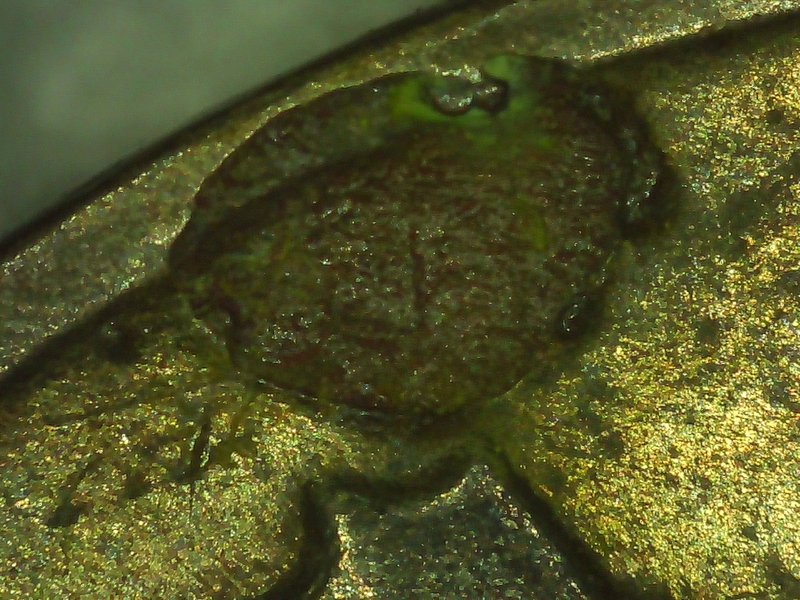
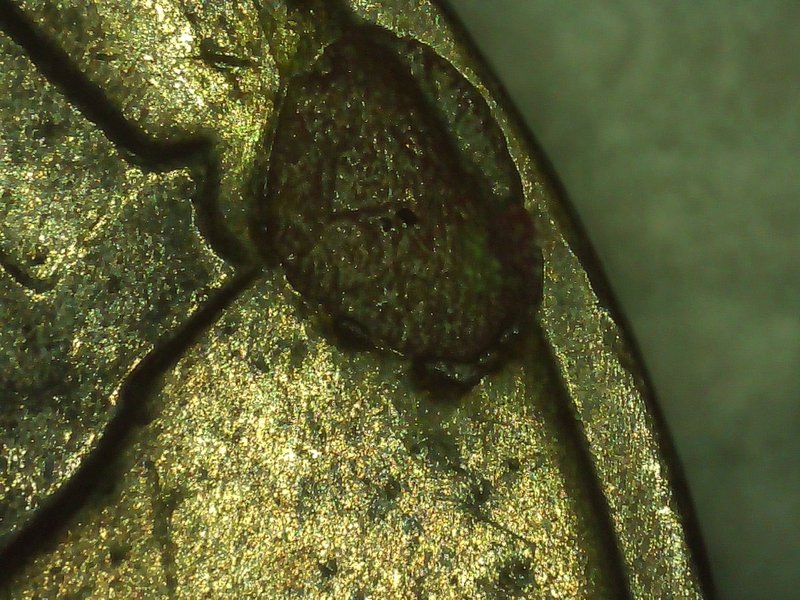
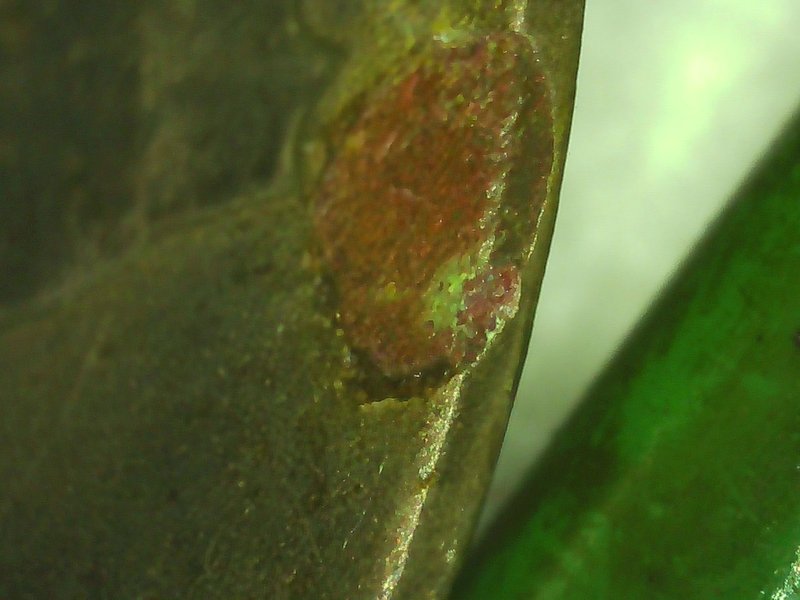
Odd oval of missing metal on Reverse. Unsure if PMD (some kind of precise hit or a drop of acid) or a LAM error. I guess the question for the pros is, can a drop of oil or some form of moisture get trapped in the planchet and possibly cause a very well-defined LAM separation? 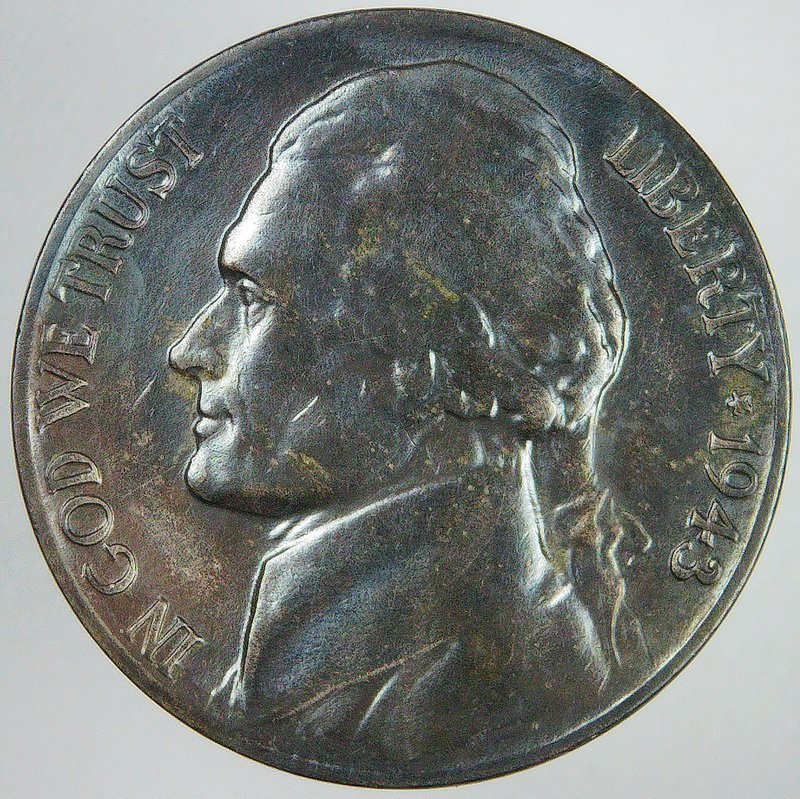  Edited by DOCC
08/29/2023 3:37 pm
|
|
|
|
Bedrock of the Community
United States
19682 Posts |
A close-in photo of the feature--taken at a shallow angle--might tell us more. Thanks.
|
|
Pillar of the Community
 United States
1502 Posts |
|
|
Bedrock of the Community
United States
94367 Posts |
So that area is depressed, right?
|
|
Pillar of the Community
United States
4136 Posts |
I am going with a drop of acid?
|
|
Pillar of the Community
United States
1502 Posts |
Quote:
So that area is depressed, right? Yes Coinfrog, depressed. |
|
Pillar of the Community
United States
1502 Posts |
Now one could also wonder if this might be one of the copper/nickel planchets and not a silver alloy. Simply a bit of corrosion at play here! The coloration and oxidation on Reverse lends to that theory a bit.
EDIT: Throw everyone for a loop now, it is slightly magnetic. A super strong N52 will pick it up. And just to clarify, this is a metal detecting find so the chances of it being altered (aka plated in something) would be slim.
Silver/copper/maganese - not magnetic
Nickel - ferromagnetic
Edited by DOCC
08/29/2023 10:38 am
|
|
Pillar of the Community
United States
3207 Posts |
has the look of warnick composition, I'd say acid droplet, or galvanic action from being in contact at that spot with some other metal while buried
|
|
Bedrock of the Community
United States
80361 Posts |
|
|
Pillar of the Community
United States
1502 Posts |
This cannot be explained by the standard War Nickel composition. It can only be explained by: 1) A transitional planchet of copper/nickel (we all know they exist) and the nickel is attracted to the N52 2) An altered surface (reprocessed) which I find highly unlikely given it was a metal detecting ground find buried 8-10 inches deep, and found right next to a '44 Merc. Weight is 4.83 and diameter is 21.24. Wish I had access to an XRF but I don't. Edit: Found access and they charge a whopping 5 bucks every time they pull the trigger. Appt tomorrow. 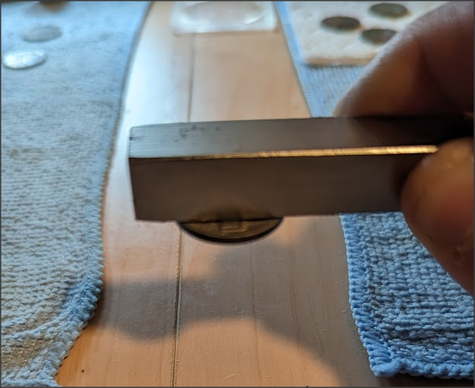 Edited by DOCC
08/29/2023 5:21 pm
|
|
Moderator
 United States
109845 Posts |
extremely strong magnets are not really a good test for coins, eventually with a strong enough magnet, you can pick up almost anything. This does appear to be a War Nickel that got the acid treatment. |
|
Pillar of the Community
United States
1502 Posts |
extremely strong magnets are not really a good test for coins, eventually with a strong enough magnet, you can pick up almost anything That may be the case but not a differentiator in this scenario. I tested against a 44-D War and 45-S War with the same magnet, neither budged. I'm not a Metallurgist but am fairly confident that Silver cannot be magnetized although Nickel can. In any event, will XRF tommorrow and if results point to the transitional error, off to PCGS to get validated. Hopefully not monkeyed with prior to being lost in the ground. |
|
Pillar of the Community
United States
3207 Posts |
easy test: place this nickel and a recent one side by side, slide the magnet equally nearer each, do they both move toward the magnet at basically the same proximity to it? next, retry with a War Nickel instead of the modern one |
|
Pillar of the Community
United States
1502 Posts |
Thanks all, learned a ton the last few days. Have a fairly solid grasp on magnetism now. While Nickel is ferro an alloy with copper must have at least 56% (saw some #'s stating 60%) nickel before it 'should' respond to a magnet. But that being said, I'm more confused than ever post XRF readout. All you that called silver are 100% correct. The XRF numbers are nowhere near what I expected however. They do not come close to what the alloy in this coin should be per the US Mint. I did read that Congress originally passed the law that stated 50% AG and 50% CU but the planchets were ultimately produced at 56% Copper, 35% Silver, 9% Manganese 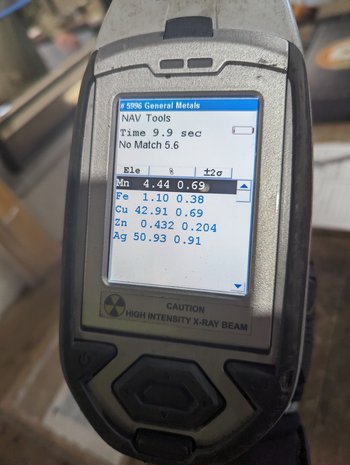 And how the heck can this coin be magnetic based on the XRF reading? Silver is diamagnetic and should push away from the magnet if anything. I'm using a single 1/2" x 1/2" x 4" N52, not at array. How trustworthy are XRF readings becomes the most obvious question. Edited by DOCC
08/31/2023 1:57 pm
|
|
Pillar of the Community
United States
6964 Posts |
The first thing that comes to mind is uneven alloy mixing. The XRF probably tests a tiny patch of material. The operator could have just put the probe on an area of relatively high silver. Also, that was mixed during a war, so there is no guarantee that the mint was exercising extreme precision when it came to coin alloys. Their metallurgists had bigger fish to fry. Alternately, since that is a metal detecting find, there are all sorts of chemicals in soil that will preferentially attack certain metals. One of my first queries on this forum was about copper surface nickels. If something pulled copper and manganese from the coin surface over the years, then the percentage balance of silver would appear to grow. The nickel is slightly under weight, so that is plausible. 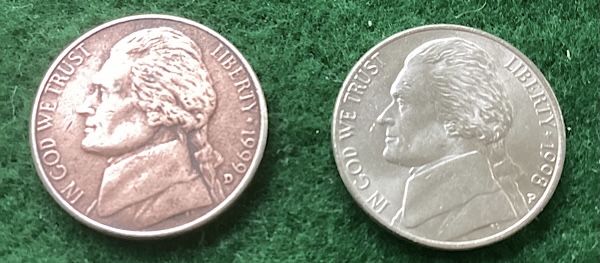 I imagine that testing this nickel surface would read unusually high for copper and low for nickel. If we cut it in half or ground off a surface, the center would probably still be 75/25. Edited by Brandmeister
08/31/2023 2:12 pm
|
|
Pillar of the Community
United States
1502 Posts |
Makes a lot of sense Brandmeister. Any thoughts on why it would be magnetic based on that composition - or any US coin composition outside of steel planchets?
I could see if it was plated in 100% pure Nickel but given there is none readable, I'm baffled. As stated above, I tested all my Wars and this anomaly is the only one that is attracted to a magnet.
|
| |
Replies: 16 / Views: 1,902 |




 Posted 08/29/2023 09:39 am