| Author |
 Replies: 30 / Views: 2,279 Replies: 30 / Views: 2,279 |
|
Valued Member
Canada
139 Posts |
What causes this bad cladding or thin cladding,bad metal mix ? Please I'm trying to learn don't make fun of me,there's so many coins I looked at and saw this one but didn't save the front image,it's about the same amount of green on the front but now I can't find the coin on the site again to take the front pic,it's a 1968 or 69 I remember though.  |
|
|
|
Pillar of the Community
 United States
1502 Posts |
Seems off color for Verdigris but is distributed like corrosion. Could always be some form of adhesive that got on there.
|
|
Valued Member
 Canada
139 Posts |
I thought it looked like glue too and not typical green spots so thought I'd ask here.
|
|
Pillar of the Community
Canada
9899 Posts |
Gesundheit !
"Dipping" is not considered cleaning...
-from PCGS website
|
|
Pillar of the Community
United States
6870 Posts |
If it's 1968 or 1969, then the two cladding layers are 80% silver. That still doesn't seem like a normal color for 80Ag-20Cu alloy. It's either an external substance like glue, or something that bonded to the surface and left a chemically altered stain when remove.
|
|
Moderator
 United States
34530 Posts |
Quote:
Please I'm trying to learn don't make fun of me Learning is the goal of this website so you should never feel made fun of.  "If you climb a good tree, you get a push."
-----Ghanaian proverb
"The danger we all now face is distinguishing between what is authentic and what is performed."
-----King Adz
|
|
Valued Member
Canada
139 Posts |
Yes I am thinking adhesive or paint too,do silver coins go like that ? I have seen green spots on the pre 1965 stuff but not that color and not to often.
|
|
Pillar of the Community
United States
1502 Posts |
Corrosion on silver alloys is always a possibility although much rarer than their copper counterparts. I've seldom encountered with my conservation work and when I have, it tends to come off fairly easy without pitting. I think you are right to question the color 1983, not typical of corrosion so more inclined to think adhesive, etc. Something Acetone would quickly consume.
|
|
Pillar of the Community
United States
3535 Posts |
Who ya gonna call? GHOSTBUSTERS! 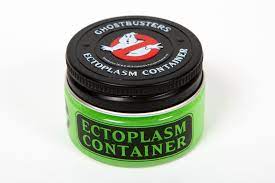 Slimed again |
|
Pillar of the Community
United States
6870 Posts |
The way that it lays over some devices, but then runs up to the edge of others, makes me think it was splattered with liquid or gunk. Tarnish and toning are atmospheric (for the most part, anyway), and that phenomenon visually lays across the surface differently than splatter.
I wouldn't rule out the detergent wash from the mint that causes milk spots. But I would be more inclined to place my bet on something pulling copper out of that alloy into a blue compound. Possibly some kind of salt or base.
|
|
Pillar of the Community
United States
4233 Posts |
|
|
Valued Member
United States
465 Posts |
I agree with the PVC damage. Old PVC flips leached chemicals and leave this green gunk on the coins.
|
|
Bedrock of the Community
United States
36940 Posts |
I agree with those that mentioned PVC damage. Give it a bath in Acetone if you are going to keep the coin.
|
|
Bedrock of the Community
United States
78098 Posts |
Looks like corrosion.
Errers and Varietys.
|
|
Valued Member
Canada
139 Posts |
The owner is a coin guy and got a message that he thinks it's Verdigris so now I don't know I tend to favour the PCV soulution by the guys here,I'll look for it later it's buried in the website somewhere and will take a while to find again.
|
|
Bedrock of the Community
United States
94367 Posts |
Looks like PVC damage to me as well.
|
| |
Replies: 30 / Views: 2,279 |







 Posted 01/05/2024 10:33 am





