| Author |
 Replies: 17 / Views: 19,320 Replies: 17 / Views: 19,320 |
|
New Member
United States
3 Posts |
|
|
|
|
Pillar of the Community
United States
4846 Posts |
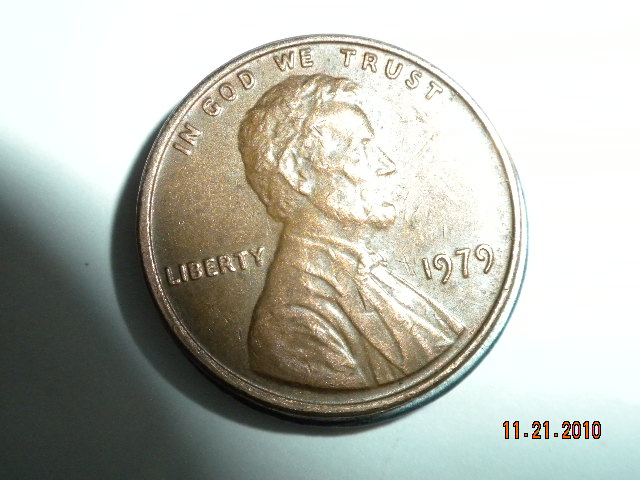
what you have is an acid dipped(and possibly a metal detecting find that was cleaned up) cent.
the only error that this could be is an improperly annealed coin but that doesn't look like it could be that because the strike isn't soft.
and a couple of pointers:
1. the comparison pictures are misleading, the 1979 cent is copper and the 1993 cent is copper plated zinc.
2. no coin minted in the U.S. (except the 1943 steel cent) ever had any reaction to metal.
Edited by Adam_E
11/21/2010 8:58 pm
|
|
New Member
 United States
3 Posts |
OK, I understand what you are saying. I was unaware that cents from different years would be significantly different sizes in diameter. That is what I was attempting to show overlaying the copper cent on the reference coin.
|
|
Pillar of the Community
United States
687 Posts |
An acid dipped coin would be smaller, not larger. All US small cents should have the same diameter. How does this thickness compare?
|
|
Pillar of the Community
United States
958 Posts |
if you soak a zinc penny in lemon juice for a few months this happens the copper goes away and the zinc remains
the zinc does not get eaten away fro some reason and keeps all the details
|
|
Bedrock of the Community
Australia
21794 Posts |
I am curious.
Normally, zinc is preferentially attacked by acid. When the acid finally manages to eat it's way through the plating, the attack would proceed faster where the zinc was exposed. The sharp edge of the coin at the rim would show this first, because that would be where the plating would be thinnest, due to wear. More advanced acid attack should show up at these points.
Edited by sel_69l
11/22/2010 03:35 am
|
|
Bedrock of the Community
United States
20753 Posts |
Quote:
I am curious.
Normally, zinc is preferentially attacked by acid. When the acid finally manages to eat it's way through the plating, the attack would proceed faster where the zinc was exposed. The sharp edge of the coin at the rim would show this first, because that would be where the plating would be thinnest, due to wear. More advanced acid attack should show up at these points.
Done in Chem labs all the time in high schools. |
|
Bedrock of the Community
United States
17884 Posts |
The larger size is created by placing the cent between a couple pieces of leather and beating with a hammer. the leather speads the blow out evenly over the whole surface so it doesn't damage the details an the entire coin expands evenly. This is referred to as "Texas sizing" the coin. (Everything is bigger in Texas!) Yours has only been enlarged slightly but I have seen "Texas" cents the size of a nickel or larger. For some reason the copper plating doesn't survive the process. Every Texas Cent I has seen has had surfaces similar to your coin. |
|
Valued Member
United States
368 Posts |
This is a fake cent of some kind
I found one as well I think mine was 2002 or something
it is bigger and all of the stamped parts, like lincoln or the memorial are bigger then a regular cent as well
I posted a question asking about mine too
is yours about the size of a nickel?
mine was in a nickel roll
I thought it might be a penny stamped on a nickel planchet but I knew it wasn't because all of the coin's details were bigger too and there was no extra metal around the coin
I saved mine for fun but I think its trash
|
|
Valued Member
United States
368 Posts |
just dug mine out, it was from 2000
looks just like yours in all respects
even the size difference up to a real penny looks about the same
the coin also feels light to me
doesn't feel like a penny
idk thats my coin
I couldn't find my previous post about my coin
|
|
Valued Member
United States
368 Posts |
is the Texas Cent thing real lol sounds like a wise tale but a cool one haha |
|
New Member
United States
3 Posts |
Thanks for the replies. This cent is larger than normal but not a lot bigger per the photo. I'll save it as something unusual
|
|
Pillar of the Community
United States
1027 Posts |
It is most likely as Conder101 states, a Texas Cent, as is the one that slash112 found in a nickel roll. During the flattening and stretching, the copper plating quickly seperates from the zinc and is lost. The copper plating is only 2.5% of the total weight of the coin (or 62.5 mg), so a coin without it can still easily be in Weight Tolerance. If you look carefully at the coin, you will see that all of the features have started to flatten and stretch out, even the spaces between features are getting larger. |
|
New Member
United States
3 Posts |
I have the same question regarding this NO copper penny. Now I have one of these pennies also! it's a 2000  1. as I understand Zinc is much more reactive to acid than Copper. 2. If this is true, then putting a penny in lemon juice would remove the ZINC leaving a copper shell. Now sooner on later, in the lemon juice, I'm sure that the penny will be eaten up my the lemon juice. 3. Here is my penny 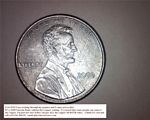 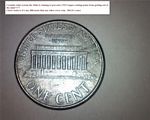 If you look close, you can make out all the writing on this penny! SO I believe it's and ERROR penny shipped out by the mint. 4. Now the 1993 penny is also an error penny! Now please tell me what about these pennies say I'm wrong?  |
|
Pillar of the Community
United States
4846 Posts |
im sorry but, a lot of the pennies I look at while roll searching look exactly like this LMC, and the 1993 LMC. there is no error |
|
Valued Member
United States
117 Posts |
The previous posters are correct this is a classic Texas Penny. When I was a kid we use to do this all the time. Back then, you could rip off coke machines. It is done the exact way that Conder101 stated. Two pieces of thick leather and a 2-lb maul. After a couple wacks the copper starts to flake off. Most come in the size of a nickel. Looks like the maker of this one quit early.
There are collectors of these things. For a while my daughter would store them in a Harris nickel book.
|
| |
Replies: 17 / Views: 19,320 |







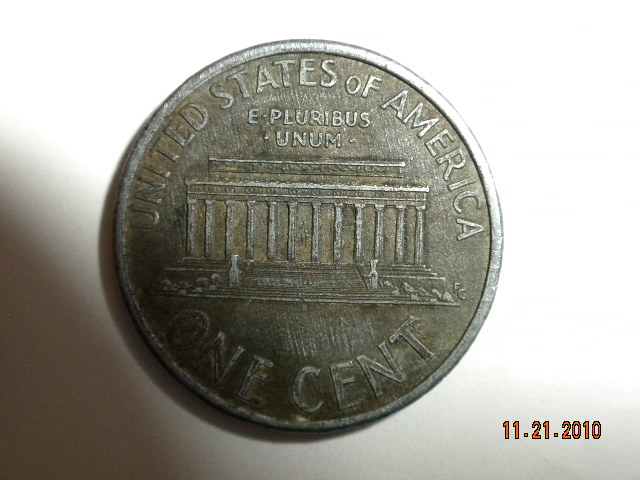
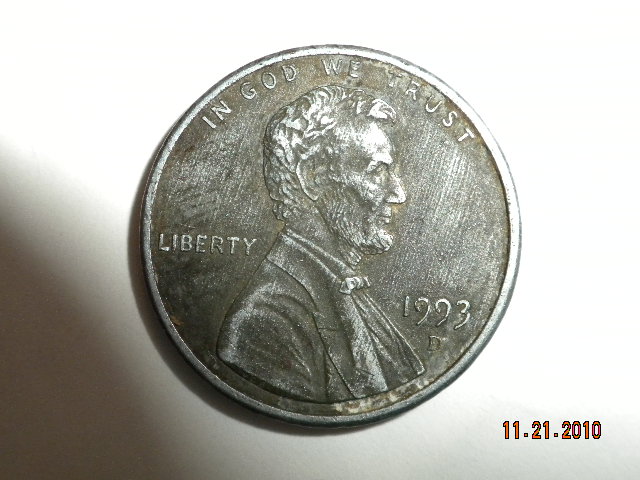


 Posted 11/21/2010 10:12 pm


