| Author |
 Replies: 73 / Views: 6,159 Replies: 73 / Views: 6,159 |
|
|
|
Moderator
 United States
23522 Posts |
I've observed a large degree of variance between individual issues with TPG's - anyone who has had both a Lincoln Cent and a Morgan graded by a TPG will know what I'm talking about. Even with consistently-conservative grading, an MS65 Morgan is an MS63 Lincoln. Although I do not endorse the policy, I can understand a TPG's unwillingness to "create wealth" by grading a new Conditional Rarity. If there are only (for instance) three extant MS65 examples of a given coin, a fourth will be held to a high standard indeed, especially when the TPG will be on the hook for a $10k value vs. a $4k value in MS64. I'm gonna throw one out here with the aladinslamp's original post in mind. Tell me what you think, and I'll comment later. For the record, I cracked it out of a major TPG slab. 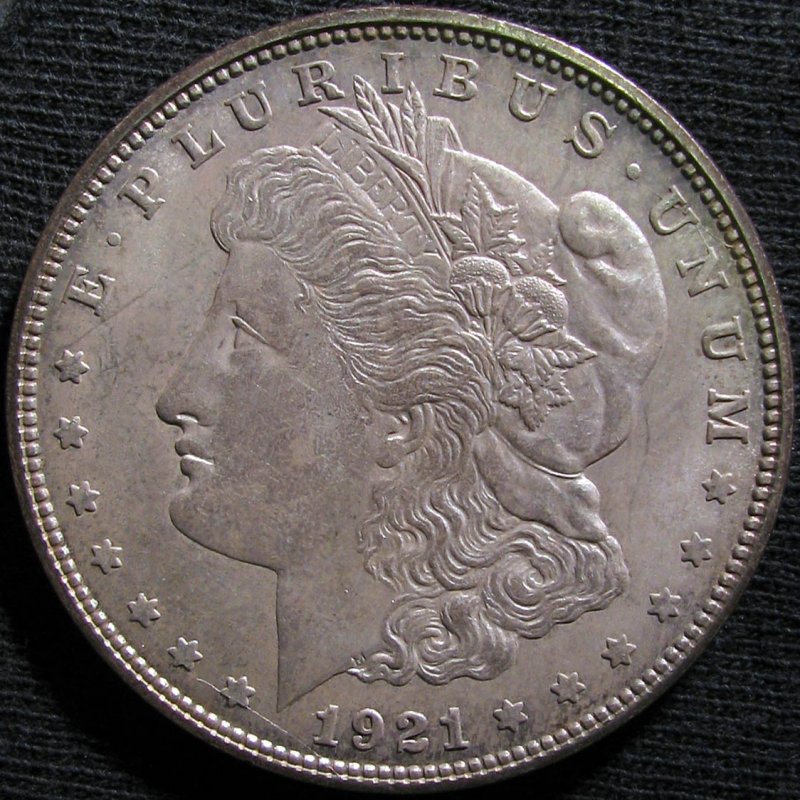 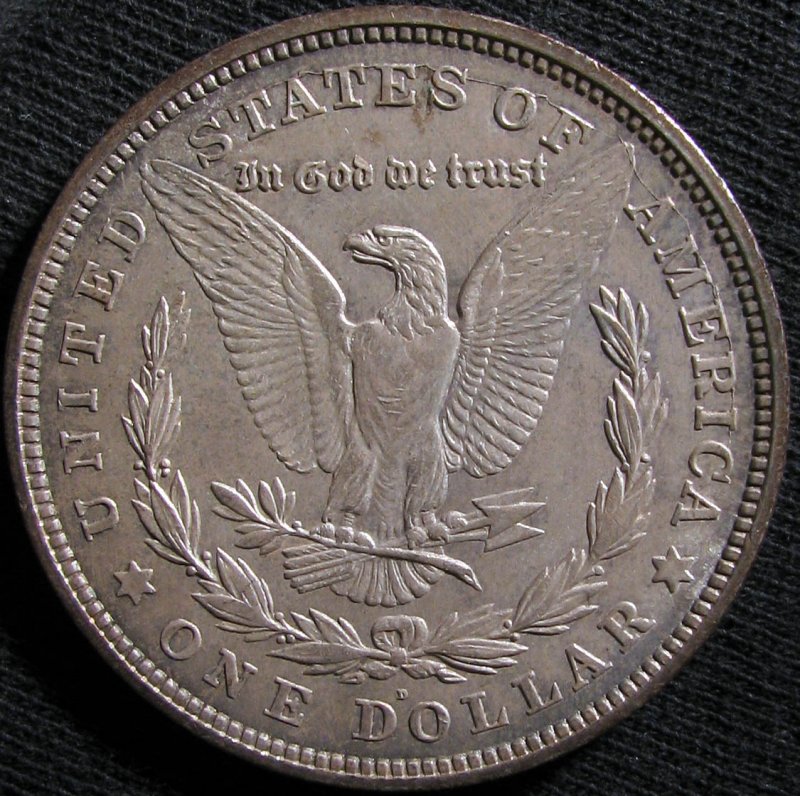 |
|
Pillar of the Community
3660 Posts |
Conditional rarity is a term that I have heard on several occasions and it had been explained to me, but it just dawned on me now what this actually means.....hmmmm.
I don;t know enough about the different years or varieties to even venture a guess at grade... Should not the year, mint, variety, (knowledge of whether or not it is know to have strike issues) be a factor in the grading?
The high detail in those cotton bolls tells me that this is a high grade coin despite the photo's slate gray appearance.... I don't know to what degree distracting features like chatter or field and cheek dings actually come into play....but I don't really see any... oh heck, MS-65 (at least).
|
|
Moderator
United States
23522 Posts |
Quote:
Should not the year, mint, variety, (knowledge of whether or not it is know to have strike issues) be a factor in the grading? Absolutely, but only the latter part of your statement. Known strike issues should, and usually are, taken into account in grading. Some Seated coinage, known for weak obverses, are a good example (20C for instance), as are New Orleans Morgans. That's one of the reasons we so constantly disagree about grading - even good graders fail to take these things into account when venturing out of their area of knowledge, and some of us by design factor strike into grading less than others. There is a point where a poor strike should count against a coin. For me, that starts at MS64-ish (for coins which are known for strong strike) to MS66-ish for those known to be weak. Again, though, this is subjective. There's a reason why grading standards are a range, not a pinpoint. |
|
Pillar of the Community
3660 Posts |
Now that I understand what this conditional rarity thing is now, it causes me to ponder the difference between a grader and an attributor... When a coin is submitted to PCGS for instance for both services, the coin is examined by both graders and an attributor correct? The attributor is a singular person is he not? Does the coin not go to the attrribtor first and then the grading staff?
If this is the case, and the customer had an extremely high grade 1878 v-44 that he wanted both grade and attribution on the label, would it not make sense to submit the coin first for grading only (banking on the long shot that the graders will not recognize the variety) and bestow a higher grade as it being a run of the mill high grade 1878 silver dollar? Then, when the acceptable grade has been achieved to the customer's satisfaction, resubmit the coin (in holder) for attribution only?
You're up kinda early Dave... I hope that I am not wearing you out with all of these noob type questions.... If it gets to be too much, don't feel obligated to answer, I am sure that others will be around shortly to exploit my ignorance of grading tactics.
Edited by zeewool
01/07/2011 10:13 am
|
|
Moderator
United States
23522 Posts |
Yeah, I'm up early and I just suffered the consequences of being up before the alarm was set to go off. Now that my blood pressure is back to normal.... I'm going to theorize here, because I'm unsure of how specific TPG's address your questions. My assumption is there exist dedicated attributors, separate from graders, although a coin submitted for attribution might be deliberately routed through a grader who has the proper expertise to do both. Attribution is a function of research if you have sufficient reference, and a good attributor does not necessarily need to be a good grader. Quote:
would it not make sense to submit the coin first for grading only (banking on the long shot that the graders will not recognize the variety) and bestow a higher grade as it being a run of the mill high grade 1878 silver dollar? Then, when the acceptable grade has been achieved to the customer's satisfaction, resubmit the coin (in holder) for attribution only? Devious, except: ANACS would catch it on the first pass through, and let you know what you had. PCGS would downgrade it and pay you the price differential based on only "normal" grade price since you didn't specify the VAM in the first place. NGC would call it VAM-3. |
|
Pillar of the Community
3660 Posts |
 edited to add: Thanks very much Dave...  Edited by zeewool
01/07/2011 10:28 am
|
|
Pillar of the Community
United States
4992 Posts |
I think that 1921 Morgan dollar may be high grade with some masking toning. I ran him through a couple filters and got this. Voila MS-65 (!) 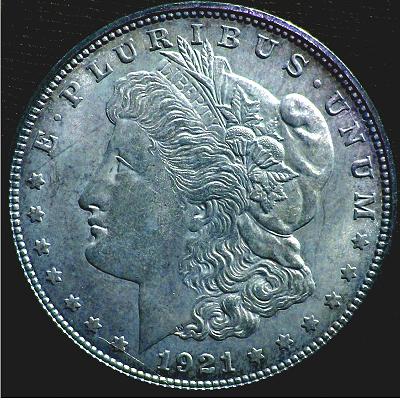 Edited by fenton
01/07/2011 10:49 pm
|
|
Moderator
United States
23522 Posts |
Quote:I think that 1921 Morgan dollar may be high grade with some masking toning. I ran him through a couple filters and got this. Voila MS-65 (!) You sure got the "masking toning" part right. 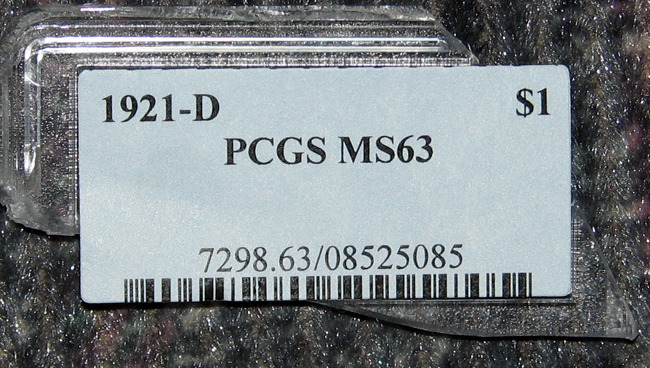 After a dip: 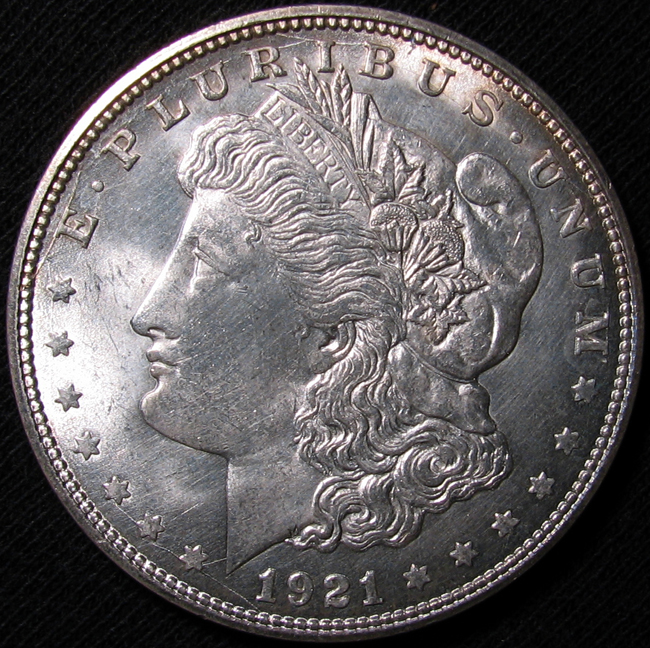 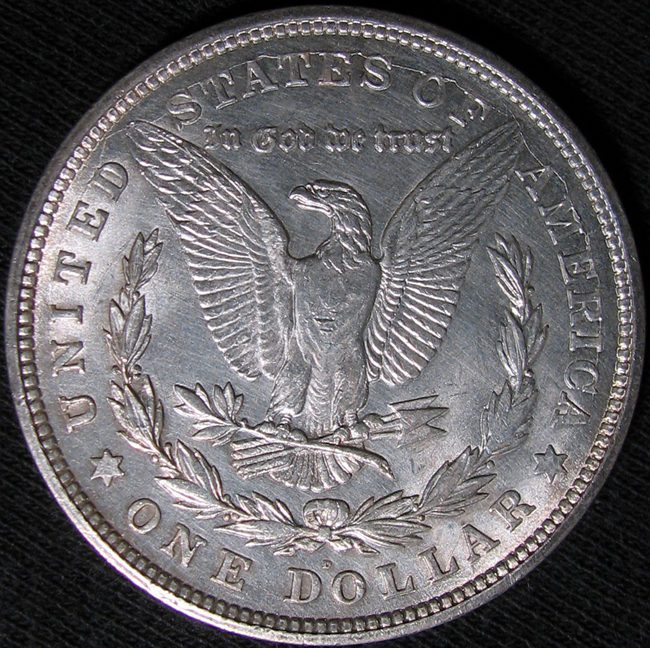 Cleaned, smoked, submitted, graded. From the original post: Quote:
but examples of raw or already graded coins so we may look into the art of grading..even as subjective as the thought is Here's the underside of grading. |
|
Pillar of the Community
United States
4992 Posts |
Wow you are going to scare me away from buying toned coins (!) Q: Should every coin where the toning masks and obscures the original surface be given a details grade only out of caution? Until TPG's develop some way to peer under that veneer the grading is just not going to be reliable Edited by fenton
01/07/2011 11:07 pm
|
|
Pillar of the Community
3660 Posts |
Maybe I am not following this too well.... You broke it out of the holder so you could clean it?
|
|
Moderator
United States
23522 Posts |
Quote:
Maybe I am not following this too well.... You broke it out of the holder so you could clean it? Yup. It was (at the time) one of the finest-known 1921-D VAM-1F's. I dropped $100 on it - big money for an MS63. When I got the coin, the color just wasn't right in-hand. This was early in my Morgan addiction; I didn't yet own a dSLR. I went after it with my loupe, scanner and Canon S2 IS (the source of the pics you see). It became pretty obvious before I even cracked it. So I made a choice. Either return it for the grading guarantee and make maybe $75 back, or crack it, clean it and use it as a teaching tool. I already had excellent "before" photographic evidence and a very characteristic reverse - note the horizontal marks on the eagle's breast. I trot it out every couple of years to make one point or another. I've been repaid long since, in educational value. |
|
Moderator
United States
23522 Posts |
Fenton, Quote:
Q: Should every coin where the toning masks and obscures the original surface be given a details grade only out of caution? No. Observe closely the even, dull color of this one. This is characteristic of "smoking," in which the coin doctor does exactly what the name implies to mask hairlines. The smoke particles sink into the hairlines, filling them, and if you get it right the whole coin looks naturally, if lifelessly, toned. There is no color to it. |
|
Pillar of the Community
3660 Posts |
Simply amazing....(all of it).
|
|
Pillar of the Community
 United States
3076 Posts |
I'm just catching up here......The problem I see is, 1921 has a fabulous strike, and even in lower MS grades such features as the hair over the ear, is still in great shape....IMHO, I didn't think the Reverse warranted an MS grade...I run from 21's due to scribbles...We can soon see 5,000 variables for scribbles....just kidding, but 21's are just to tuff to attribute if you don't have all the die breaks, and this coin, which does have these helpfull cracks, are not listed in the die cracks guide...must be a scribbles variety? and how did that grade MS63 with all the apparent wipe marks? or are they polish lines   with the eagles breast feathers that are not apparent..I would have guessed MS53?but as I have said, I really don't know 21 series, and they are there own monster. with there own grading standards.... which is one thing I want to point out for grading... One must know not just the Photograde book, but rather the year series...where knowledge is so vary important "Grading principles are not applied equally to every year".... |
|
Pillar of the Community
United States
4992 Posts |
Good advice that is going to save me a bunch of money if I find one of those "smoked" coins in a case I'll avoid it like the black plague
|
| |
Replies: 73 / Views: 6,159 |








 First Page
 Previous Page


 Posted 01/07/2011 09:50 am


