| Author |
 Replies: 16 / Views: 3,270 Replies: 16 / Views: 3,270 |
|
Valued Member
Sweden
135 Posts |
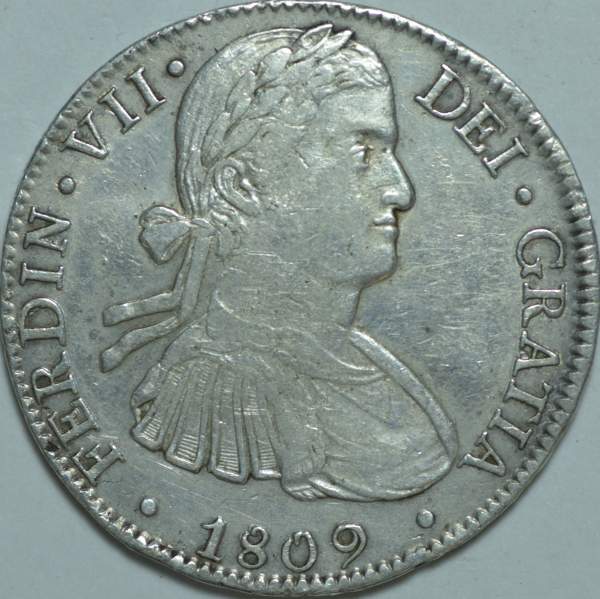
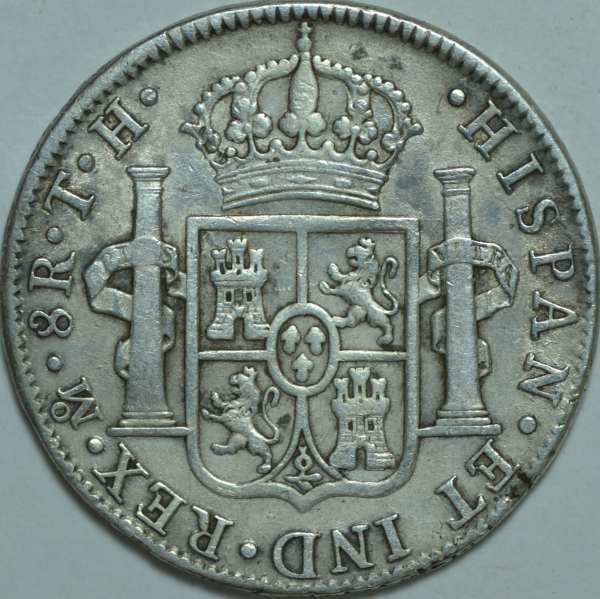
Considering the high number of forgeries that plaque this series, I am curious about this one. I purchased this from what I believe is reputable dealer from Germany. Weight comes in at 26.79g I can provide other pictures if need necessitates. 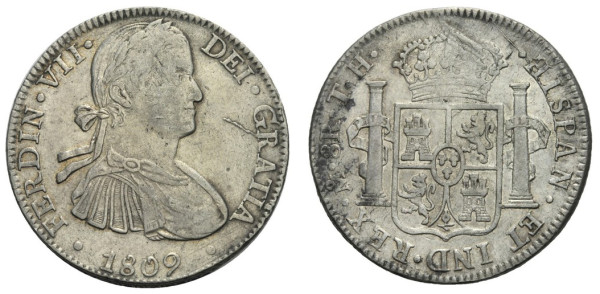 |
|
|
|
Pillar of the Community
Canada
4911 Posts |
Looks real.
Feel free to call me Will.
|
|
Pillar of the Community
United States
2543 Posts |
Unfortunately the counterfeits in this series can be very subtle. More detailed pictures will be needed. And pictures of the edge, where the design overlaps itself are also needed to make any kind of determination.
|
|
Pillar of the Community
United States
1962 Posts |
Looks legit... average strike/circulation for the imaginary bust type.
|
|
Pillar of the Community
Canada
5417 Posts |
|
|
Pillar of the Community
Hong Kong
1270 Posts |
|
|
Pillar of the Community
United States
5362 Posts |
Looks alone can be deceptive.
So while I completely agree that the design is correct in this case, that alone is not adequate for me to say the coin is genuine. The fact that a correct design can be copied is rather old news. It has been possible since roughly 1830 and today it is fairly easy.
A correct design does however eliminate over 95% of contemporary circulating counterfeits from the list of possibilities.
A correct design usually means the coin is one of three possible things:
1. A genuine coin.
2. A silver restrike - This coin is the correct type for the restrike category. Restrikes are usually treated as if they were genuine so right now value is unaffected.
3. A numismatic forgery meant to deceive collectors. This is the most serious threat.
To be more certain of what the coin is I always consider a few more facts.
1. The weight - which is here supplied as 26.79 grams. This seems about correct for the level of wear observed.
2. The specific gravity (weight divided by volume). This might be helpful to eliminate forgeries but an SG of 10.31 alone might not be adequate to decide which of the three categories this coin belongs in. All three groups might display a correct SG but only the first (genuine) MUST display the correct SG.
3. Edge design - as stated above this could provide critical information.
A. Two overlaps exactly opposite one another.
B. Two overlaps that are identical in length.
C. Circles and Rectangles that are identical in size.
D. Wear on the edge that matches the faces?
Once again deviation from any of these four standards could be enough to identify a forgery. But if the coin shows adherence to all four standards - it still might fall into any of the three categories.
This is the point where I normally would stop and say the coin has passed the normal tests and I have no need to go further. It starts to get expensive at this point.
However, in this case, the coin has a large and very distinctive die gouge in the field in front of the bust. When I see examples like this (features that clearly distinguish the die)and I often attempt to win the auction to have one final test run. The use of XRF will either confirmed or condemned the alloy of the coin. Testing of every coin would be prohibitive - but an XRF test performed on a distinctive coin like this could eliminate all others made with this same die. Therefore I would usually go the added step.
You must always keep in mind one critical fact - that when looking for counterfeits you are running tests that eliminate the elements of forgery one by one. Each negative test indicates the coin MIGHT be real. But there is really no scientific test to prove that a coin is genuine. All you can do is to run more and more tests to prove that it is NOT a forgery. A preponderance of negative results leads to the theory that the coin is genuine. It will remain genuine until a scientific fact proves it is not genuine.
As collectors we each face making the decision of how much proof is enough for us.
You can stop right now and say it looks right so it is good.
Some collectors go further.
Some go to the extreme like I do.
The decision is yours SpareHuman but please have fun and don't get paranoid. You are already in an area that is foreign territory to the majority of coin dealers.
|
|
Pillar of the Community
Hong Kong
1270 Posts |
SpareHuman, would you show the enlarged pictures for your coin and also edge pictures for comparing with my coin? Henry
|
|
Pillar of the Community
United States
5362 Posts |
wonghinghi Good timing with your post. The face design looks good - like SpareHuman's coin. The weight is also good - like SpareHuman's coin. The SG at 83% classifies the coin from my perspective as a Silver Restrike (Class 2) made before the period of time when the Chinese Schroff's adopted SG testing. A bit of history. In about 1830 the British at the Canton factories took note of sub-standard Portrait 8Rs that averaged only 85% silver. Some of these were sent back to The Royal Mint at London for assay. It was the British who introduced Specific Gravity testing to the Chinese schroffs so that the silver restrikes could be weeded out. (You must recall that the British were already making restrikes for this market that were 900 fine and they didn't want some other party making an extra 5%. What happened was that the other people making the restrikes raised their silver content gradually to 90% so their coins could not be detected by the schroff's. The majority of the profit lay in the premium being paid by the interior merchants for the Bustman Dollars with the fat head, the thick ribbons and the Mo mint mark. Getting 20% over silver spot was the incentive these "restrikers" operated for. The edge design only strengthens my opinion. There are two different edge designs employed. There are overlaps at roughly the T in ET and the T in T.H. but they are NOT the same length at all. This is a fairly typical botched edge seen on many Class 2 silver restrikes. This example proves what can happen if you let looks alone fool you.
|
|
Pillar of the Community
Hong Kong
1270 Posts |
Swamperbob, thank you your opinion. Before that, I suppose only Carlous IV be the only popular portrait 8R for restrike. I bought this coin a few years before from a local reputable shop for melting coins for decades. I believe this coin not a numismatic forgery, it had been circulated so is likely a contemporary restrike as the silver content is correct. Now, I get the correct conclusion for this coin.
|
|
Valued Member
 Sweden
135 Posts |
I certainly appreciate the time to offer your knowledge on this. I am absolutely in foreign territory here. As requested, here are some better photos. I am macro challenged and operating strictly within the confines of my camera phone. Here's a link to them as I don't know how to post higher resolution images here. http://imgur.com/a/YPMAl#0If you click on the upper right hand corner of the primary image, that will allow you to view them in full resolution. Again, thank you for your assistance. Cheers! |
|
Pillar of the Community
United States
1801 Posts |
Hello Sparehuman,
Your coin appears to me to be real. Could you post a high resolution picture of the assayer portion of the coin ( TH on the reverse at 11o'clock). It looks like you may have the scarce TH/HJ variety.
|
|
Pillar of the Community
United States
5362 Posts |
SpareHuman The pictures came out very good but on my PC anyway they came in as locked zipped files that I could not copy. That makes my comments verbal only instead of illustrated.
The photos of the edge were not as good because they are out of focus except for the last one. The final two are the same portion of the edge so there are only two edge photos and I can not place them in relation to the face design.
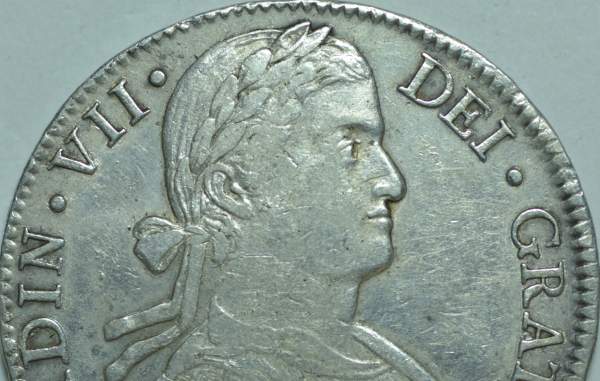
Starting with the obverse (King's head) the detail of the individual punch that created that image is to my eye suspect. It could be a transferred image on the punch. The details are ragged (possibly rusted) look at the top of the head and area of the hair over the pony tail. The look at the possibly doubled ear and ribbon. I have seen things similar to that before on Class 2 restrikes.
Next look at the dentils around the entire perimeter - they too lack sharpness. I some spots -over the head - at DEI GRATIA and near the date the spaces between the dentils appear clogged. At the date this anomalous surface texture extends into the field between the dentils and the digits. Note that these lines run almost perpendicular to the normal flow pattern of die erosion which is radial and is clearly present between the dentils at the DIN period VI of the Kings name. This erosion should have begun to wear down the die at the tailing edge of the groves in the die running perpendicular to the direction of flow I see NOTHING.
Next notice the fracture pattern of the die. Start with the small break at the last ordinal which starts as a curve from the side of the I runs into the period then emerges as several roughly parallel cracks. These look like what I call soft breaks which I attribute to a US die maker. The large defect in front of the King and the breaks in the area of GR in GRATIA all look like low stress breaks and they do not follow patterns of actual stress concentration. I believe they are caused by the steel failing because it was not high quality and lacked uniform strength.
Finally on the obverse there is the rolled in fin between the I of Dei and the G of GRATIA - which I would examine more closely to confirm a fin made it. The end at the G seems too abrupt and it should connect to the rim at that point not the G.
I have also noted lamination cracks as well as roller marks on the planchet surface, some roughness along the edges of die punch features - letters, numbers etc with clogging (an indication the punches were not touched up to maintain a crisp cut.
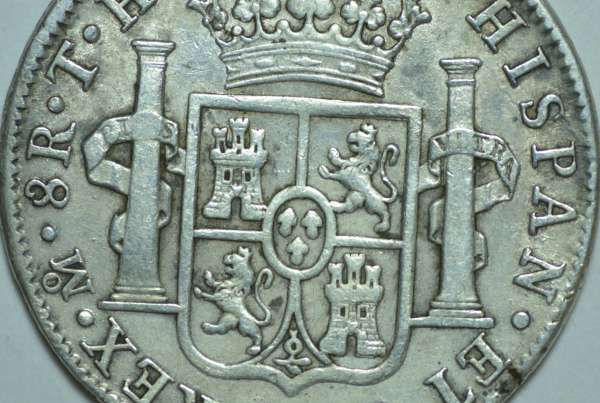
On the reverse die I see more of the same. Even the feature at the assayer initial H looks like it might be the result of a deep setting of a poorly finished H punch. Hard to tell the photo gets slightly blurry.
Notice the general clogging and rough edges of the letter punches in general - R in REX is a good example. The dentils as well appear clogged and there is significant flow wear on the die which is radial indicating this die may be older than the obverse die.
The shield outline, the devices in the shield and the pillars especially the one at the right show very well progressed deterioration of the punches (which could ne caused by the punches being image transfer elements from a coin and not the matrix block.
Now for a very odd potentially very serious feature look above the N in HISPAN - there is a raised - also curved feature in the midst of the FLOW LINES. That one has me scratching my head. Similar anomalies are seen on counterfeits and is a diagnostic point for at least one very high grade forgery uncovered 15 years ago that had fooled many dealers. In that case it was a piece of string that had been copied INTO the false die on top of pre-existing flow lines on the coin. This could be a very conclusive feature at 300X.
Without exhausting all of my comments I will turn to the edge. In the one picture that can be successfully enlarged I notice a rapid side to side wobble of the edge indicating an edging mill that lacked the typical restraining groove that prevented pop-outs from the edger it looks like a simple flat bar edger might have been used of the type believed to have been used in the US.
I also note what I call squared circles in the edge pattern where the circles are not true circles. The edges of the circles nearest the rectangles should be round not flattened. I also note the top of one circle which is furthest from the edge seems to be flattened as if from the compressive force of the strike - that always takes place on the part of the edge design closest to the die face.
Part of one overlap is also visible toward the left but without a photo of the opposite side I can not tell if it is correct or not.
All in all because this coin as a significant number of potential markers for forgery - I would make this a candidate for XRF analysis and make the final decision on Genuine or Restrike only after seeing that result.
I do not see the situation as definitive at this time.
|
|
Valued Member
Sweden
135 Posts |
Swamperbob, Excellent analysis and I appreciate your expertise on this. Unfortunately, It seems to me that this raises far more questions then it answers. Now, I am completely out of my comfort zone! Here are my thoughts on this... In no particular order... - I do know the sound of silver and it does have that ring, now in what concentration? I don't know obviously and do not have the means to perform a specific gravity test. I do know that it is not solely a steel alloy. - Where is a good place in Sweden (Western Sweden) to have this authenticated in hand? I do not know of any dealers around here that I know and trust, I am a recent import from the states. My wife has all of my paperwork :) - If this coin is a counterfeit, I do feel that it is important for the general coin collecting community to have this properly documented... The feel that I get from your analysis is that this might be a unknown counterfeit. - At what cost will additional analysis bring to me? I'm already about $80 US into this coin. Not an exorbitant amount by an means. Is it that special to warrant more? - Do I send this a TPG? Are they reliable enough to pin point a counterfeit as this? It certainly fooled the seller. - Do I contact the seller (Numismatik Lanz in Germany) about this? Any advice on how to move forward would be very much appreciated. |
|
Pillar of the Community
United States
1758 Posts |
Bob is the expert on the characteristics of Portrait 8R's but the coin has good weight. Having said that silver in its most oxidized state is BLACK as we see that in this coin. On debased Ag issues I have not seen a coin with this type of BLACK toning effect. I would consider this Ag~90% from experience. In all the 2 Reales I have tested as possible Kleeberg CC2R off-metals none have been shown as off-metal or significant debased Ag pieces with BLACK toning ... I simply avoid these piece even if they look crude as debased Ag issues do not carry a premium to contemporary counterfeit 2 Reale collectors ... check your collection Bob - see if there are exceptions - students like yourself I normally do FREE XRF analysis but your in Sweden - so based on post office costs your best to send it into PCGS or NGC - true they can't figure out a Sheffield like with the recent Eric P. Newman GIII Ctmk 8R Sheffield for $1400 in a NGC but at least it may get slabbed and your money is still good.
John Lorenzo
United States
|
|
Pillar of the Community
United States
5362 Posts |
The coin is almost certainly silver and should test between 80 and 90% pure. Based on die characteristics it is either a genuine coin or a Class 2 counterfeit - a silver restrike. The restrikes sell for the same price as genuine coins because so far very few people even know they exist. None of the TPGs are set up to distinguish between the two types so if you submit now they will be encapsulated as genuine. My research is so far unpublished but I believe it is 99% correct. What will happen after it is published is anyone's guess.
John is correct when he says there is no significant premium for a restrike (silver counterfeit) they are treated as genuine even though a significant percentage test as being made after 1870. I own one that I got from a self admitted forger who said it was made in the 1920s. That coin is 900 fine silver and the correct weight. Every dealer who has seen it says it is REAL. But the XRF test proves it has no gold or platinum in the alloy. Those missing traces plus a couple other minor contaminants prove it was definitely made sometime after 1900.
So what you do now is entirely your choice. If you NEED to be sure it is NOT a restrike made AFTER 1870 you can get the XRF test. If you do not care whether it is genuine or a restrike made before 1870 do not bother testing. If you only want to preserve your investment have it graded by one of the TPGs.
It is your decision.
|
| |
Replies: 16 / Views: 3,270 |










 Posted 01/16/2014 5:56 pm