| Author |
 Replies: 20 / Views: 5,326 Replies: 20 / Views: 5,326 |
|
Pillar of the Community
United States
1158 Posts |
I've only been here a short time, but the mantra or stigma with cleaned coins has already been beaten into me. I've discovered many of my newbie purchased "shiny" coins are actually cleaned. Looking at ebay, it seems like a good portion of the raw coins of high grade are probably cleaned. Doing some reading, it seems like cleaning coins was pretty common and hardly frowned upon a generation ago or more. So many, many "high grade" coins older than I am are probably cleaned. I understand the reasons why cleaning coins is bad and I don't plan to clean any of mine. However, what do we do as real world collectors. Many of the coins we are looking for our collection are going to be cleaned. It's very unlikely most middle-class people are going to be able to build a large coin collection of only professionally graded coins due to expense, so purchasing RAW coins that look good and have great eye-appeal is probably the best we can do. Many of them will probably end up being cleaned coins. I guess my question is, does it really matter for cheaper coins? I mean if you aren't buying a professionally graded MS-64+ rare coin is it really going to alter the value of your coins much? If I buy a relatively common (to use a real example) 1939 S Mercury dime that looks fantastic, but turned out to be cleaned on close inspections, well that was never going to be a high-collectible anyway. Maybe it's worth $5 instead of 15 now. But I paid cleaned coin prices for it to start with. And I got a VERY nice looking coin for my dime kit. Sorry for the long post, I'm just trying to figure out a strategy and learn the game here. |
|
|
|
Valued Member
United States
199 Posts |
Everything about coin collecting, or collecting anything for that matter, is what you prefer. Some people like their coins blast-white, some people like theirs toned. Many collectors prefer US Classic coins, I prefer World Moderns. If you can pay $5 for a coin that you think will bring you more than $5 of satisfaction, then, by all means, buy it.
|
|
Pillar of the Community
Korea, Republic Of
1881 Posts |
 With Bob. Even if it is cleaned, if you like the coin then go for it. Here's a good real-life example: Over in my Korean numismatics forum, people always post cleaning results (of coins that shouldn't be cleaned, with normal dirt and toning. A good reason to why many, many Korean classical coins are determined to be Hairlined, Polished, or Cleaned when sent to a TPG.)Also, most collectors have no problem with buying a cleaned coin. I try to tell them to not clean their coins and try to buy a problem-free coin, and tell them that cleaning coins will decrease their value, and if you are calling yourself an expert, you should not advocate cleaning coins with toothpaste, silver polish, erasers. etc. However they always tell me that "Collecting is self-satisfaction so cleaning a coin/ buying a cleaned coin is all good. " |
|
Pillar of the Community
United States
1314 Posts |
Bob's right. Personal choices. Some folks would rather have a nearly complete album, than look at holes. Many subscribe to the belief that they will upgrade later.
That brings me to a second topic. Although, you did not ask, you may want to think about selling. Some here never sell, and consider it sin to even consider. Again personal choices. For me, I'll sell duplicates to buy coins I don't have.
If you have the inclination, I would recommend selling. For the purpose of learning. Pick up a few that you don't really want to keep, but think you can make a little money by selling. Not only is that a valuable lesson, but it will make you a much smarter buyer.
I know you didn't ask, and I hope others will add their opinions. Good Luck
|
|
Pillar of the Community
United States
940 Posts |
I do my best to see that the coins I add to my collection have not been cleaned. However, since I collect mostly pre-1948 US coins, especially capped bust coins, I realize there are very few raw coins of the capped bust era that haven't been dipped at least. I'm very happy with the eye appeal of some of my "gently" cleaned silver coins that have re-toned, and I plan on keeping them a long time. Abrasive cleaning is another matter all together, and I won't keep coins with that kind of damage in my collection. |
|
Pillar of the Community
United States
2543 Posts |
I don't think buying a cleaned coin is a personal choice. I think it is a choice forced on to many collectors by availability and budget constraints. If I said here is a thousand dollars, you can buy a original surface 1909S VDB LWC or a cleaned 1909S VDB and a cleaned 1914D LWC. I would bet that the majority of the people would go for the uncleaned coin. I think that cleaning coins has always been taboo among collectors, never an accepted practice. With the advent of the internet, mass media and targeted sites such as CCF, new and newer collectors just assume that this information has always been out there and widespread and that people/collectors just chose to ignore it and clean their coins anyway. The reason there are so many cleaned coins is that people just didn't know any better. Unless you made a concerted effort to buy books or go to the library to really study up and really dive head long into being a serious collector, the common/beginning collector just didn't know any better. When I was a kid, it was not uncommon to find Franklin halves, Walkers, SLQs, IHCs,and the odd Peace dollar and sometimes even Morgans in every day change. Many of these were circulated and dirty. I was a collector and loved to grab these coins out of Dad's change and run to the dining room were Mom kept the silver polish with her silver plates and silverware. Boy those coins looked brand spanking new after a good wiping with the silver polish. My collecting shelf in my room sparkled with new looking coins. It wasn't until I went for my Boy Scout coin collecting merit badge did I come to know what a NO-NO it was to clean your coins. And there were millions just like me. This is why there are so many cleaned coins around. I have no problem buying a cleaned coin to fill a hole, but always for a "defective coin" price and always with the self-acknowledgement that I will be upgrading this slot in my collection when the budget allows. To me cleaned coin are a necessity sometimes, not a choice. No first class collection has cleaned coins in it . IMHO |
|
Valued Member
United States
415 Posts |
Personally, I don't give a rip about cleaned coins. 99% of the people I show my coins to would have no idea in the world the difference between a cleaned and non-cleaned coin, so it's not like anyone is going to judge me for having cleaned coins.
|
|
Pillar of the Community
United States
589 Posts |
Quote:
I don't think buying a cleaned coin is a personal choice. I think it is a choice forced on to many collectors by availability and budget constraints. and this also applies to damaged coins as well. |
|
Bedrock of the Community
Australia
21792 Posts |
The only coins that should be cleaned are ancient coins recovered from burial, and if they are likely to have significant value, they should be cleaned by experts who know what they are doing.
The cleaning of ancient coins can nevertheless involve the risk of damage anyway, and that is why THEY should be doing it. THEY are the ones by experience, that take a measured and considered risk, not the collector.
My collection comprises about 4,500 coins of all ages, ancient to modern.
I have cleaned only about 10 of them, because I felt that I had no choice. I WILL NOT interfere with a coin just to make it look better.
|
|
Rest in Peace
United States
7075 Posts |
denco7 Thanks for sharing your story. It never occured to me that youngsters were cleaning coins to make them shiny.
Anyway. to reply to the question in the original post: I would say that YES it matters. It definitely affects the value of the coin. What matters more is whether or not a buyer was aware at the time of purchase.
|
|
Pillar of the Community
 United States
1158 Posts |
I know it matters but how much does it matter for coins that are unlikely to be extremely valuable. The penny example above is one where of course you make sure it is legit. But a what about a coin that's unlikely to ever be worth more than say $50 even in the best condition?
|
|
Pillar of the Community
United States
1391 Posts |
Also, Hotels used to buff and steam coins over night so they could hand back shiny coins to their customers. I also know little old ladies used to shine cents and nickels to give a "shiny new" coin to kids.
If 99% of the people carnold744 is showing his collection to can't tell the difference, I would have to say they aren't coin people. Starting out I couldn't tell the difference, but after a few weeks it became pretty clear what a cleaned coin looked like. After you handle enough of them I think it becomes second nature (if you are an observant person).
That being said, I do have some cleaned world coins in my collection. Some of them are older German states coins, others are more modern. A couple of medieval or ancient coins, that I assume were cleaned by the person who found them.
What I do not have in my collection are harshly cleaned coins. Coins that have their patina stripped way, coins that look like they have been chromed, coins with all the hairline scratches. Those are damaged coins as far as I am concerned.
And to your question, if the coin is never likely to be worth more than $50 dollars, or it is a common coin, then why not just wait for a non-cleaned example to show up? We have the benefit of the internet these days, wait a week or a month and there will more more examples of the coin you are looking for up for auction again.
|
|
Pillar of the Community
United States
5230 Posts |
Quote:
Also, Hotels used to buff and steam coins over night so they could hand back shiny coins to their customers I've gotten boxes of halves that have shiny bright orange rims but the rest of the coin is hammered. It seems casinos also wash their coins as anyone who has every roll searched can tell you how black your hands turn afterwards and I'm sure casinos don't want their customers playing the slots to end up with black hands. If you find a coin that you need in change and it has been cleaned you don't have a choice. If you are buying a coin you might not have a choice if the coin comes up rarely for sale or an uncleaned example is way out of your budget. |
|
Pillar of the Community
United States
1156 Posts |
Three points to make here: 1) Cleaning that damages an undamaged surface is obviously bad (lightly bad to harshly bad). 2) Some coins must be cleaned because not doing so will allow contaminates to damage the surface (eg PVC residue) 3) Some coins can be carefully cleaned (ie conserved) without damaging the surface. So, tkbslc, what type of cleaning are you talking about? Quote:
It's very unlikely most middle-class people are going to be able to build a large coin collection of only professionally graded coins due to expense, so purchasing RAW coins that look good and have great eye-appeal is probably the best we can do. Why not build a small collection of only quality coins? I wish someone had asked me this question when I started my collection but I foolishly started with quantity over quality. I think it was because I did not realize how much I would love what I was getting into or how much I would end up investing. It sounds like you might be able to learn from others' mistakes. ~jack Edited by jgenn
07/06/2014 10:44 pm
|
|
Pillar of the Community
Canada
2786 Posts |
the term "cleaning" covers so many variables it's hard to really refine what it means singularly. mechanical whizzing or using an abrasive is going to be bad regardless of the value of the coin. I would argue with anyone who says this is ok. chemical (acidic) dips? not my cup of tea, but hey if it's your coin so go for it but I think it would limit the coins audience/value if you choose to sell it in the future. acetone? good at melting away the organic junk but can leave coppers with a rainbow toning. still "cleaning" but supported by a large number of members here who still claim "cleaning" is a bad thing. other "cleaning" or conservation agents like verdi-gone/care (works wonderfully by the way) make the coins healtheir and more attractive. is it "cleaning"? kind of, but the end result is often better than leaving the coin alone. reverse electrolysis? I played with this a little on junk silver. left some toning but freed up the gunk and some of the heavy oxidization. technically still altering the surface but not as intrusive as a chemical bath. removing junk & gunk with oil and a toothpick/thorn etc ? some coins are going to come out with better eye appeal than leaving it alone. does it affect the value? I dunno, I put A LOT into eye appeal. (see image) coins on the top row are both original, one is acceptable, one is not. coins on the bottom row are both cleaned, again, one is acceptable, one is not.  |
|
Bedrock of the Community
United States
20042 Posts |
Collect what you like. I have several cleaned coins in my collection. I think this coin has an old cleaning but I find it quite collectable. 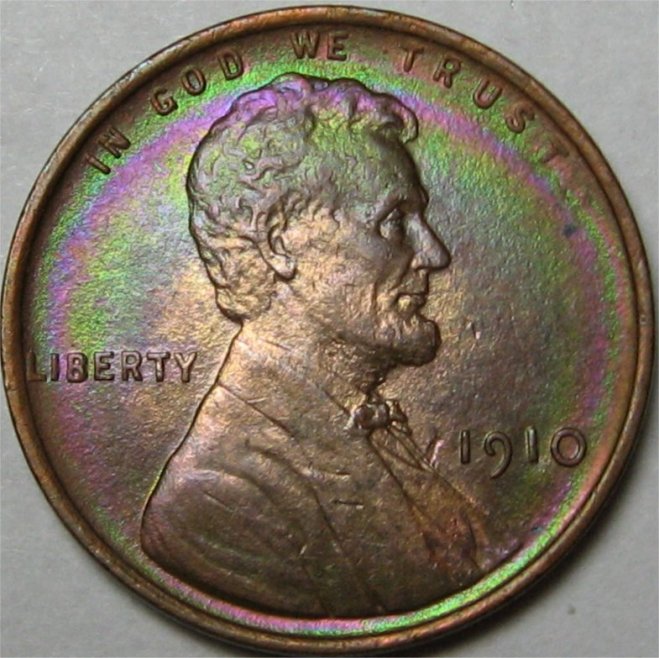 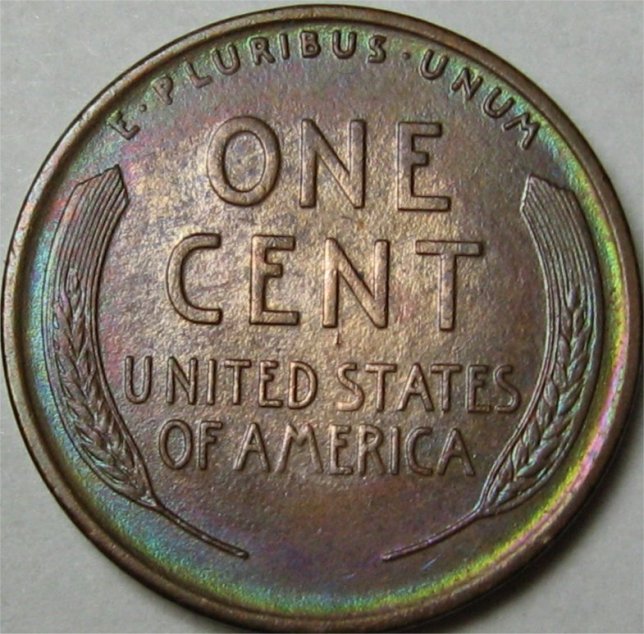 Edited by BadThad
07/07/2014 12:24 am
|
| |
Replies: 20 / Views: 5,326 |










 Posted 07/06/2014 6:34 pm


