| Author |
 Replies: 18 / Views: 3,382 Replies: 18 / Views: 3,382 |
|
Pillar of the Community
United States
5362 Posts |
I do not generally like cob coins, but I ran into one I liked. I will post the best pictures I have until it actually arrives. Any comments about what this is? Is it genuine? Can you guess why I like it? Remember please list the reasons for your beliefs. 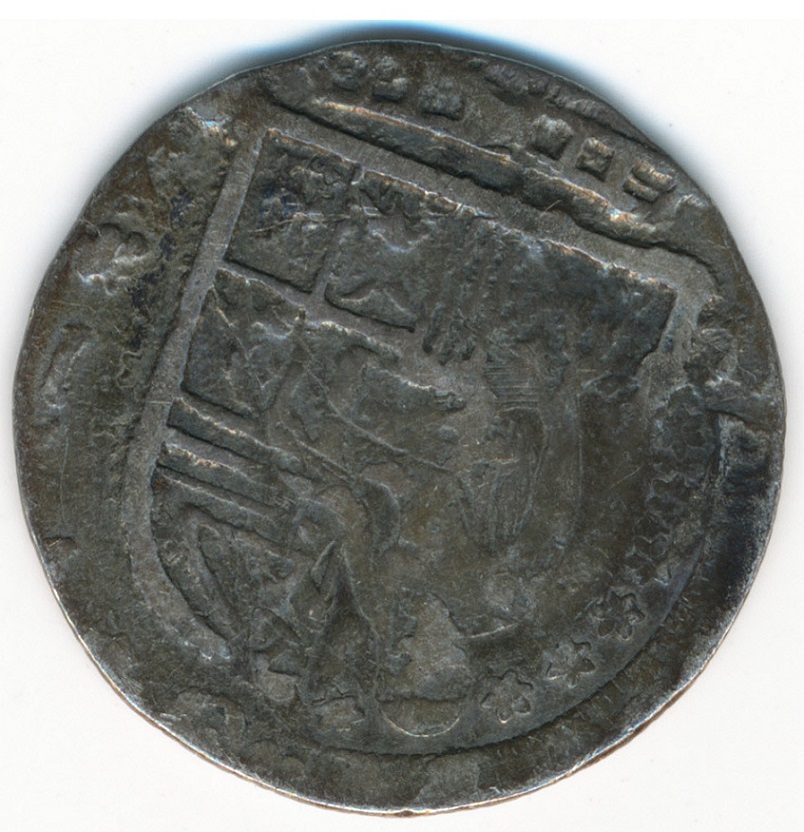 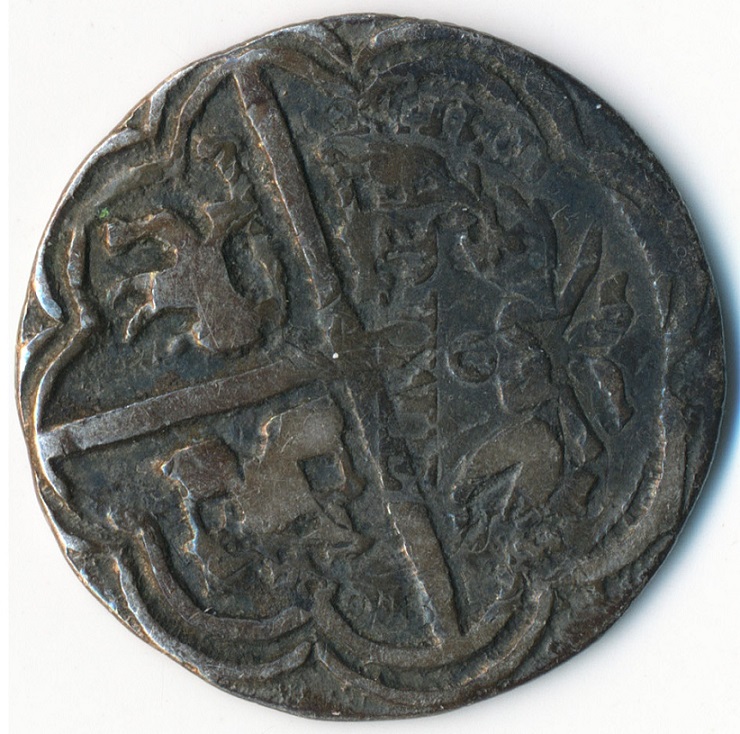 |
|
|
|
Moderator
 United States
34554 Posts |
Way cool coin! Seems to be overstruck on a Seated Liberty dime.  Can't make out the date though. "If you climb a good tree, you get a push."
-----Ghanaian proverb
"The danger we all now face is distinguishing between what is authentic and what is performed."
-----King Adz
|
|
Pillar of the Community
 United States
5362 Posts |
I posted the reverse backwards by error. It is not a brockage. The host is a New Orleans Seated Liberty dime with the O placed inside the wreath. The date if I am correct in the interpretation of the photos is 1845. That means the dime used as the host for a trial strike for a counterfeit 1 reale was made in New Orleans the year that John Riddell (the melter and refiner of that mint) published his book on counterfeit dollars. It looks like this coin may actually have circulated - so the trial strike effectively changed a 10 cent coin into 12.5 cents. Good eyes. |
|
Pillar of the Community
United States
1962 Posts |
Wow, interesting piece, have never seen anything exactly like that... Does look to have circulated, but it makes no sense. Shield-style cobs hadn't been made for more than 100 years prior to the 1840s, at any mint... Also, a cob that's round like that would have been completely odd-looking in the U.S. by this time... and probably also in most Latin American countries.
Where was the seller located?
|
|
Pillar of the Community
United States
5362 Posts |
The seller is located in the US and is a dealer who hunts for forgeries. He travels around to a lot of shows that I can not attend because of my wife's illness and my own physical issues. On a coin like this I provide an estimate of my interest then he shops the coin around looking for other bidders. When I show most interest (highest price) I win. Works fine for me. I can usually outbid most collectors except Mike Dunigan and collectors at that level.
On the frontier of the 1850s which was almost anyplace west of the Mississippi - I believe really old silver (even cob coins) would have been welcomed because small change (silver) was particularly hard to get.
|
|
Pillar of the Community
United States
3361 Posts |
I'm guessing that you like it because it is both esoteric and extremely ugly.
The fantasy lion and castle are great!
A good use for a dime too.
"Two minutes ago I would have sold my chances for a tired dime." Fred Astaire
Edited by thq
02/24/2016 11:56 am
|
|
Pillar of the Community
United States
5362 Posts |
thq This one proves that beauty is in the eye of the beholder.
|
|
Pillar of the Community
United States
4409 Posts |
|
|
Pillar of the Community
United States
1962 Posts |
Bob, just asked to see about where it came from to see if that might narrow its origins down.
Figuring how the host dime is in theory barely below the face value of a cob 1R (and in practice, I believe I've read that old, worn-down 1R only traded at 10 or 11 cents in the U.S. by this time), I guess one of two things here:
1) (and your language alludes to this) If originating in the States, this strike on a dime would simply be a test strike and not meant to be the standard procedure (virtually no margin over the dime face value).
OR
2) Perhaps this originated from somewhere in Central America, where American small change sometimes made its way to in the mid-1800s... Maybe if they weren't universally accepted as "legal tender" or similar, someone endeavored to overstrike them with a Spanish design?
Either way, interesting that they would use such an old design (not only cob, but the even older shield design)... guess they figured perhaps it would be vaguely recognized enough to be accepted, but no one would know enough to question legitimacy.
When I get a chance, I'll peek at pics of contemp. counterfeit and/or older fake cobs I've come across (sometimes they're hard to tell apart) to see if there are any potential relatives...
|
|
Pillar of the Community
United States
5362 Posts |
realswatcher Since I first saw the coin a few weeks ago, I believed it was simply a die trail for a counterfeiter. The date 1845 sets the earliest possible date for the counterfeit dies.
As I studied the images it appeared from wear that it did circulate. I want to wait to see the coin in person before estimating the wear present on the dime before it was overstruck and the amount of wear that took place after it was re-struck.
It could of course date to any time after 1845.
At present I am of the opinion that after the die trial served its purpose; it simply was passed into circulation for the sliver value.
|
|
Pillar of the Community
 United States
1950 Posts |
That is one of the most interesting pieces I have seen in a long time...
|
|
Valued Member
United States
106 Posts |
Neat coin, but seems like a lot of trouble...what is the point?
|
|
Pillar of the Community
United States
5362 Posts |
All forgers test their dies. Using a convenient coin just makes the test easier once the die pair is mounted in a press.
Very few survive compared to single sided splashers.
|
|
Moderator
United States
34554 Posts |
Quote:
The date 1845 sets the earliest possible date for the counterfeit dies.
In looking at the fine details still evident on the host coin, I'm pretty confident that it had not circulated widely before being over struck. "If you climb a good tree, you get a push."
-----Ghanaian proverb
"The danger we all now face is distinguishing between what is authentic and what is performed."
-----King Adz
|
|
Pillar of the Community
United States
1761 Posts |
Fred Weinberg chimed in on this piece on another channel. It floated around the last Long Beach show however he told me he really does not involve himself with non-Federal errors ... however on this one with the host coin is a Federal dime.
On a separate matter Julia Purdy recently has shown and found newspaper articles that Mexican tokens were forged in Pittsburgh, PA, New York and of course Belleville, NJ which may be the best source yet for Canadian Blacksmiths. She has found several 19thC newspaper clippings. Trying to convince her to send to MNA Journal. Maybe Joe Flores can add ... ? Paper ads say forged Mexican Tokens for sale and the like ... contact this company. The Belleville paper article was a counterfeiting ring getting caught in a port in South America with tons of forged blanks ready for striking like that well known 1833 S.A. Forgery from Honduras in my collection and in my new book on Foreign Counterfeits ...
JPL
Edited by colonialjohn
02/25/2016 7:44 pm
|
|
Pillar of the Community
United States
1962 Posts |
"Fred Weinberg chimed in on this piece on another channel."
And said... ?
------
"She has found several 19thC newspaper clippings... Paper ads say forged Mexican Tokens for sale and the like"
Heh, interesting.
|
| |
Replies: 18 / Views: 3,382 |








 Posted 02/23/2016 7:21 pm


