| Author |
 Replies: 12 / Views: 1,220 Replies: 12 / Views: 1,220 |
|
|
Valued Member
United States
493 Posts |
|
|
|
|
Pillar of the Community
United States
1609 Posts |
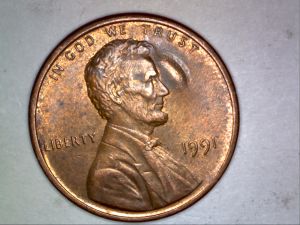
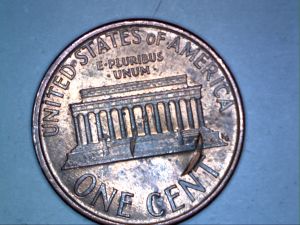
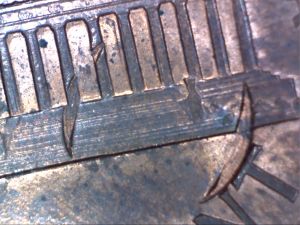
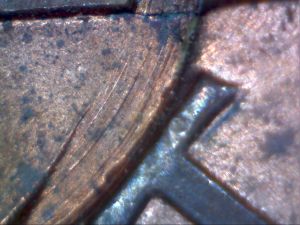
Well, the obverse appears to have a rather large bubble in the copper plating. It's not unusual to have bubbling on coins of this period. It is unusual to have them so large. If the plating has been broached (breached), there's likely zinc rot behind it. I don't see a connection of the obverse & reverse conditions. The reverse seems to have been partially struck through something round. Either the anvil die itself is damaged, leaving an incuse round shape [in which case there are more than a few of such coins], or ... something damaged the planchet and excess metal flowed into that. I'm not overly confident of the last of these comments. I'll just sit here scratching my head for awhile.  Edited by Biedercoins
03/04/2017 07:40 am
|
|
Pillar of the Community
967 Posts |
Someone struck the reverse of the coin so hard that it forced the metal to be displace outward on the obverse of the coin.
|
|
New Member
United States
33 Posts |
I'm a total numis-noobie here, but....i just saw a quarter with a similar problem in another website...described as "rolled in wire". The website explains that wire was rolled in the metal before the strike.
|
|
Pillar of the Community
United States
2260 Posts |
It kind of looks to me like the reverse damage is incuse which would mean it probably took a hit. ( PMD) |
|
Pillar of the Community
 United States
5715 Posts |
The metal fragments on the reverse look raised to me. If it's PMD, how would the surface between the columns not be affected at all? |
|
Bedrock of the Community
United States
62064 Posts |
I see something like scratches where something turned/rotated while making this damage. PSD |
|
Pillar of the Community
United States
2260 Posts |
Quote:If it's PMD, how would the surface between the columns not be affected at all? That's what gives it away. If it were a die issue the surfaces between the columns would be the first to be affected since they are the higher point on the die. What ever caused the damage in it's later life didn't go deep enough to affect the area between the columns. I'm pretty new at this and hope my explanation is correct. |
|
Rest in Peace
10197 Posts |
I'm gonna say it's copper shavings...coin was face up on top of a hard surface, then a board placed on top and hammered w/ a heavy hammer...imprinted material did force thru, notice the cheek is puffed out as well...is coin bent slightly, or have a parabolic effect?
|
|
Bedrock of the Community
United States
62064 Posts |
If it were a burr between the dies, then the opposite side would be normal. It is not, so it was altered after it was struck. The reason it didn't affect the bays is that the columns took the the hit. If it were deeper a deeper hit/damage, then the plating would probably would have been split. But it is not. Just the obverse balloons out. from the hit on the reverse. So it may have been more that one thing that happened when this coin was damaged or a different angle may have cause the bulged area.
|
|
Valued Member
 United States
493 Posts |
Should I try taking different pic's from different angles?
|
|
Pillar of the Community
United States
1609 Posts |
Yes, do try some different photo angles and give us a "braille" description: what's incuse and what's sticking out because I don't think we're all on the same page.
|
|
Valued Member
United States
493 Posts |
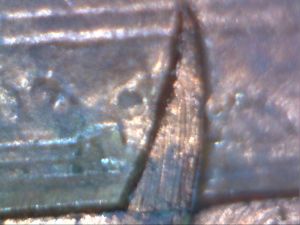
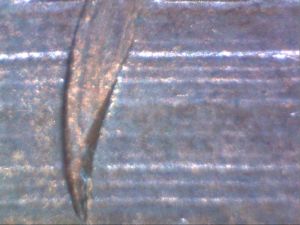
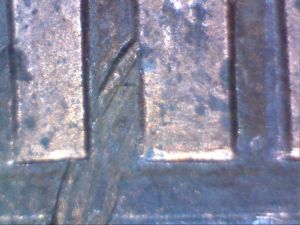
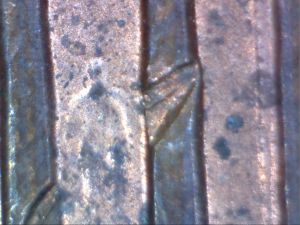
Okay, I went and dusted off grandpas old magnifying glass its a monster, but it gave me a better look see at the problem. It looks like a hard hit may be right, but I took a couple more pics. The big gap on the right has been pushed down and shows the inside layers of the coin, not some object. I still am not sure about the left side. 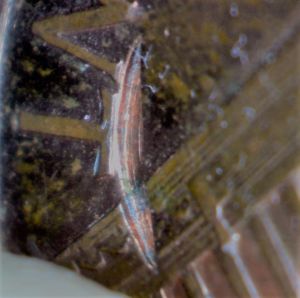 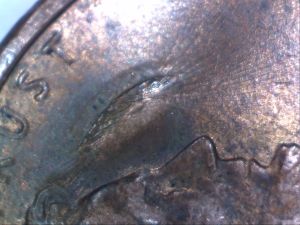 |
| |
Replies: 12 / Views: 1,220 |
|








 Posted 03/04/2017 07:44 am





