| Author |
 Replies: 29 / Views: 2,197 Replies: 29 / Views: 2,197 |
|
New Member
United States
45 Posts |
Hi all! I have a question regarding what I assume is a lamination (or delamination?) error on this 1943 D 5C. The part in question is recessed into the coin. There seems to be "CE" printed into the coin, to the right of the "S" and under the "O". I'm assuming it's from "CENTS" above it because it matches the size, font, and angle. I tried to get it to show in the photos, but it is very clear in person. I can't wrap my head around how this is possible, at least from what I understand about how lamination errors happen. Any help would be appreciated! 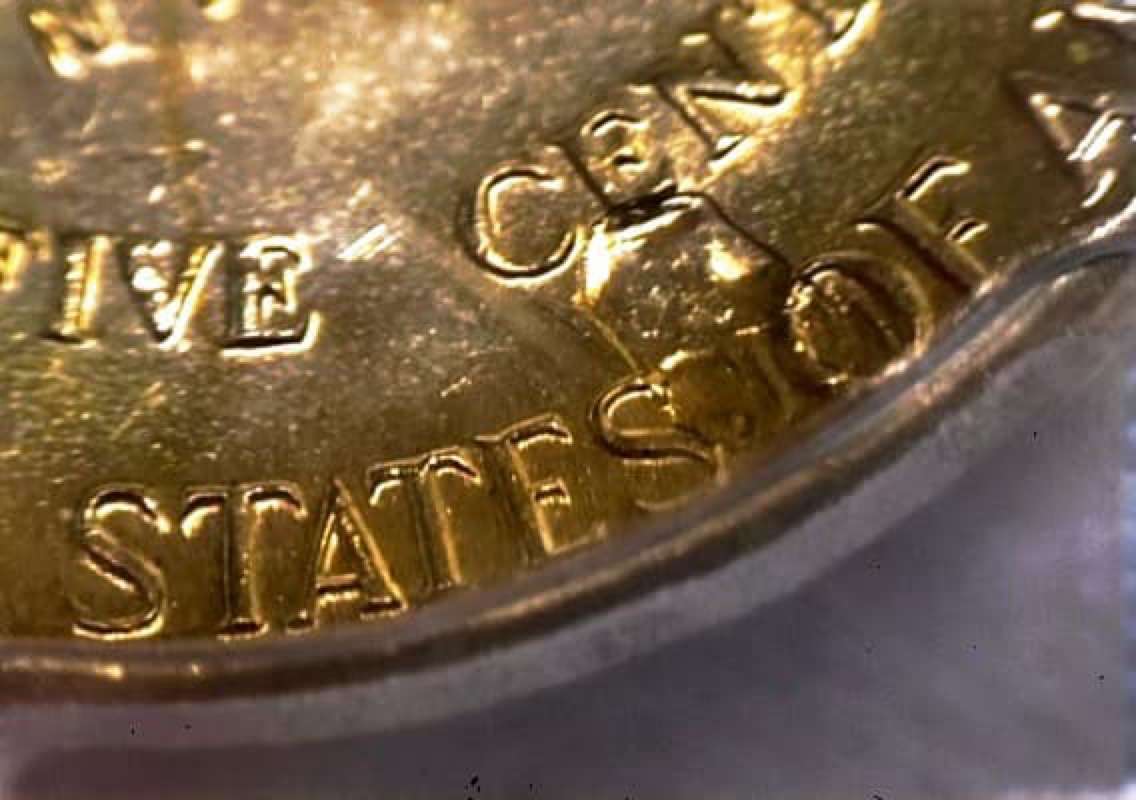 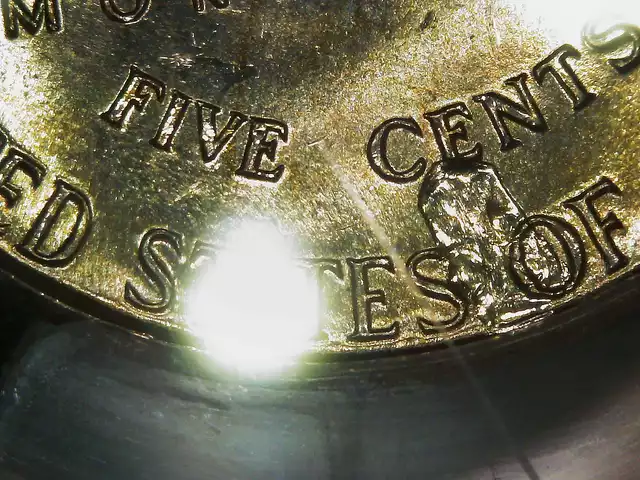 |
|
|
|
Bedrock of the Community
Canada
21868 Posts |
 to the CCF Not a lamination problem, it is a retained Struck Through. Looks like it may be a piece of foil or something similar. Do not try to remove it, leave it as it is. |
|
New Member
 United States
45 Posts |
@JimmyD
Thank you for your reply!
The area in question appears to be recessed into the coin, at least as far as I can tell. Is this possible if it is a retained struck through error?
I agree with you that that makes the most sense, but I'm not sure how it would be recessed. Perhaps it is not and I am just viewing it wrong.
And don't worry, either way it is enclosed in a slab so it won't be coming off any time soon!
|
|
New Member
United States
45 Posts |
@JimmyD
and thank you for welcoming me to the community! I am excited to become a part of it!
|
|
Pillar of the Community
United States
3207 Posts |
have you gently probed that area with a toothpick to be sure it's not a drop of glue into which letters from another coin were pressed?
|
|
New Member
United States
45 Posts |
@nick10
Interesting thought! I'm afraid it's in a PCGS slab so I can't probe it. The letters appear to be oriented correctly, they would be mirrored if from another coin, no?
|
|
Pillar of the Community
United States
3207 Posts |
the letters in question being incuse suggests an impression from another coin, but yes, you are correct that in such a case those letters should be mirrored ah, the coin is slabbed, ok, then glue is unlikely since PCGS would not have slabbed it with glue present the lettering within the anamalous area looks sufficiently formed to not be Pareidoliahmm, what if a thin sliver from another coin stuck to the die, I think subsequently minted coins could appear like yours does the slab's label not mention this anomaly? |
|
Bedrock of the Community
United States
62064 Posts |
The weight will be normal for a Struck through debris.
|
|
New Member
United States
45 Posts |
@nick10
Love the new word! I did at first think I was just seeing something I wanted to, but the letters are too perfectly distinguished. Even more so in person than in the photos.
The whole area seems to be recessed, but the letters in the recessed area seem raised. It is hard for me to truly get close enough to tell because of the slab, but after shining a light at it from the side to see the shadows this appears to be the case.
The slab does not mention anything about it, perhaps the graders did not think it was important enough. Or perhaps the submitter would have had to pay for the attribution.
|
|
New Member
United States
45 Posts |
@coop
Unfortunately I do not have a scale accurate enough to weigh it. Plus I think the slab it is would make it very difficult to get an accurate weight of just the coin itself.
|
|
Bedrock of the Community
United States
62064 Posts |
I agree the slab would affected the weight.
|
|
Moderator
 United States
56855 Posts |
. Could it be a de-lamination? Does it say anything on the slab? John1  |
|
New Member
United States
45 Posts |
@John1
Delamination was my first thought, but doesn't explain the letters.
I actually think I agree with nick10's assessment of a small piece of another coin being stuck to the die. I'm beginning to believe the letters in the anomalous part are actually recessed into the coin. I think that this would back up nick10's theory. So rather than this being part of the coin missing, it's just been further pressed into the planchet.
|
|
Pillar of the Community
United States
3207 Posts |
partial die cap, maybe? this might be one for Mike Diamond to weigh in on
|
|
Pillar of the Community
Canada
6244 Posts |
My taught on this it is struck over a missing planchet ex-foliation. The lines of the missing part are very close with the coins struck with 35% AG and 9% MN. This from the second photo which show also a missing part of the rim with metal texture. The first photo has complete other effect.
|
|
Bedrock of the Community
United States
10065 Posts |
Oops - got things a bit backwards here: Quote:
The slab does not mention anything about it, perhaps the graders did not think it was important enough. Or perhaps the submitter would have had to pay for the attribution. Grading companies only GRADE coins. They do not automatically inspect coins for anomalies, identify the error, and print it on the label. An owner must tell the company what error is on their coin at the time of submission, pay the company for verifying (or not) the coin actually has that error, and hope the company gets it right. I have had die hard slab collectors on this forum tell me the companies are terrible at error attribution being correct. And I believe it... Check the No FG essay in my signature which uses a lot of linked PCGS website data to show they have a less-than-rookie level understanding of Kennedy half No FG attribution. Edited by Earle42
03/20/2022 5:49 pm
|
| |
Replies: 29 / Views: 2,197 |








 Posted 03/20/2022 10:37 am


