| Author |
 Replies: 15 / Views: 464 Replies: 15 / Views: 464 |
|
|
Pillar of the Community
United States
776 Posts |
Edited by Adam590
04/06/2026 7:44 pm
|
|
|
|
Pillar of the Community
 United States
6880 Posts |
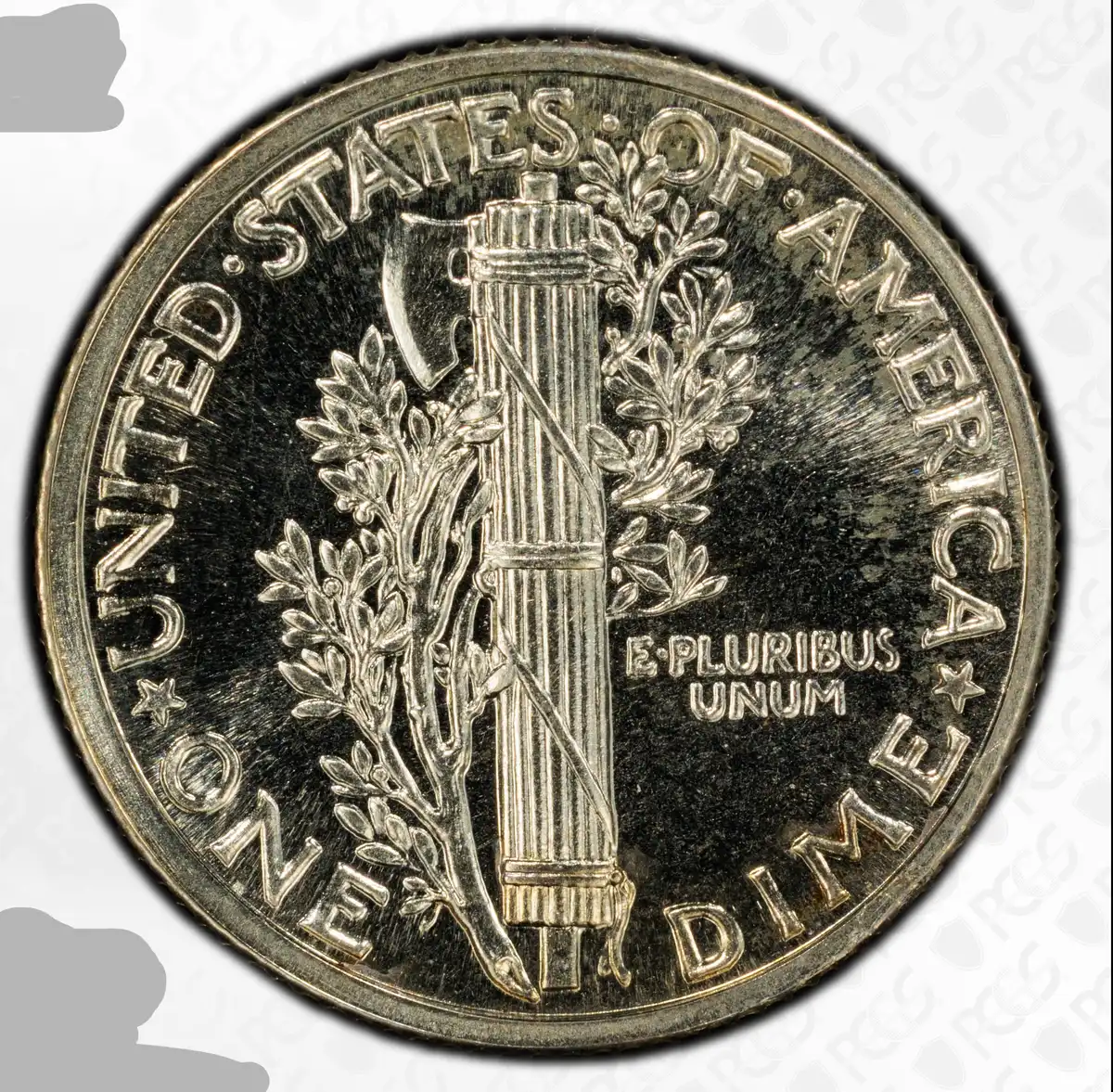
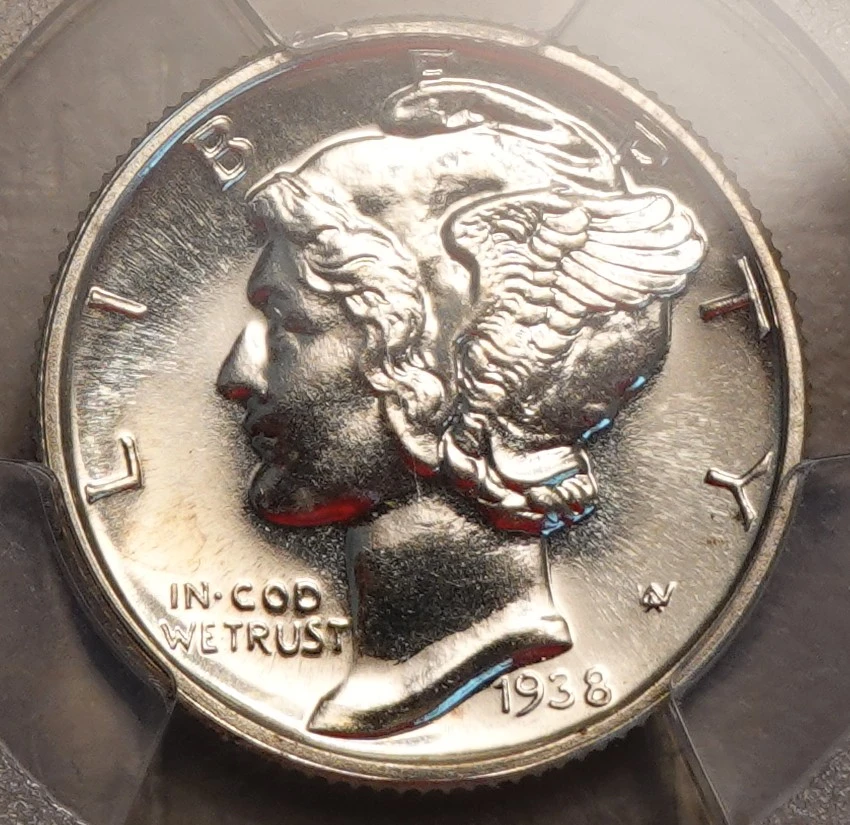
Is it a proof? The fields, that radial metal flow, and the strike detail are really eye catching.
|
|
Pillar of the Community
United States
7269 Posts |
Quote:
Is it a proof? I studied this coin longer than most "you vs grader" topics wondering the same. I'll go out on the limb...and say PF-65 |
|
Bedrock of the Community
 United States
10601 Posts |
Of course it's a proof! (watch me be wrong!  ) I think 65 sounds about right! |
|
Pillar of the Community
 United States
776 Posts |
@Brandmeister: It's a good question, and I purposely didn't specify on this guess the grade post. I appreciate how careful and thoughtful you are.
|
|
Pillar of the Community
United States
6880 Posts |
I think it's a beautiful coin. I don't think PCGS is picky about die polishing, not like CACG anyway. This die has been polished a lot, particularly around the bridge of the nose. The dime doesn't have the color that PCGS really fancies. However, it also has no cloudy toning, which is a plus for me. I would say this is a PF-66 grade, maybe a PF-67.
|
|
Bedrock of the Community
United States
18873 Posts |
Quote:
his die has been polished a lot, particularly around the bridge of the nose. Brandmeister I have no idea how you can tell the metal flow from die polish lines.  PR66 - not sure what the marks on the nose are from? maybe rollers? |
|
Pillar of the Community
United States
6880 Posts |
Quote:
Brandmeister I have no idea how you can tell the metal flow from die polish lines. 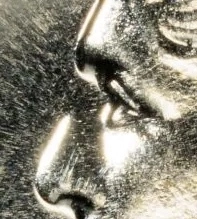 That gap in the bridge of the nose is definitely die polishing. I have seen that over and over on Mercury dimes on many different years. The bridge of the nose is very low relief on the obverse. It is also where the branches stick out after a die clash. So if the engravers remove a clash, that spot is often degraded. Usually that specific clash removal is accompanied by a patch of fine vertical lines that have horizontal unevenness. However, if the engravers heavily polish the whole die surface, that area will also inevitably be polished away, as in the case of proof dimes. That sort of whole face polishing doesn't seem to result in the same patches of aligned vertical or horizontal scratches or marks. 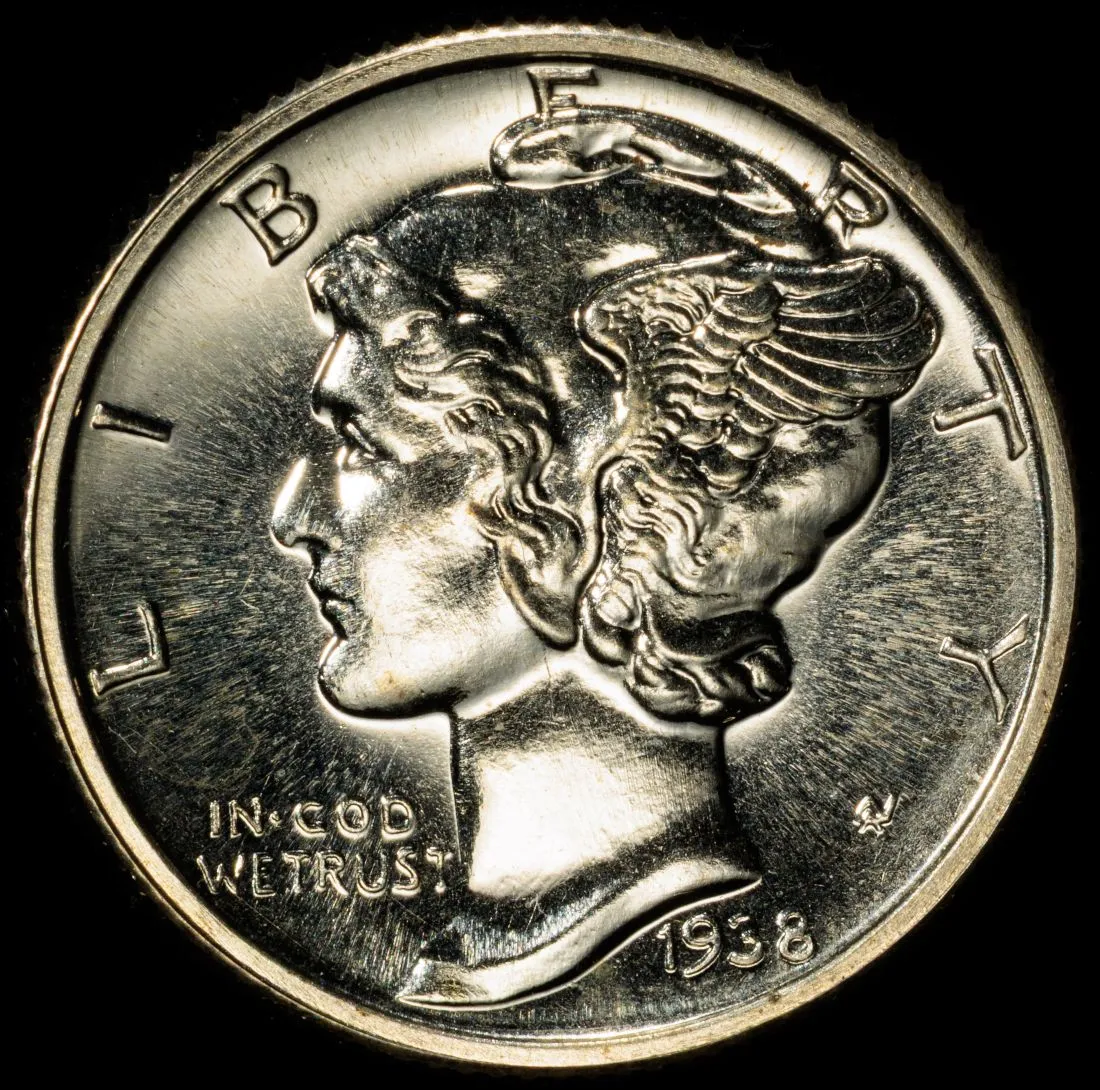 That radial sunburst pattern in the fields is common to many proof coins. It seems especially prevalent on silver proof dimes (both Mercury and Roosevelt) and silver proof quarters. It seems to happen more after some die wear. I have always assumed it was a proof coin analog to business strike radial die flow—basically cold metal deformation of the die face after repeated high pressure strikes. The way that the pattern is usually centered also seems to indicate mechanical stress. To be fair, my assumption is largely due to the fact that I don't know of any polishing tools that would produce a centered radial pattern of tiny lines on a die face. I have always assumed that any aggressive buffing or grinding results in lines going the same direction. |
|
Bedrock of the Community
United States
18873 Posts |
excellent Brandmeister. thanks for the detailed explanation. I did notice these lines on other high end proofs as well.
so are you saying you believe all of these radial fine lines may be from aggressive die polishing and not really from metal flow from the strike including the lines around nostrils and upper lip? I can see that now as there are similar looking lines along the bottom of the bust and they are actually recessed.
|
|
Pillar of the Community
United States
625 Posts |
|
|
Pillar of the Community
United States
6880 Posts |
Quote:
so are you saying you believe all of these radial fine lines may be from aggressive die polishing and not really from metal flow from the strike including the lines The opposite. I am pretty sure that starburst pattern in the fields is from striking. It is analogous to Die Deterioration flow on business strikes. It's just much finer on proofs because the polished die surface is so smooth. You can find that pattern on silver proofs from many different years. https://www.pcgs.com/cert/39839912It's also possible that the pattern is caused by the planchet metal getting squashed outwards towards the rim and inwards to fill the bust. Quote:
around nostrils and upper lip? Inside the bust boundary, I am not sure what's happening on the nose and lip. |
|
Pillar of the Community
United States
2382 Posts |
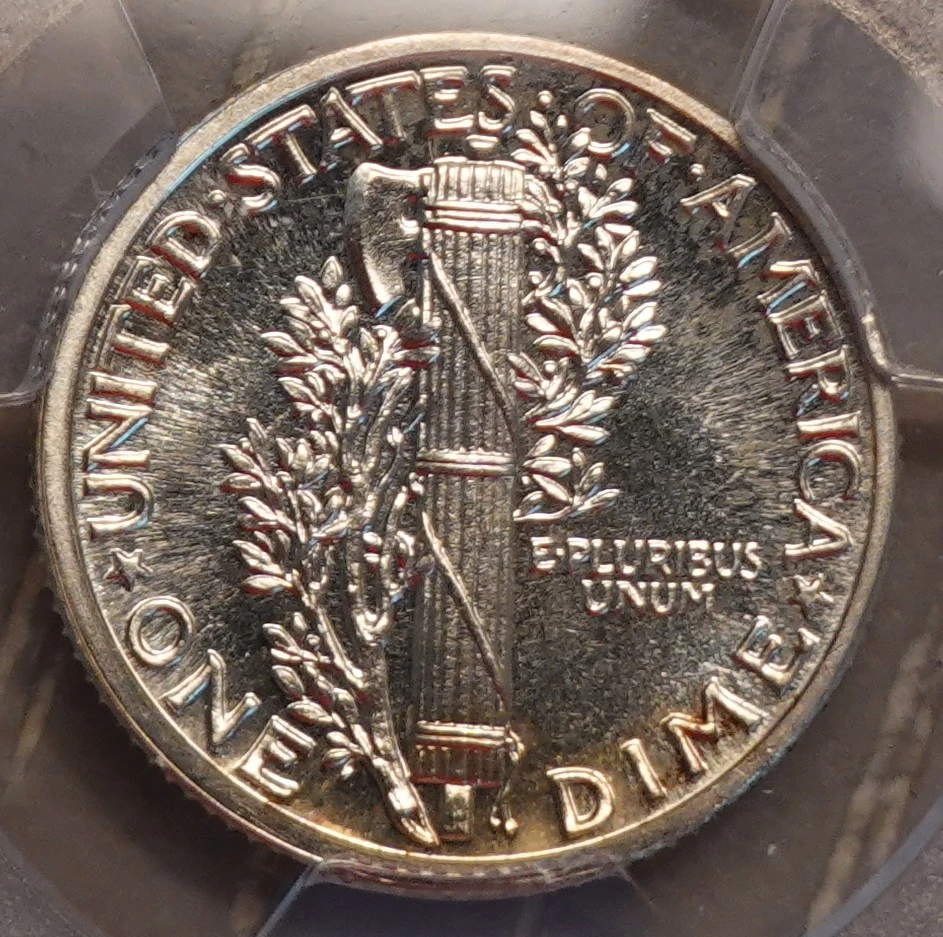
The 2nd pic of the reverse makes it look DCAM. The obverse...not so much. Nice square rims. PR-66 Nice coin!  smat |
|
Bedrock of the Community
United States
18873 Posts |
Quote:
I am pretty sure that starburst pattern in the fields is from striking. thanks for the clarification. I wanted to make sure I understood what you were saying |
|
Pillar of the Community
United States
776 Posts |
I really appreciate the discussion on this one--I am learning a lot. This one PCGS calls PR(67). I have a question about these Mercury dime proofs: are they ever cameo? I have never seen a cameo one, although I also see how the reverse on mine almost has that cameo look. 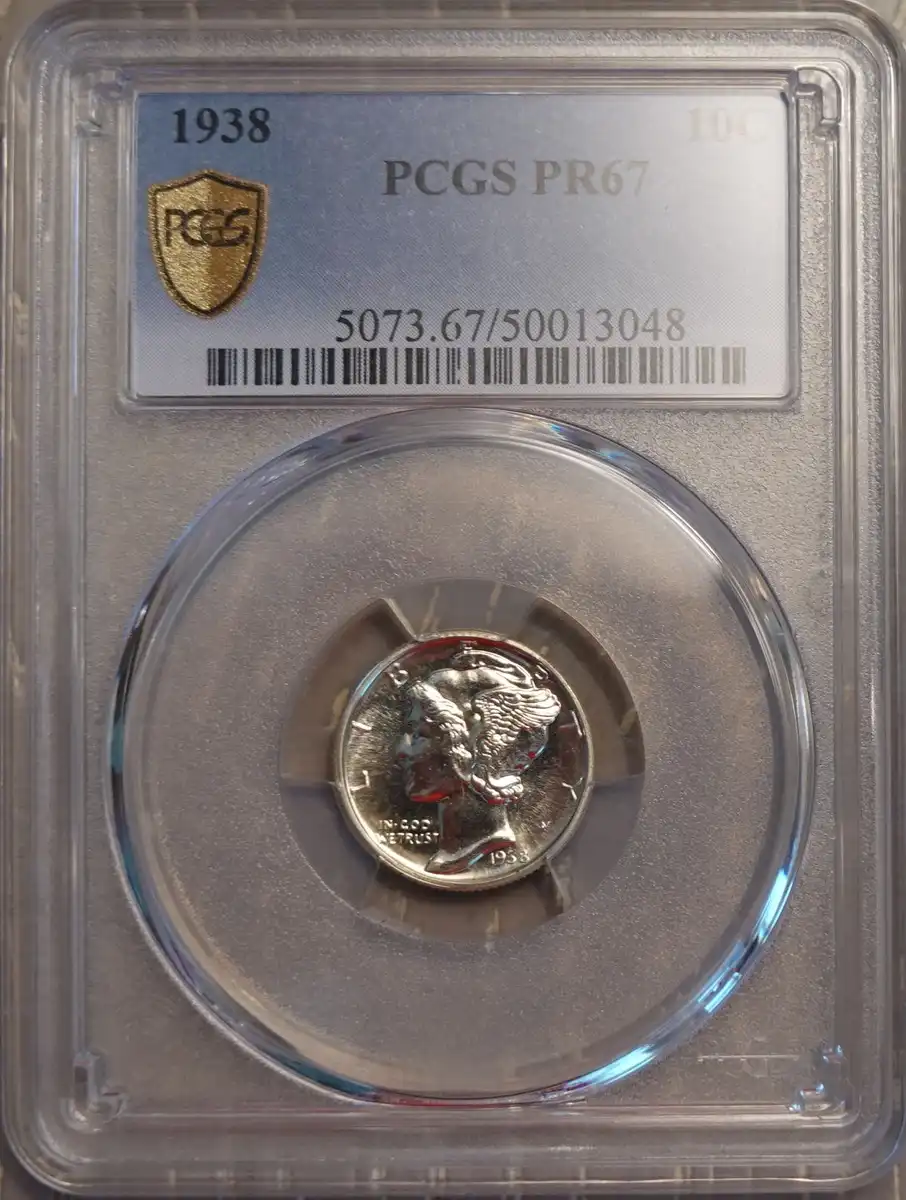 |
|
Pillar of the Community
United States
1853 Posts |
Late to the game on this one. I had it at PF-66, but it is hard to tell what are marks on the holder vs. coin. Roger Burdette has an excellent book on 1936-1942 proofs that talk about the top of the nose being polished away. They were aggressive polishing proofs back in those years, leading to detail removal.
|
|
Bedrock of the Community
United States
36940 Posts |
|
| |
Replies: 15 / Views: 464 |
|









 Posted 04/06/2026 9:27 pm





