Posted 09/21/2022 10:54 pm


TALKING BEGINNERS: EAC GRADING
Last time, we looked at ways net grading was defined. This time, let's look at how some EAC'ers determine net grade. For this column, I solicited member comments on net grading from old issues of Penny-Wise, though Region 8, from the US Cents web site <http:/twww.USCents.com>, and from personal communication. I was somewhat disappointed in the low number of responses. Maybe there is some truth to the rumors about net grading "secrets" (said tongue-in-cheek).
I want to thank everyone who shared their ideas on net grading. Your willingness to publicly state your grading principles marks you as gentlemen and scholars!
Perhaps I do not need to do so, but I want to repeat one thing that was said last time. Each person has his or her own standards that he or she uses to net grade. This may result in different people assigning different net grades to the same coin. Learn how others net grade and you may be able to visualize their coins before you actually see them.
Here then is how some EAC'ers net grade.
PENNY-WISE articles
In the past, several articles on net grading have appeared in Penny-Wise. Two might be of interest to members who have past issues or who have the Penny-Wise CD. One, by Frank Wilkinson, dealt with a theoretical approach to Dr. Sheldon's grading (Volume XVII, 1983, p. 297). A second, by Bill Noyes, should be REQUIRED READING for anyone interested in net grading (Volume XXI, 1987, p. 205). This article has been reprinted in the front of his two large cent books.
WILLIAM SHELDON
OK, I did not meet with Dr. Sheldon through a clairvoyant, and I never met him while he was alive. And no, this is not a theoretical approach to Dr. Sheldon's grading secrets. This information is forwarded by Denis Loring who, as a young man in the late 1960s, learned net grading in Dr. Sheldon's Riverside Drive apartment in New York City. There the good doctor used his own coins to show his net grading methods.
Dr. Sheldon would remove a coin from his safe, carry it to an open window, and,
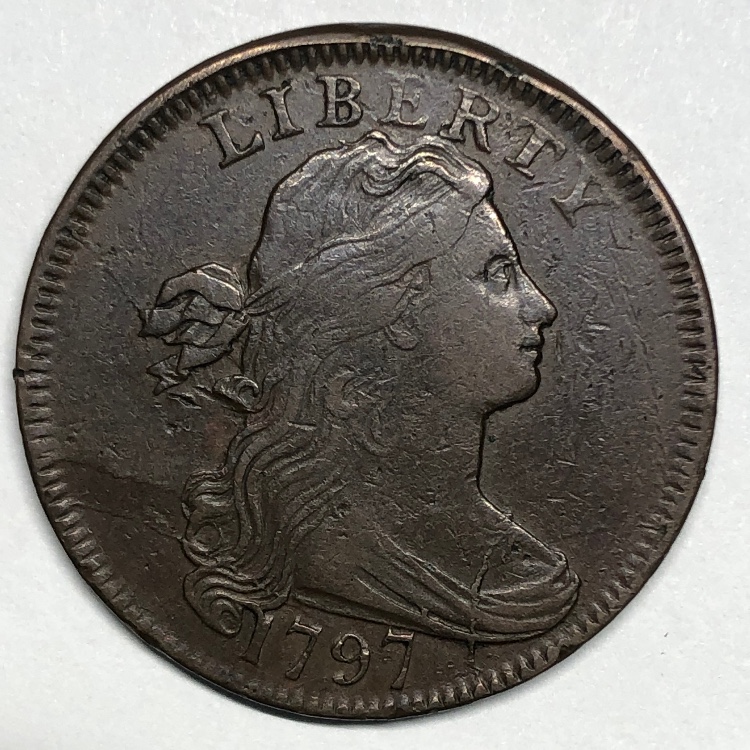
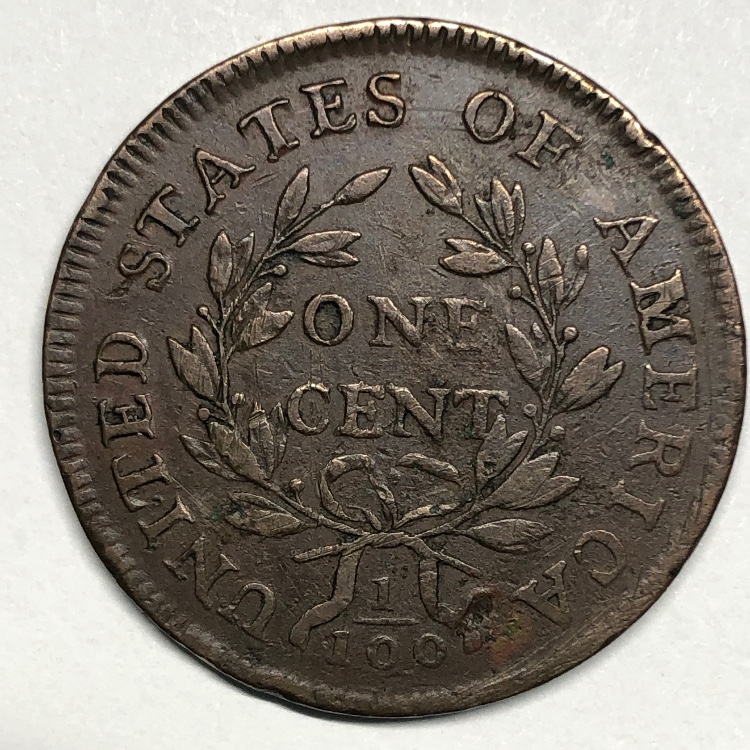
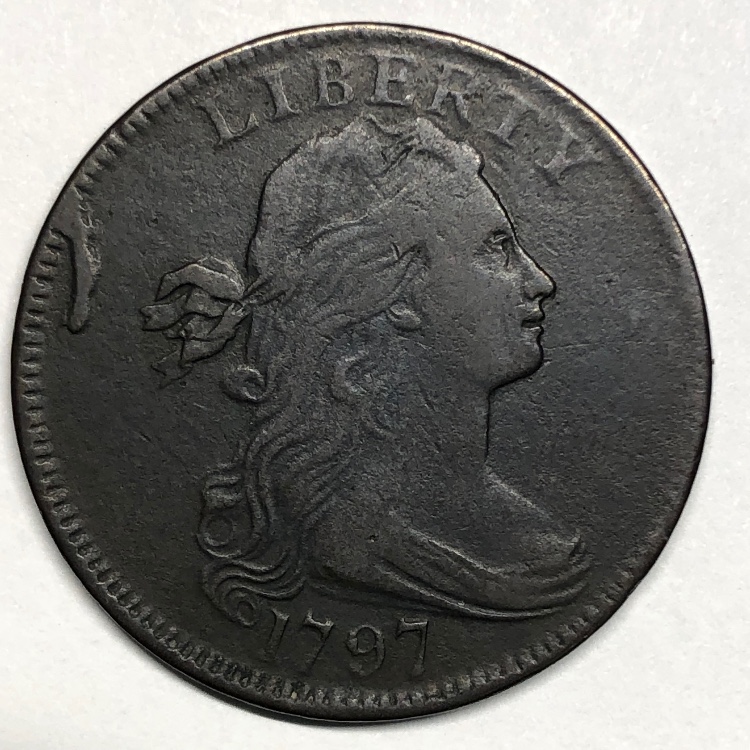
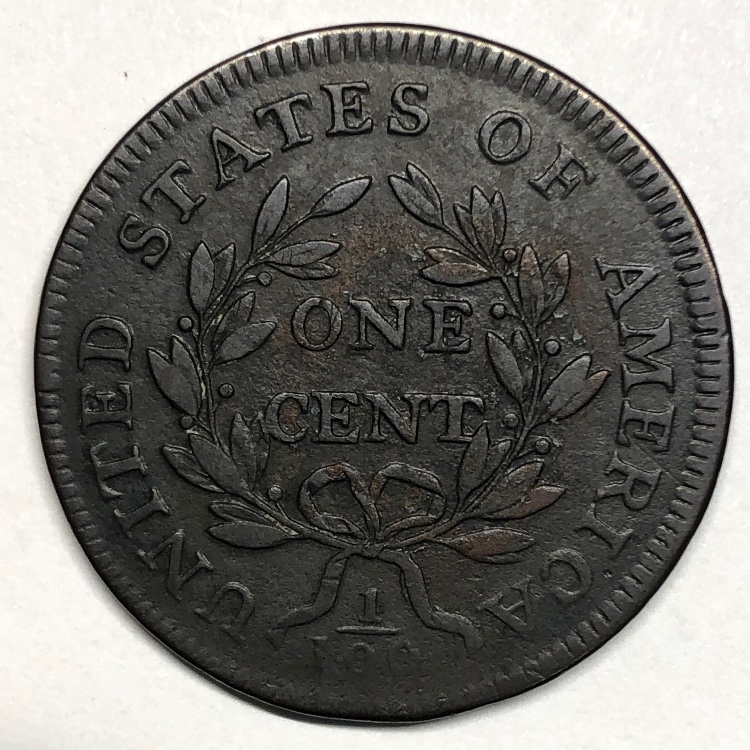
using natural sunlight, proceed to show Denis how he net graded the coin. Suppose the coin had Extremely Fine sharpness with some porosity and an edge dent. Dr. Sheldon would hold the coin about two feet from his eye and ask himself, "Is it Extremely Fine?" The answer was "No." Then he would ask, "Is it Good?" Again, the answer was "No," as the coin was better than Good. He then asked, "is it Very Fine?" "No," he would answer himself, he did not feel comfortable calling it a Very Fine." "Is it Very Good?" Again, he answered himself with a "No." Now, the grade was narrowed to Fine.
The final question Dr. Sheldon asked himself was, "Is it just Fine, or is it a little better?" If it was just Fine, he would net grade it F-12. If it was a little better, he would call it a F-15.
Dr. Sheldon would start from both ends of the grading spectrum (the sharpness grade and Good) and move toward the center until he reached a point of indecision. At that point, he found the net grade.
TOM NEWMAN
I am a dealer / collector of Large Cents and know that net grading needs to be used in order to estimate the severity of detractions from a coin's sharpness grade. Things like edge bumps, surface dings, porosity and roughness all have an effect on the coin's value as opposed to a "full grade" coin. Once this effect is severe enough to lower the value to that of a lower grade, the "net grade" is then the grade closest to that value. That is the value method of net grading. Problem is, how much is a small scratch worth? How many people actually use this? Most often people tend to look at the coin, see the detractions, net it down a grade or two and then look at what the price is for the lower grade.
BILL ECKBERG
I have been thinking about this since our first notes back and forth. I think maybe some of the reason people are unwilling to put their opinions on grading into print is that a) they are afraid their views will be ridiculed by "experts" (whoever they may be) or b) they don't want to give away trade secrets. As to a, having sold my first collection of Half Cents through the late, lamented M & G Auctions, I have a pretty clear idea of how my own grading stacks up relative to that of respected dealers. Also, every time any of us buys a coin, he / she makes his / her own judgment of its grade / price relative to that set by the seller. As to b, I'm not a dealer and therefore have no trade secrets. Anyway, here goes ...
I had always thought of EAC grades as being 5-15 points tougher than ANA grades. However, after rereading Sheldon, Breen ( Half Cent and US Encyclopedias), Brown & Dunn (yes, I AM old enough to have a copy of B & D, the ANA Grading Guide and Photograde, I am of the opinion that EAC sharpness grades and the VERBAL DESCRIPTIONS (but NOT necessarily the photographs) of the ANA grades are actually pretty close. Up to Fine, EAC and ANA grades are about the same. In the VF and XF levels, most EAC grades seem to be about 5 points lower than ANA grades, much of the difference being due to net grading. Most, but definitely not all, "commercial" AUs seem to be EAC 35-45s, again with some of the difference being due to downgrading for defects. For coins in the XF-UNC range, I pretty much grade by surface. If the luster is full on the fields AND the devices, it is Mint State; if the luster is disturbed on the highest points of the devices but full in the fields, it is AU, if the luster is gone or present only in protected areas, the coin is only XF (or it may be lower).
In the UNC range, I don't think MS65Bn exists in EAC standards; you need some red for MS65. Furthermore EAC MS 60 requires NO TRACE OF WEAR; I've seen at least one coin slabbed as MS 64 RB that had wear on the high points. It would have been at best an EAC AU 55. In general, almost nothing slabbed as MS 60-62 will be considered an UNC by EAC standards. By contrast, the EAC 60 coin will probably slab at least MS 63, and the EAC 60+ coin will probably slab at least MS64Bn. Therefore, the coin sold as an EAC 60+ will price much higher than the PCGS / NGC / ANACS MS60Bn and more like the MS64Bn, so if you want to collect mint state copper, you have to know both EAC and market grading of these coins.
I find the most useful grading standards to be those written in Breen's US Coin
Encyclopedia as they are very brief and focus on the specific criteria to look for at each grade level (e.g. WHICH hairs must you see on a coin for it to be F, VF or XF?). NET GRADING IS EAC-STYLE MARKET GRADING. In other words, it is a way of deciding on PRICE AS A FUNCTION OF BOTH SHARPNESS AND DAMAGE. A high-end VF coin with heavy porosity may be worth no more than a really nice, clean G in the marketplace; a VF20 with choice surfaces may be worth more than an AU with a bad scratch. Keep in mind that Half Cents aren't as big as large cents, so an identical scratch / dent / whatever on the two coins will cause a deduction proportionately larger on a Half Cent than on a large cent.
I have always considered net grading to be much more a matter of common sense and connoisseurship than a science. I have shown the same coin to multiple, knowledgeable collectors and dealers and gotten opinions as to net grade that vary as much as 15 points on one coin! Disagreements of 5 points can be expected on any coin that grades F1 5 or higher. Contrary to popular opinion, there are no actual rules for net grading; it's a matter of personal taste that can be supported by the market: what a willing buyer and a willing seller can agree on. Consequently, a neophyte should not expect to be able to net grade accurately. S/he should stick to dealers who do. Some of the better known dealers in copper include both sharpness and their net grades (sometimes even condition) on their envelopes, and you can learn a lot about how the EAC market views different types of defects by looking over their inventory. I strongly recommend this. In fact, there is really no other way to get a feel for net grading other than by seeing how other knowledgeable people do it.
Having said that, you can follow Jack Robinson's directions and begin by deciding on condition. You can usually recognize a scudzy coin at a glance by large scratches, rim bumps, corrosion, etc. A coin lacking major defects, but also lacking pizzazz is usually average, and a coin that looks really great for the grade at first glance is probably choice unless a glass shows too many microscopic defects.
You need to keep in mind that an average coin in VF will have more marks than an average XF and so on. An average G or AG can even have a little bit of porosity; an average coin at higher grades can't be porous. By contrast, a choice AU should be nearly mark-free as well as highly lustrous. Also, the amount of metal moved by a scratch or edge ding and its position can affect the deductions taken for the defect. For example, a small scratch in a prime focal area such as the cheek or field in front of the face or around the date will cost more in deductions than a similar one in the hair or wreath; a large scratch costs more than a small scratch in the same place. Different people have different tastes, so they will deduct different amounts for the same defect. You may hate rim dings, but not be particularly bothered by light porosity. Someone else may demand a perfect planchet, but not care about minor scratches. Another person might not mind a cracked planchet. Etc., etc.
The bottom line is that this is all a matter of opinion. Since there are no rules for net grading (nor can there be, really), you have to cultivate an eye that understands the market as well as you can. My advice is not to buy coins with a substantial downside unless you are sure about the grade / price, and to beat down all temptation to buy that coin that you need to fill that hole unless you are absolutely certain that the grade / price is appropriate.
Alternatively, you can cherrypick and not have to worry about grades so much! Deal only with knowledgeable dealers unless you are very sure of your grading. Beware of dealers who offer properly attributed varieties in slabs at CQR prices; the EAC market doesn't allow that, and I often wonder what happens to those coins. This kind of thing happens fairly frequently. Two weeks ago (for example), I was offered a scarce coin in a PCGS AU58 holder with a CC of 60, 55, 45, 40 (4+). It was offered at CQR AU55 choice for the variety. The coin had numerous marks and was, at best, an EAC net EF40; I net graded it as VF35. Remember too that in a slab, it is impossible to judge the surfaces of a MS/AU coin accurately. Coins that are convincingly mint state in plastic become AU55 when removed.
STEVE CARR
My method was influenced strongly by several EAC dealers, including Doug Bird, Tom Reynolds, Jerry Wysong, and Rod Burress, and by looking at coins in auction catalogs (particularly the Jack Robinson sale). I must confess that most of my experience is with lower and middle grade large cents. But I have no problems transferring my technique to higher grade coins.
To determine net grade, I look at a coin and ask a simple question. "If I could have this coin or a choice large cent of the same variety, what grade would that choice cent be?" Once I decide that, I have found my net grade. For example, if I see a large cent with Very Fine sharpness but a couple of scratches and an edge dent, I might decide that I would like this coin as much as I would a choice Very Good coin. In that case, I would net grade the Very Fine sharpness coin as a Very Good.
This can go two ways. If I have a VF 20 coin that is choice, choice, choice, I might equate it to a choice VF 30 coin. In this case, the VF 20 sharpness coin would net grade VF 30!
The more coppers I see, the better I feel my net grading becomes.
Anyone else care to share how they net grade?
Last time, we looked at ways net grading was defined. This time, let's look at how some EAC'ers determine net grade. For this column, I solicited member comments on net grading from old issues of Penny-Wise, though Region 8, from the US Cents web site <http:/twww.USCents.com>, and from personal communication. I was somewhat disappointed in the low number of responses. Maybe there is some truth to the rumors about net grading "secrets" (said tongue-in-cheek).
I want to thank everyone who shared their ideas on net grading. Your willingness to publicly state your grading principles marks you as gentlemen and scholars!
Perhaps I do not need to do so, but I want to repeat one thing that was said last time. Each person has his or her own standards that he or she uses to net grade. This may result in different people assigning different net grades to the same coin. Learn how others net grade and you may be able to visualize their coins before you actually see them.
Here then is how some EAC'ers net grade.
PENNY-WISE articles
In the past, several articles on net grading have appeared in Penny-Wise. Two might be of interest to members who have past issues or who have the Penny-Wise CD. One, by Frank Wilkinson, dealt with a theoretical approach to Dr. Sheldon's grading (Volume XVII, 1983, p. 297). A second, by Bill Noyes, should be REQUIRED READING for anyone interested in net grading (Volume XXI, 1987, p. 205). This article has been reprinted in the front of his two large cent books.
WILLIAM SHELDON
OK, I did not meet with Dr. Sheldon through a clairvoyant, and I never met him while he was alive. And no, this is not a theoretical approach to Dr. Sheldon's grading secrets. This information is forwarded by Denis Loring who, as a young man in the late 1960s, learned net grading in Dr. Sheldon's Riverside Drive apartment in New York City. There the good doctor used his own coins to show his net grading methods.
Dr. Sheldon would remove a coin from his safe, carry it to an open window, and,
using natural sunlight, proceed to show Denis how he net graded the coin. Suppose the coin had Extremely Fine sharpness with some porosity and an edge dent. Dr. Sheldon would hold the coin about two feet from his eye and ask himself, "Is it Extremely Fine?" The answer was "No." Then he would ask, "Is it Good?" Again, the answer was "No," as the coin was better than Good. He then asked, "is it Very Fine?" "No," he would answer himself, he did not feel comfortable calling it a Very Fine." "Is it Very Good?" Again, he answered himself with a "No." Now, the grade was narrowed to Fine.
The final question Dr. Sheldon asked himself was, "Is it just Fine, or is it a little better?" If it was just Fine, he would net grade it F-12. If it was a little better, he would call it a F-15.
Dr. Sheldon would start from both ends of the grading spectrum (the sharpness grade and Good) and move toward the center until he reached a point of indecision. At that point, he found the net grade.
TOM NEWMAN
I am a dealer / collector of Large Cents and know that net grading needs to be used in order to estimate the severity of detractions from a coin's sharpness grade. Things like edge bumps, surface dings, porosity and roughness all have an effect on the coin's value as opposed to a "full grade" coin. Once this effect is severe enough to lower the value to that of a lower grade, the "net grade" is then the grade closest to that value. That is the value method of net grading. Problem is, how much is a small scratch worth? How many people actually use this? Most often people tend to look at the coin, see the detractions, net it down a grade or two and then look at what the price is for the lower grade.
BILL ECKBERG
I have been thinking about this since our first notes back and forth. I think maybe some of the reason people are unwilling to put their opinions on grading into print is that a) they are afraid their views will be ridiculed by "experts" (whoever they may be) or b) they don't want to give away trade secrets. As to a, having sold my first collection of Half Cents through the late, lamented M & G Auctions, I have a pretty clear idea of how my own grading stacks up relative to that of respected dealers. Also, every time any of us buys a coin, he / she makes his / her own judgment of its grade / price relative to that set by the seller. As to b, I'm not a dealer and therefore have no trade secrets. Anyway, here goes ...
I had always thought of EAC grades as being 5-15 points tougher than ANA grades. However, after rereading Sheldon, Breen ( Half Cent and US Encyclopedias), Brown & Dunn (yes, I AM old enough to have a copy of B & D, the ANA Grading Guide and Photograde, I am of the opinion that EAC sharpness grades and the VERBAL DESCRIPTIONS (but NOT necessarily the photographs) of the ANA grades are actually pretty close. Up to Fine, EAC and ANA grades are about the same. In the VF and XF levels, most EAC grades seem to be about 5 points lower than ANA grades, much of the difference being due to net grading. Most, but definitely not all, "commercial" AUs seem to be EAC 35-45s, again with some of the difference being due to downgrading for defects. For coins in the XF-UNC range, I pretty much grade by surface. If the luster is full on the fields AND the devices, it is Mint State; if the luster is disturbed on the highest points of the devices but full in the fields, it is AU, if the luster is gone or present only in protected areas, the coin is only XF (or it may be lower).
In the UNC range, I don't think MS65Bn exists in EAC standards; you need some red for MS65. Furthermore EAC MS 60 requires NO TRACE OF WEAR; I've seen at least one coin slabbed as MS 64 RB that had wear on the high points. It would have been at best an EAC AU 55. In general, almost nothing slabbed as MS 60-62 will be considered an UNC by EAC standards. By contrast, the EAC 60 coin will probably slab at least MS 63, and the EAC 60+ coin will probably slab at least MS64Bn. Therefore, the coin sold as an EAC 60+ will price much higher than the PCGS / NGC / ANACS MS60Bn and more like the MS64Bn, so if you want to collect mint state copper, you have to know both EAC and market grading of these coins.
I find the most useful grading standards to be those written in Breen's US Coin
Encyclopedia as they are very brief and focus on the specific criteria to look for at each grade level (e.g. WHICH hairs must you see on a coin for it to be F, VF or XF?). NET GRADING IS EAC-STYLE MARKET GRADING. In other words, it is a way of deciding on PRICE AS A FUNCTION OF BOTH SHARPNESS AND DAMAGE. A high-end VF coin with heavy porosity may be worth no more than a really nice, clean G in the marketplace; a VF20 with choice surfaces may be worth more than an AU with a bad scratch. Keep in mind that Half Cents aren't as big as large cents, so an identical scratch / dent / whatever on the two coins will cause a deduction proportionately larger on a Half Cent than on a large cent.
I have always considered net grading to be much more a matter of common sense and connoisseurship than a science. I have shown the same coin to multiple, knowledgeable collectors and dealers and gotten opinions as to net grade that vary as much as 15 points on one coin! Disagreements of 5 points can be expected on any coin that grades F1 5 or higher. Contrary to popular opinion, there are no actual rules for net grading; it's a matter of personal taste that can be supported by the market: what a willing buyer and a willing seller can agree on. Consequently, a neophyte should not expect to be able to net grade accurately. S/he should stick to dealers who do. Some of the better known dealers in copper include both sharpness and their net grades (sometimes even condition) on their envelopes, and you can learn a lot about how the EAC market views different types of defects by looking over their inventory. I strongly recommend this. In fact, there is really no other way to get a feel for net grading other than by seeing how other knowledgeable people do it.
Having said that, you can follow Jack Robinson's directions and begin by deciding on condition. You can usually recognize a scudzy coin at a glance by large scratches, rim bumps, corrosion, etc. A coin lacking major defects, but also lacking pizzazz is usually average, and a coin that looks really great for the grade at first glance is probably choice unless a glass shows too many microscopic defects.
You need to keep in mind that an average coin in VF will have more marks than an average XF and so on. An average G or AG can even have a little bit of porosity; an average coin at higher grades can't be porous. By contrast, a choice AU should be nearly mark-free as well as highly lustrous. Also, the amount of metal moved by a scratch or edge ding and its position can affect the deductions taken for the defect. For example, a small scratch in a prime focal area such as the cheek or field in front of the face or around the date will cost more in deductions than a similar one in the hair or wreath; a large scratch costs more than a small scratch in the same place. Different people have different tastes, so they will deduct different amounts for the same defect. You may hate rim dings, but not be particularly bothered by light porosity. Someone else may demand a perfect planchet, but not care about minor scratches. Another person might not mind a cracked planchet. Etc., etc.
The bottom line is that this is all a matter of opinion. Since there are no rules for net grading (nor can there be, really), you have to cultivate an eye that understands the market as well as you can. My advice is not to buy coins with a substantial downside unless you are sure about the grade / price, and to beat down all temptation to buy that coin that you need to fill that hole unless you are absolutely certain that the grade / price is appropriate.
Alternatively, you can cherrypick and not have to worry about grades so much! Deal only with knowledgeable dealers unless you are very sure of your grading. Beware of dealers who offer properly attributed varieties in slabs at CQR prices; the EAC market doesn't allow that, and I often wonder what happens to those coins. This kind of thing happens fairly frequently. Two weeks ago (for example), I was offered a scarce coin in a PCGS AU58 holder with a CC of 60, 55, 45, 40 (4+). It was offered at CQR AU55 choice for the variety. The coin had numerous marks and was, at best, an EAC net EF40; I net graded it as VF35. Remember too that in a slab, it is impossible to judge the surfaces of a MS/AU coin accurately. Coins that are convincingly mint state in plastic become AU55 when removed.
STEVE CARR
My method was influenced strongly by several EAC dealers, including Doug Bird, Tom Reynolds, Jerry Wysong, and Rod Burress, and by looking at coins in auction catalogs (particularly the Jack Robinson sale). I must confess that most of my experience is with lower and middle grade large cents. But I have no problems transferring my technique to higher grade coins.
To determine net grade, I look at a coin and ask a simple question. "If I could have this coin or a choice large cent of the same variety, what grade would that choice cent be?" Once I decide that, I have found my net grade. For example, if I see a large cent with Very Fine sharpness but a couple of scratches and an edge dent, I might decide that I would like this coin as much as I would a choice Very Good coin. In that case, I would net grade the Very Fine sharpness coin as a Very Good.
This can go two ways. If I have a VF 20 coin that is choice, choice, choice, I might equate it to a choice VF 30 coin. In this case, the VF 20 sharpness coin would net grade VF 30!
The more coppers I see, the better I feel my net grading becomes.
Anyone else care to share how they net grade?