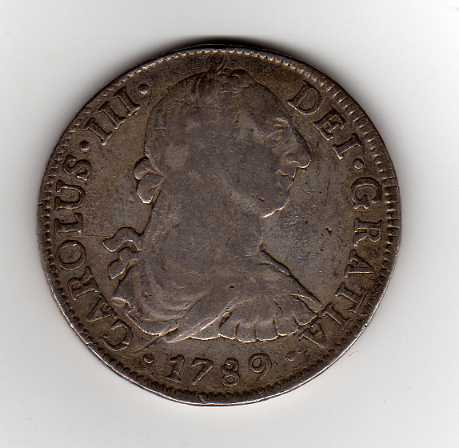
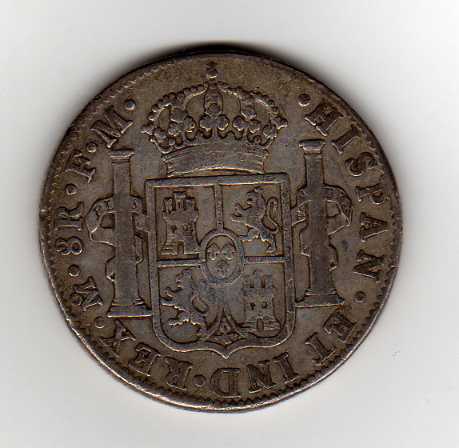
Quote:
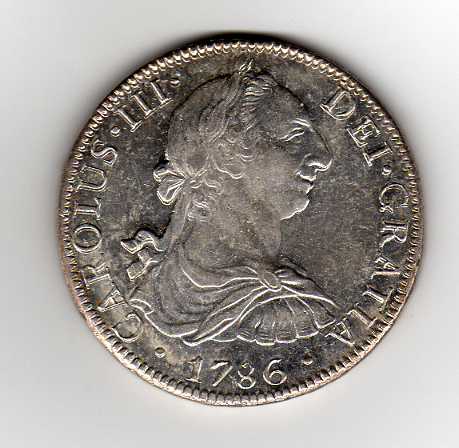
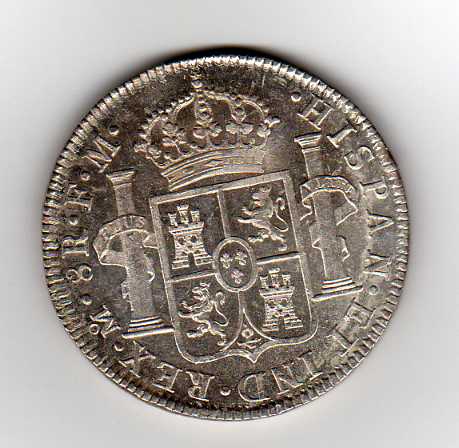
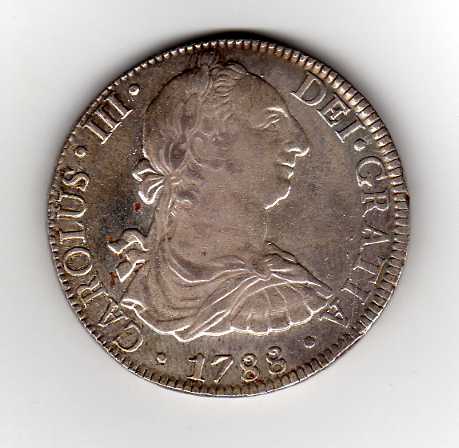
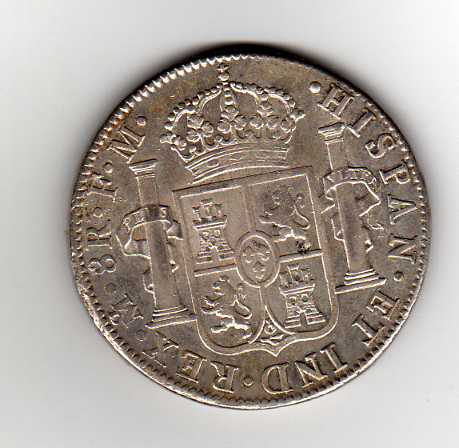
With a brief answer, WHY exactly did they not like the Ferdinand bust, even of the Mo mint? Kind of silly, when you think about it... They were picky enough to prefer the coins with the Mo mintmark... yet rejected (relatively speaking) coins with that same mark, which would test to be the same, content-wise, because they had a different picture.
That point was not lost on English, US and even Chinese sources. They all thought it was crazy. An official edict was promulgated by the Chinese at the behest of US trading interests in 1838 making the Mexican Eagle dollar Standard in China. This was affirmed and made even more official in 1856. The edicts simply didn't stop the preference.
The
US Trade dollar which contained more silver was also rejected. It traded UNDER melt as much as 4%. There are references to the absolute preference from before 1840 and there is NO reason. It is just a preference for the fatter face (Buddha like) Carolus with THICKER ribbons (rich?). That is why they preferred the picture of Carolus but accepted the transitional bust of Mexico City.
Regarding the Mo mint mark that was due to actual fire assay tests from what I gather. The coins of Bolivia and Peru were found to be unreliable in content. The same problem was reported with the South American Republican coins AND with the first Mexican Eagle dollars. So by the late 1830's the Chinese were fixated on just Carolus from Mexico City. NOTHING ELSE carried the big premium.
The dates didn't matter - we record several impossible dates for Chas IIII - the earliest meant for circulation is a Class 1 dates 1700 and the last 1895. So the date range was of no concern. The assayer initials were also of no importance so there are many incorrect combinations and fantasy assayers.
One interesting quote I found from a Chinese author indicated that the
US Trade dollars were accepted at a discount then melted and recoined as Carolus dollars so that the sharp Chinese merchants made enough to produce a tidy profit even after the extra work. The added silver in the
Trade dollar was a bonus that paid for the re-coining.
Quote:
Concerning the anecdotes from your local New England ring... Interesting that you've now linked it, potentially, to a higher level. Those dots seem like they could connect. If the scope was indeed that large, it's all the more fascinating that more info concerning these operation(s) didn't leak out.
The scope of the project is something I have always marveled at as well. But in the era of political corruption and the robber barons who controlled big business it makes complete sense. They always operated in secret behind closed doors and left minimal records.
The fellow charged in California with smuggling of counterfeit coin that got off as a result of the "senator" also had ties to shipping, textiles and railroads he was on several boards and had powerful relatives. His partner (an in-law) was a Railroad president. Another factor to consider is that in the period after the Civil War, New Bedford, Mass was the city with the largest number of millionaires per ca pita in the world. It was the area where Hetty Greene and her father operated.
I did find ties to one of the larger banks of the time (pre-crash of 1929) and it appears the raw silver came through that channel. The bank is long out of business and any old records are unavailable. No one officially knows anything about their present whereabouts. But I learned of an archive that supposedly had the bank collection. In a preliminary phone conversation on a sale of records I was brokering, I brought up the subject of counterfeiting in relation to the bank and their negotiator (an archivist)acted like he knew all about it. So I travelled back to New Bedford a couple months later (a 750 mile trip) only top find out I could NOT hunt through the files and he "knew nothing about any counterfeiting operation".
I reached the same dead end when I enquired about the corporate records of the metal works. The company had gone through several mergers (it still exists technically) and it appeared all the old files were moved to a central point about 30 years ago. But when I asked if I could get research access, they said about 10 years ago all of the corporate records were destroyed and no photocopies or microfilm records were ever made. The official answer was another "stonewall".
One of the letters I uncovered (for which I could NOT GET permission to print - from a different archive) also refers to "the Supreme Court" as being an avenue of appeal in the counterfeiting case. These may be veiled references but the individuals involved included a State Governor and another US Senator as well as several judges. I have not completed the family trees but there are clear links to many influential names.
One other "fact" to consider that points to a very high level of support was that the Law of 1873 (The Crime of 1873) actually included a clause that made a legal defense possible to a charge of counterfeiting for producing NON-current foreign coins in the US. Up until 1873 such production was against the law. The law of 1873 changed that provision and this was the basis used to quash the case against the Mass Attorney General in 1893.
There are NO court records anywhere of these proceedings that I could locate.
Why more records can not be found is likely because many have been lost - destroyed - or perhaps they were never written in the first place. Imagine the diplomatic problems that might have resulted with Mexico if the truth was known. We were after all producing money that they wanted a 15% surcharge for making legally. That amounted to millions of dollars potentially. We were making these coins after being turned down.
I think we are seeing the tip of an iceberg. What has yet to be uncovered is likely far more than has been uncovered to date.






 First Page
 Previous Page


 Posted 04/19/2013 5:57 pm